
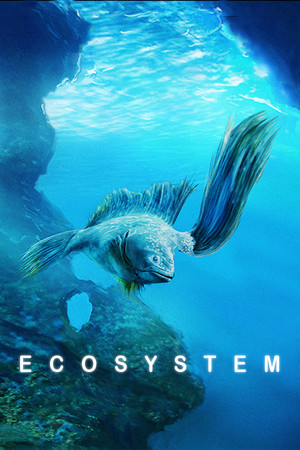
Ecosystem
If watching natural selection pressure a blob of random joints and neurons into a functional predator doesn't hook you within ten minutes, no game ever will. Ecosystem is the most rigorous evolution sandbox on PC right now, and the depth-to-price ratio is hard to argue with.
GamerScout Verdict
Best for patient sim players who want to watch genuine natural selection run loose rather than follow a scripted progression path.
Compare Prices(8 stores)
Every store in this table quotes us in euros, so the EUR figure is the price the seller actually set, not our arithmetic — which is why EUR is also the currency we rank in. We only list an offer here when the store gives us its price in euros, so nothing in this table is a number we invented.
Pick USD, PLN, GBP, CAD or AUD in the header and we convert from EUR at the European Central Bank reference rate — converted amounts are prefixed with ~. Your bank or the store may apply a different rate at checkout. We never hide offers based on where you are: everyone sees this whole table.
We may earn a commission when you buy games through links on this page — at no extra cost to you. It never affects our rankings or verdicts.
Price History
Screenshots & Media
About Ecosystem
I spend a lot of time in games where I control the levers of complex systems, but Ecosystem put me in a position I rarely find myself in: genuinely surprised by my own creation. I set up a mid-depth ocean with rocky terrain, seeded a few plant species, released a batch of random lifeforms with scrambled DNA, and watched most of them immediately flail and die. That failure is the point. The survivors, moving even fractionally better than their peers, reproduced more. Forty generations later I had something that looked vaguely like an eel navigating the current with eerie efficiency. I had not designed that eel. The simulation had. What makes Ecosystem technically interesting is that creatures are not animated by artists. Their bodies grow from synthetic DNA that encodes skeletal structure, joint types, skin, and even the architecture of a neural pipeline that fires sensory data through neurons and contracts muscles in real time. The physics engine then determines whether that body plan can actually swim. Most random configurations cannot. Natural selection handles the rest. This is not a metaphor or a simplified abstraction. It is a functioning evolutionary pressure system, and the fact that it runs inside a game you can buy for under twenty dollars is legitimately surprising. The combat layer adds predator-prey tension: creatures can develop electrical attacks, poisonous spikes, and a range of combat statistics that shift their role in the food chain across generations. Arms races between species emerge organically, and managing those collapses and extinctions becomes the long-game challenge. For players who want to steer rather than observe, a set of unlockable tools lets you impose trait requirements on species at varying granularity. You can mandate tentacles, lock in a body-part count, or dial down the drag coefficient on a specific lineage. The procedural world builder handles terrain sculpting, ocean depth, soil type, and current placement. Steam Workshop support means you can import other players' evolved species into your world and stress-test them against your local pressures, which is genuinely one of the smarter community integration ideas I have seen in this genre. The simulation also tracks nutrient cycles, temperature, and energy flow, so the environment itself behaves as a variable rather than a static backdrop. The honest criticisms are real ones. Performance under load is a recurring complaint from the community, particularly when save files grow large or the Aquarium mode is used. Some players have hit loading bugs that locked saves entirely. The tutorial does a reasonable job of scaffolding the early mechanics, but the gap between "I understand the tools" and "I understand why my ecosystem collapsed" is steep, and the game does not bridge it with much in-game guidance. If you are the kind of player who needs legible progress bars and immediate feedback loops, Ecosystem will feel like staring at a terrarium waiting for something to happen. It is, by design, slow. The payoff is not guaranteed and it is not structured. What it offers instead is emergent surprise on a schedule the simulation controls, not you. For strategy and sim players willing to think in generations rather than minutes, this sits in a category almost by itself. The closest comparisons, things like Spore's creature editor or species-management sims, do not run anywhere near this level of physical simulation fidelity. The Workshop and cloud save support are practical touches that extend the lifespan well past a single playthrough. Go in expecting a systems toy, not a game with a win condition, and Ecosystem will hold your attention for a long time.

Strategy & simulation
Tags
System Requirements
Minimum
- OS
- Windows 7 64-bit or higher
- Memory
- 8 GB RAM
- Storage
- 2 GB available space
- Graphics
- nVidia GeForce GTX 1050Ti / AMD Radeon RX 560
- Processor
- Intel Core i3-8100 / AMD Ryzen 3 1200
Recommended
Requires a 64-bit processor and operating system
Keep exploring
Community Discussion
Be the first to comment on Ecosystem.
Reviews & Ratings
No ratings available
Game Info
- Developer
- Tom Johnson
- Publisher
- Slug Disco
- Release Date
- Nov 8, 2024