
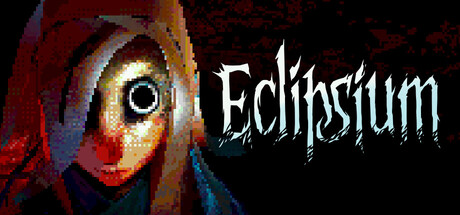
Eclipsium
Three to four hours of body-horror symbolism, a disintegrating world, and a soundtrack that knows exactly when to go quiet. If atmosphere is the point, Housefire understands the assignment better than most studios twice its size.
GamerScout Verdict
Worth the three-hour commitment for anyone who prioritizes atmosphere and handcrafted imagery over mechanical depth or narrative closure.
Compare Prices(5 stores)
Every store in this table quotes us in euros, so the EUR figure is the price the seller actually set, not our arithmetic — which is why EUR is also the currency we rank in. We only list an offer here when the store gives us its price in euros, so nothing in this table is a number we invented.
Pick USD, PLN, GBP, CAD or AUD in the header and we convert from EUR at the European Central Bank reference rate — converted amounts are prefixed with ~. Your bank or the store may apply a different rate at checkout. We never hide offers based on where you are: everyone sees this whole table.
We may earn a commission when you buy games through links on this page — at no extra cost to you. It never affects our rankings or verdicts.
Price History
Screenshots & Media
About Eclipsium
I played Eclipsium with the lights off and headphones on, the way the game quietly insists you should, and I came out the other side feeling like I'd read someone else's private grief and couldn't quite hand it back. That's the texture of this thing. You are the Wanderer, a silent figure waking in a hospital bed in a sunless, self-consuming world, and your only directive is forward. Toward Her. Who she is stays deliberately smeared, told through brief flashbacks and environmental symbolism rather than dialogue, and Housefire seems genuinely comfortable with that ambiguity in a way that either pulls you in or locks you out entirely depending on what kind of player you are. The first-person traversal is as minimal as horror gets. You walk, you duck, you fall through crumbling platforms. There are puzzles scattered through the four-or-so-hour runtime, mostly involving light manipulation, environmental observation, and the Wanderer's mutating hand. That hand is the mechanical heart of the game: it transforms into a blade form, a fire ability, and a hollow-aperture state that reveals hidden things, with each mutation tied to an act of self-sacrifice the character performs along the way. The puzzles themselves are uneven. Some feel precise and creepy, others feel slightly inert, and the late-game platforming sections that demand more precision than the loose movement physics can honestly support are a genuine friction point. The walk speed being conspicuously slow is either a deliberate compositional choice or a mild irritant depending on your tolerance, and several reviewers landed on both sides of that line. What nobody disagrees on is the sound design and the art. The pixel aesthetic is not lo-fi laziness. It is closer to animated pointillism, a heavily dithered, low-resolution filter over real-time 3D that makes the world look like deteriorating archival footage of a nightmare. The player's hand was physically recorded from a live model, which gives it an uncanny tactility that bleeds into every interaction. The environments range from apocalyptic open plains under a blood-red sky, to cathedrals of flesh, to stretches of outer space, each with its own oppressive palette. And the soundtrack is used sparingly, which makes every moment it arrives feel seismic. Ambient dread carries most of the runtime, and then without warning the score lifts into something roaring and raw. Horror through restraint, not noise. The narrative is where Eclipsium will divide people most cleanly. There is no dialogue, no codex, no spelled-out resolution. The story communicates through imagery: scales that demand a tongue before you pass, a tower crowned with a giant beating heart, a witch-like figure who is simultaneously a beacon and a threat. Some reviewers found that the ending earned its ambiguity; others left unsatisfied, feeling the abstract symbolism never quite cohered into emotional closure. I think Eclipsium is honest about what it is from the first five minutes. It is a mood object about grief and pursuit and the cost of obsession, not a puzzle box with a clean solution. Come in expecting the former and the three to four hours will linger. Come in expecting the latter and you will spend the whole time waiting for a payoff that isn't structured that way. For CRITICAL REFLEX, who shepherded Mouthwashing and Buckshot Roulette, this feels like a natural extension of a very specific curatorial instinct: short, handcrafted, psychologically uncomfortable, and not remotely interested in holding your hand. Housefire's Swedish studio built the art style out of a game jam and never looked back, and that origin story is visible in the work. There is a purity to it. The one honest caveat worth flagging is the heavy pixel stylization, which caused mild eye strain for multiple reviewers during extended sessions. Accessibility settings do allow you to reduce the visual intensity without gutting the atmosphere entirely, so it is worth experimenting early if your eyes are sensitive.

Indie & narrative
Tags
System Requirements
Minimum
- OS
- Windows 7
- Memory
- 2 GB RAM
- Storage
- 7 GB available space
- Graphics
- DX10, DX11, DX12 capable.
- Processor
- x64 architecture with SSE2 instruction set support.
Keep exploring
Community Discussion
Be the first to comment on Eclipsium.
Reviews & Ratings
No ratings available
Game Info
- Developer
- Housefire
- Publisher
- CRITICAL REFLEX
- Release Date
- Sep 19, 2025