Drone Swarm
Command 32,000 drones as a single tactical weapon across wave-based space battles. Clever concept, uneven execution.
GamerScout Verdict
A visually inventive swarm-control concept worth a weekend, but too shallow for strategy players chasing long-term depth.
Compare Prices(9 stores)
Every store in this table quotes us in euros, so the EUR figure is the price the seller actually set, not our arithmetic — which is why EUR is also the currency we rank in. We only list an offer here when the store gives us its price in euros, so nothing in this table is a number we invented.
Pick USD, PLN, GBP, CAD or AUD in the header and we convert from EUR at the European Central Bank reference rate — converted amounts are prefixed with ~. Your bank or the store may apply a different rate at checkout. We never hide offers based on where you are: everyone sees this whole table.
We may earn a commission when you buy games through links on this page — at no extra cost to you. It never affects our rankings or verdicts.
Price History
Screenshots & Media
About Drone Swarm
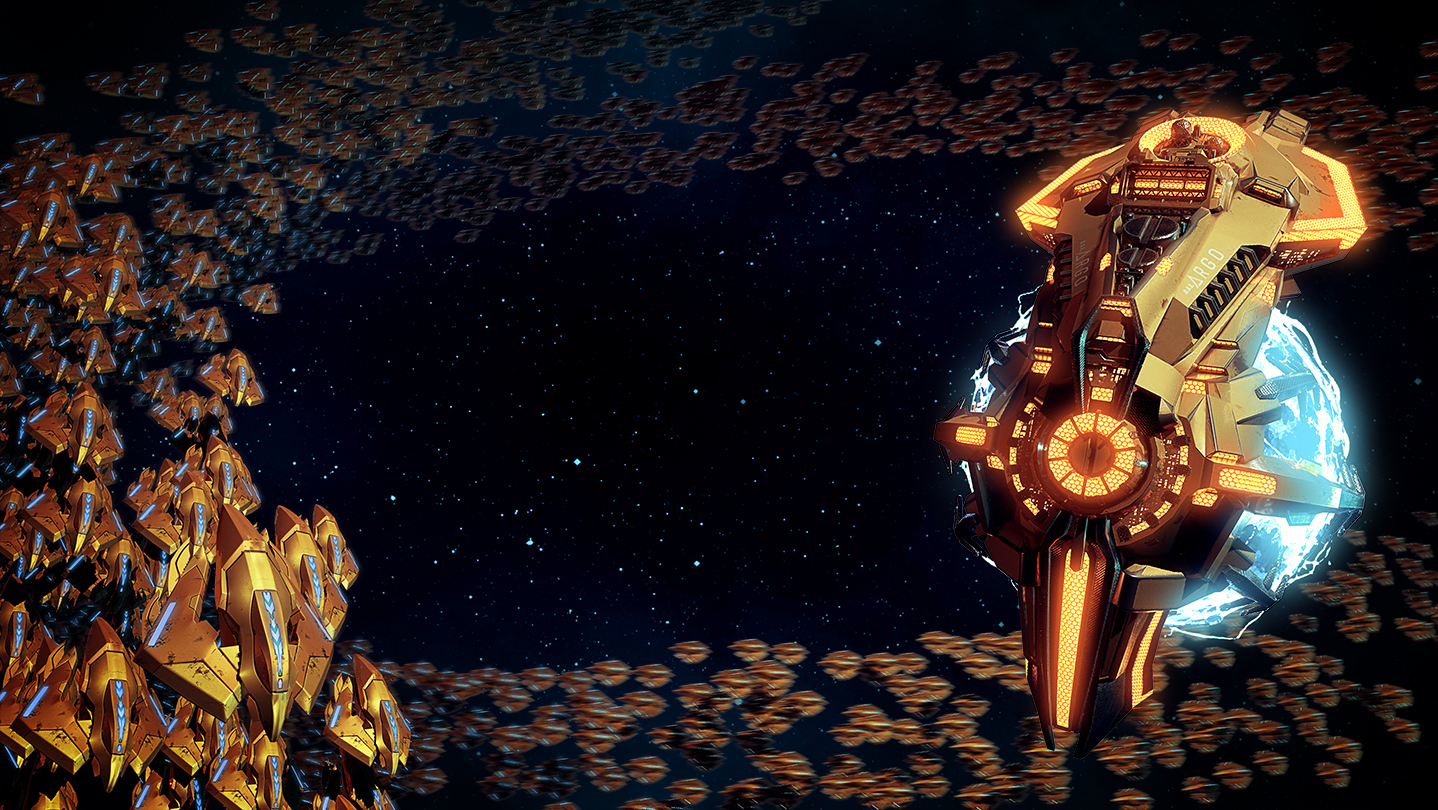
Drone Swarm pitches itself as something genuinely different: instead of managing units one at a time, you direct a single massive swarm of 32,000 drones like a fluid, paintable force field. You drag, shape, and redirect the swarm to intercept incoming fire, ram enemies, or funnel into tight attack formations. On paper that sounds like a fresh tactical hook, and for the first couple of hours it absolutely is. Watching thousands of tiny drones ripple into a defensive wall to absorb a missile salvo feels spectacular and mechanically satisfying in a way few strategy games bother to attempt. The core loop is wave-based: survive enemy attacks, earn upgrade points between systems, then push into the next encounter with a slightly more capable swarm. Upgrades cover abilities like splitting the swarm into independent clusters, boosting speed, or unlocking special attack patterns. There is a light decision layer here, and players who enjoy optimizing a build between runs will find some legitimate choices to make. However, the upgrade tree is shallow compared to what the concept promises. By the midpoint of the campaign, most viable builds converge, and late-game variety drops noticeably. A strategy player looking for the kind of compounding systemic depth you get from a proper 4X or grand-strategy title will hit a ceiling fast. The AI presents a bigger problem. Enemy wave design starts with genuine creativity, mixing fast interceptors, shielded capital ships, and projectile patterns that force you to split your attention. But enemy behavior does not evolve in meaningful ways across the full campaign. Once you identify the counter-pattern for each enemy archetype, the challenge flattens out rather than escalating. Harder difficulty settings raise aggression more than they add tactical variety, which feels like a missed opportunity given the concept. A swarm this large deserves opponents that actually stress-test its full range of abilities. Presentation is a mixed bag. The space environments are visually clean and the swarm itself animates impressively. Story framing, delivered via text and voice-acted cutscenes, is competent but thin, borrowing familiar humanity-in-crisis beats without adding much to them. On the technical side, performance can dip during the most chaotic multi-vector attacks, which matters when timing your swarm repositions is everything. The 63 percent positive rating on Steam is honestly a fair reflection: this is a game that earns genuine enthusiasm from players who connect with the swarm-control fantasy, and polite disappointment from everyone hoping for more strategic substance underneath. For a pure strategy audience expecting long-term depth, Drone Swarm is a weekend curiosity rather than a library staple. For someone who wants a visually distinctive, low-barrier tactics game with a novel control scheme and no complicated ruleset to absorb, it delivers what it promises within its limits. No mod ecosystem to speak of, and no multiplayer, so once you have cleared the campaign there is limited reason to return. Approach it as a focused, single-sitting-friendly experience rather than a deep system, and the mixed reviews make a lot more sense.

Strategy & simulation
Tags
System Requirements
Minimum
- Processor
- Intel Core i3-2120 3, 3 GHz or AMD Phenom II X4 975 3, 6 GHz
- Memory
- 8 GB RAM
- Graphics
- NVIDIA Geforce GTX 460 or AMD Radeon HD 5970 / AMD Radeon RX 550
- Storage
- 5 GB available space
Recommended
- OS
- Windows 10 64-Bit
- Processor
- Intel Core i5-3570K 3,4GHz or AMD Ryzen 7 1800X
- Memory
- 8 GB RAM
- Graphics
- NVIDIA Geforce GTX 660 or AMD Radeon RX 560 3…
Keep exploring
Community Discussion
Be the first to comment on Drone Swarm.
Reviews & Ratings
Game Info
- Developer
- stillalive studios
- Publisher
- astragon Entertainment
- Release Date
- Oct 20, 2020