Drawngeon: Dungeons of Ink and Paper
A hand-drawn dungeon crawler with one of the most quietly arresting visual concepts on Steam - if you can forgive a shallow skill tree and a combat loop that runs dry before the credits roll.
GamerScout Verdict
Worth a single run for dungeon crawler nostalgists who can overlook thin mechanics in exchange for a genuinely one-of-a-kind visual handcraft.
Compare Prices(4 stores)
Every store in this table quotes us in euros, so the EUR figure is the price the seller actually set, not our arithmetic — which is why EUR is also the currency we rank in. We only list an offer here when the store gives us its price in euros, so nothing in this table is a number we invented.
Pick USD, PLN, GBP, CAD or AUD in the header and we convert from EUR at the European Central Bank reference rate — converted amounts are prefixed with ~. Your bank or the store may apply a different rate at checkout. We never hide offers based on where you are: everyone sees this whole table.
We may earn a commission when you buy games through links on this page — at no extra cost to you. It never affects our rankings or verdicts.
Price History
Screenshots & Media
About Drawngeon: Dungeons of Ink and Paper
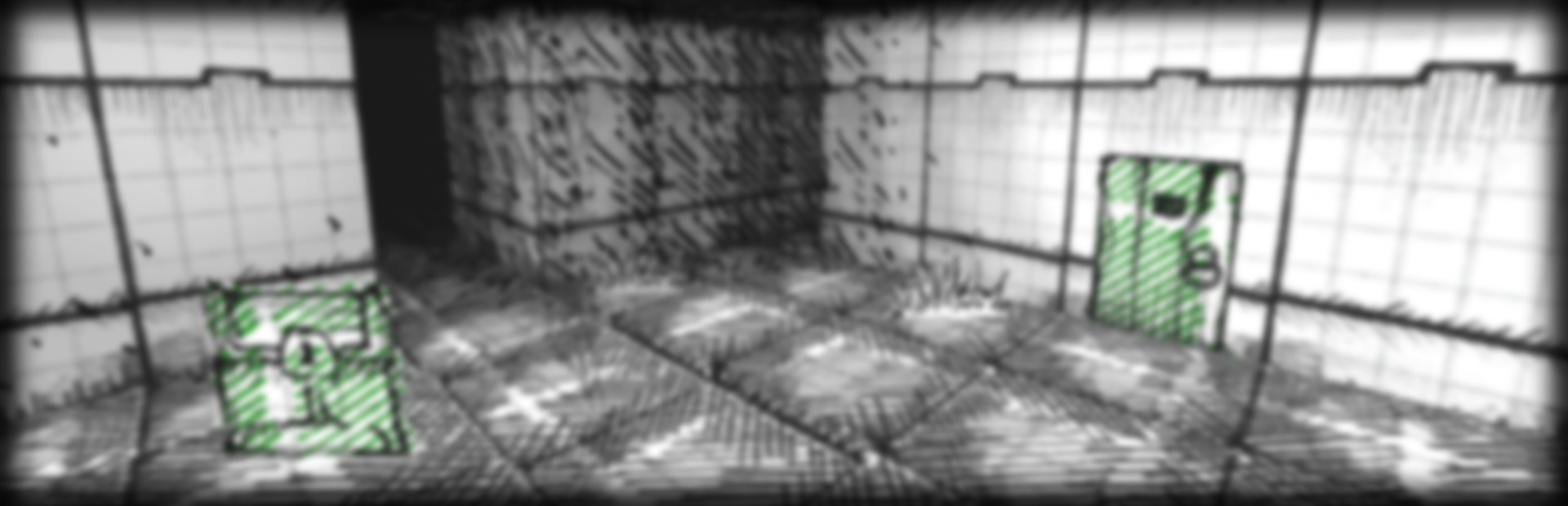
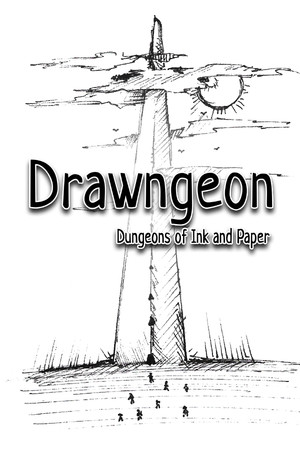
My first minutes with Drawngeon felt like finding a notebook doodle that somehow learned to breathe. The entire world of Inkland is rendered as if sketched in pencil on graph paper - environments, enemies, UI elements, all of it committing fully to the conceit. That singular aesthetic choice is the game's strongest argument for existing, and I want to be honest about how far it carries things: pretty far, actually, but not all the way. The structure is a first-person, grid-based dungeon crawler with real-time combat and procedurally generated layouts across dungeons, caves, forests, and the titular Mysterious Tower. You pick one of three classes - warrior, magician, or rogue - each built around four stats: HP, Strength, Wisdom, and Acrobatics (which, confusingly, governs speed rather than anything jump-related). Combat works on a dodge-and-retaliate rhythm: enemies telegraph their moves, you sidestep on the grid, then close in. Active dodging is possible and timing matters, which gives early fights a satisfying tension. The rogue leans into evasion, the warrior can raise a shield, the magician casts spells - the classes are distinct enough on paper, but in practice the gap between them shrinks quickly once you realise the core loop is almost always the same sequence of presses. There's also a quirky item-eating mechanic: most loot can be consumed for health recovery, which unintentionally drains any tension from survival because healing becomes trivially abundant. The soundscape is where things get genuinely interesting - and also genuinely limited. There is no music score to speak of. Instead, the sound design leans into the paper theme: pages turning as you move between areas, tearing sounds when you land a kill, dice rolling when a chest opens. It is a small, strange, committed detail that I found charming every single time. But the absence of any ambient score means that after an hour or two, the quiet starts to feel less atmospheric and more like absence. The moody background wind effects keep a faint unease alive, but this is a soundscape that needed one more layer to feel complete rather than merely conceptual. The rougher edges are real and worth naming plainly. The skill tree across all three classes is sparse - around six nodes, mostly passive - and levelling up rarely delivers the satisfaction it should. The inventory is tiny, loot is plentiful, and a frustrating loop of trekking back to town just to free up slots becomes routine well before the midgame. The procedural generation keeps runs structurally different but doesn't vary the enemy roster or encounter design enough to make a second run feel meaningfully fresh. Some early Steam players also flagged crashes when using controllers, so keyboard and mouse remains the safer choice on PC. The narrative is almost entirely absent in-game; what little story exists lives in the store description rather than the world itself. For a certain kind of player - someone who finds genuine warmth in the idea of a dungeon sketched into a school exercise book, who can accept two to five hours of unpolished but atmospheric crawling as a complete experience - Drawngeon earns a quiet, conditional recommendation. It is a concept that outpaces its execution in almost every mechanical dimension, but the concept is genuinely lovely, and the commitment to the paper aesthetic never wavers from first room to last. The extras section, which shows scans of the actual hand-drawn source art, is a small treasure on its own.

Indie & narrative
Tags
System Requirements
Minimum
- OS
- Windows 7
- Memory
- 512 MB RAM
- DirectX
- Version 9.0
- Storage
- 64 MB available space
- Graphics
- NVidia GeForce GT 240 ( 1Gb )
- Processor
- AMD Athlon II X4 635 ( 2.9 GHz Quad core )
- Sound Card
- DirectSound compatible
Recommended
- OS
- Windows 7, Windows 10
- Memory
- 1 GB RAM
- DirectX
- Version 11
- Storage
- 64 MB available space
- Graphics
- NVidia GeForce GT 240 ( 1Gb )
- Processor
- AMD Athlon II X4 635 ( 2.9 GHz Quad core )
- Sound Card
- DirectSound compatible
Keep exploring
Community Discussion
Be the first to comment on Drawngeon: Dungeons of Ink and Paper.
Reviews & Ratings
No ratings available
Game Info
- Developer
- DarkDes Labs
- Publisher
- DarkDes Labs
- Release Date
- May 24, 2019