
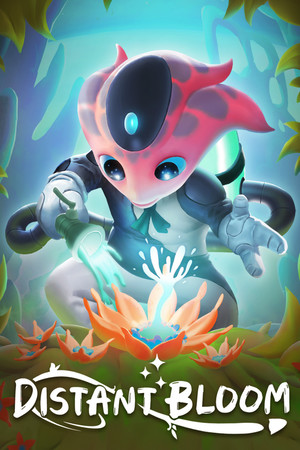
Distant Bloom
Crash-land on a polluted alien world and coax it back to life, one hexagonal seed patch at a time. Zero combat, zero timers, and about ten hours of quiet planetary therapy.
GamerScout Verdict
Best for players who want a slow, purposeful restoration fantasy with zero pressure and a genuinely lovely audio-visual payoff.
Compare Prices(6 stores)
Every store in this table quotes us in euros, so the EUR figure is the price the seller actually set, not our arithmetic — which is why EUR is also the currency we rank in. We only list an offer here when the store gives us its price in euros, so nothing in this table is a number we invented.
Pick USD, PLN, GBP, CAD or AUD in the header and we convert from EUR at the European Central Bank reference rate — converted amounts are prefixed with ~. Your bank or the store may apply a different rate at checkout. We never hide offers based on where you are: everyone sees this whole table.
We may earn a commission when you buy games through links on this page — at no extra cost to you. It never affects our rankings or verdicts.
Price History
Screenshots & Media
About Distant Bloom
I want to be upfront: the cozy-game shelf on Steam is overflowing, and most new arrivals earn a sigh before they earn a click. Distant Bloom earned more than that from me, mostly because Ember Trail seems to understand something a lot of its competitors miss. The transformation has to feel earned, not just handed to you. When you first arrive on Altra 3 as the low-ranking Assistant, the planet is genuinely grim. Garbage piles, oil spills, shattered glass, dying plant life. The visual shift as you clean and plant is slow and deliberate, and that's exactly the point. The core loop sits at the overlap of light exploration, hex-grid gardening, and resource recycling. You use a scanner to identify flora and environmental hazards, a shovel to plant seeds on hexagonal cell patches, and the ExoMulti - a multi-tool that upgrades over time - to break down tougher pollutants like oil slicks and goop masses. Waste you clear doesn't just disappear; it becomes scrap metal and plastic that you repurpose to build crew quarters back at the Hearth Ship base. The loop is genuinely elegant in that every action feeds the next. Planting the right combination of species (each patch needs at least three, with ground type and atmospheric temperature factoring in) eventually causes root bridges to grow and stone pillars to reactivate, physically opening new sections of the map. There are nine biomes in total - Valley, Hills, Wetlands, Quarry, Hot Springs, Glacier, Forest, and a Volcano dome - each asking you to adapt your seed selection to the local climate. That variety keeps the gardening from going entirely on autopilot. Where the game wobbles is in the connective tissue between those satisfying planting sessions. Tracking down scattered crew members and locating data probes involves a lot of back-and-forth across a map that grows quite large, and fast travel is limited enough that the commute starts to drag. The minimap points toward objectives but doesn't show terrain or pathways, which can make navigation feel like guesswork. The dialogue, while charming in small doses, has a tendency to over-explain the eco-fiction premise - the planet has a deity-like presence woven into the ten-hour story, and it's a good idea, but the writing trusts the player less than the gameplay does. Crafting and cooking are similarly surface-level: you place structures where prompted and cook mostly to manage creature health or nudge friendship meters. If you arrive expecting Stardew Valley-style depth in those systems, you will be underwhelmed. On the sensory side, the game earns real goodwill. The soundtrack is patient and layered, leaning into nature sounds more and more as restored regions come alive - the audio design does a quiet job of marking your progress in a way the visuals reinforce. The characters speak in an invented alien murmur rather than English, which sits well in the soundscape without ever becoming grating. There is also a Little Buddy co-op mode where a second player can control the robotic companion KEi.Ki, which opens things up for younger audiences or couch-play scenarios. Post-credits, a set of after-story missions extends the runtime modestly without dramatically adding new mechanics. Distant Bloom knows what it is: a stress-free, intentionally paced restoration fantasy for people who want a game to feel like exhaling. The bugs that reviewers noted at launch - UI disappearing, occasional character-stuck states - appear to have been largely addressed in post-launch patches. It is not trying to be Okami or Pikmin. It borrows some of their energy but runs on a much quieter engine. If you can accept that the dialogue is occasionally heavy-handed and the fast-travel is more wish than reality, the core experience of watching a dead world turn green because of your careful, unhurried work is quietly wonderful.

Indie & narrative
Tags
System Requirements
Minimum
- OS
- Windows 10
- Memory
- 4 GB RAM
- DirectX
- Version 11
- Storage
- 10 GB available space
- Graphics
- NVIDIA GeForce GTX 770 4GB / AMD Radeon RX 570 (or equivalent with 4 GB VRAM)
- Processor
- Intel i3 (4th gen or better) / AMD Ryzen 3 (2200G or better)
- Sound Card
- DirectX compatible
Recommended
Requires a 64-bit processor and operating system
Keep exploring
Community Discussion
Be the first to comment on Distant Bloom.
Reviews & Ratings
No ratings available
Game Info
- Developer
- Ember Trail
- Publisher
- Kinda Brave
- Release Date
- Mar 27, 2024