Dispatch
If superhero fatigue has you checked out, Dispatch is the specific antidote: a tightly written eight-episode management-drama where the best move is usually the one that hurts someone you like.
GamerScout Verdict
Essential for narrative fans willing to engage the management layer; a complete, confident debut from AdHoc that earns its reception.
Compare Prices(3 stores)
Every store in this table quotes us in euros, so the EUR figure is the price the seller actually set, not our arithmetic — which is why EUR is also the currency we rank in. We only list an offer here when the store gives us its price in euros, so nothing in this table is a number we invented.
Pick USD, PLN, GBP, CAD or AUD in the header and we convert from EUR at the European Central Bank reference rate — converted amounts are prefixed with ~. Your bank or the store may apply a different rate at checkout. We never hide offers based on where you are: everyone sees this whole table.
We may earn a commission when you buy games through links on this page — at no extra cost to you. It never affects our rankings or verdicts.
Price History
Screenshots & Media
About Dispatch
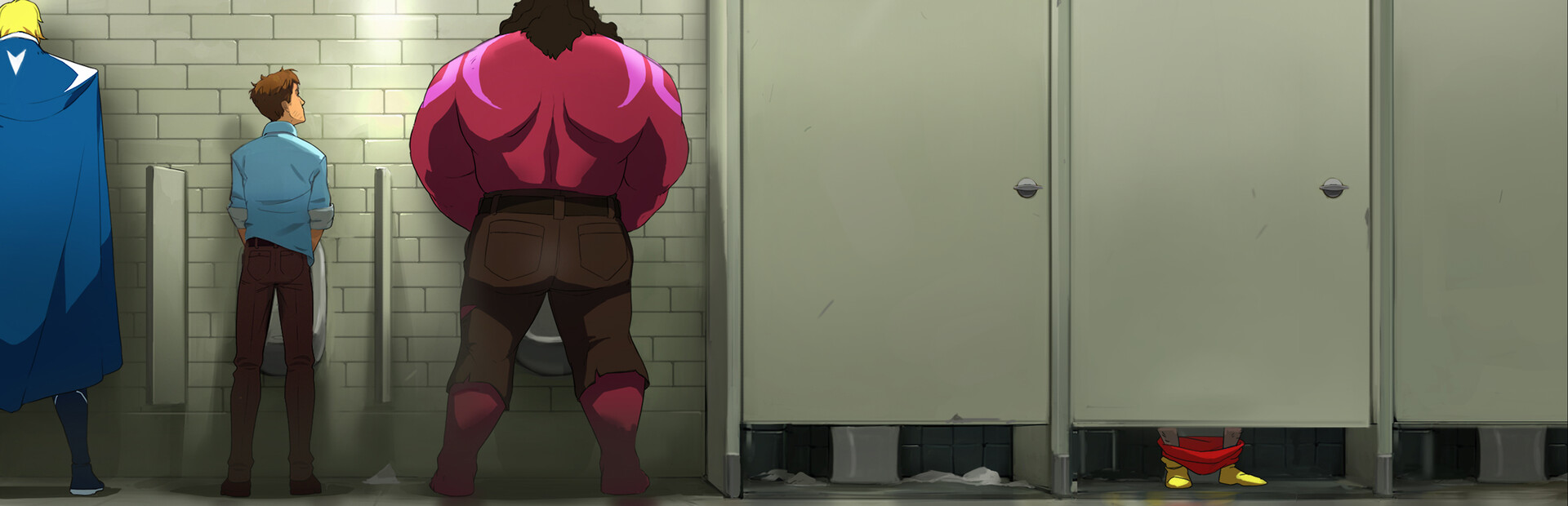
I came into Dispatch with calibrated skepticism. Interactive narrative games live or die on writing quality, and the Telltale alumni angle felt like marketing bait. Twenty minutes into episode one I stopped taking notes and just watched. That does not happen often. The setup puts you behind the desk rather than in the field. Robert Robertson III, voiced by Aaron Paul, is a powerless third-generation Mecha Man whose suit has just been destroyed and whose father is freshly dead at the hands of the villain Shroud. He ends up running the Z-Team, the worst-performing squad at the Superhero Dispatch Network, composed entirely of reformed criminals. The actual dispatching mechanic is the strategy layer that separates this from a pure visual novel: you read incoming emergency notifications on a city map, cross-reference your heroes against five core stat categories (Defense, Mobility, Charisma, Intelligence, and Attack), and assign the best fit. Heroes can get injured on failed missions, reducing their effectiveness until they recover, and sending too many out simultaneously leaves you short-handed when the next wave of calls lands. It plays closer to something like This Is the Police than any traditional Telltale title, and the loop genuinely tightens as later episodes layer in hero training, unlockable synergies between team members, and a hacking minigame that mixes up the rhythm without overstaying its welcome. The common criticism that the dispatching segment is the "vegetables before dessert" simply does not hold by episode four. The character work is what earns the 98% Steam approval. Each Z-Team member, Invisigal, Golem, Malevola, Punch Up, Sonar, Blonde Blazer, and the rest, arrives as a type and then quietly dismantles it. Matching the wrong hero to a hostage situation does not just produce a failure screen; it strains a specific relationship and forces a follow-up choice between the company's reputation and a friendship you have been building for hours. Choices do not wildly rewrite the main arc, but they reshape relationships, background events, and the shape of the ending. The voice cast is stacked, pulling from Critical Role (Laura Bailey, Matthew Mercer, Travis Willingham) alongside Aaron Paul and Jeffrey Wright, and even the internet-personality hires (JackSepticEye as Punch Up, MoistCr1TiKaL as Sonar) hold their weight. One legitimate criticism worth flagging: a scene late in episode seven involving Invisigal sparked real community pushback over the framing of a romantic encounter, and AdHoc patched the conditional logic in response. The studio's transparency in addressing it was reasonable, but prospective players should know the game carries mature content toggles in the main menu for a reason. For anyone wondering whether the mechanical depth justifies a second playthrough, the answer is yes, but with context. The story branches produce meaningfully different relationship outcomes and ending conditions rather than wholesale new plot lines. The dispatching system lacks a standalone endless mode, which several players have flagged as a missed opportunity given how solid the loop is. What the game absolutely nails is accessibility. The tutorial is woven into Robert's SDN job interview, which is the cleverest onboarding design I have seen in a management-adjacent title in years. There is no wall of tooltips, no separate tutorial mode. You learn by doing, and failure is narratively absorbed. Anyone who bounces off strategy games because of front-loaded complexity should note that the stat system here reveals itself incrementally across eight episodes totaling roughly five to eight hours, not in a first-session information dump. Dispatch is a complete package now, all episodes out, no waiting required. The animation holds up as genuinely premium, the music playlist is unusually well-curated, and the writing punches well above the genre average. It is not mechanically deep enough to satisfy players chasing a pure strategy experience, and anyone wanting the radical branching of old-school CRPGs will hit ceilings. But as a piece of authored interactive entertainment with a real management hook underneath, very little released alongside it comes close.

Strategy & simulation
Tags
System Requirements
Minimum
- OS
- Windows 10 (64-bit) or later
- Memory
- 2 GB RAM
- DirectX
- Version 11
- Storage
- 15 GB available space
- Graphics
- NVIDIA GeForce GTX960 / AMD Radeon RX560
- Processor
- Intel(R) Core(TM) i5-6402p CPU / AMD Ryzen 5 1600 or higher
- Sound Card
- DirectX compatible
Recommended
- OS
- Windows 10 (64-bit) or later
- Memory
- 16 GB RAM
- DirectX
- Version 11
- Storage
- 15 GB available space
- Graphics
- NVIDIA GTX 1050 / AMD Radeon RX 580
- Processor
- Processor: Intel(R) Core(TM) i5-7400 CPU / AMD Ryzen 5 2600 or higher
- Sound Card
- DirectX compatible
Keep exploring
Community Discussion
Be the first to comment on Dispatch.
Reviews & Ratings
Game Info
- Developer
- AdHoc Studio
- Publisher
- AdHoc Studio
- Release Date
- Oct 22, 2025

