Die After Sunset
A cartoony third-person roguelite that has one genuinely clever trick up its sleeve - but whether that trick carries five levels in a single sitting is the real question.
GamerScout Verdict
Worth a discounted pick-up for roguelite completionists, but don't expect the power-curve rush that defines the genre's best.
Compare Prices(7 stores)
Every store in this table quotes us in euros, so the EUR figure is the price the seller actually set, not our arithmetic — which is why EUR is also the currency we rank in. We only list an offer here when the store gives us its price in euros, so nothing in this table is a number we invented.
Pick USD, PLN, GBP, CAD or AUD in the header and we convert from EUR at the European Central Bank reference rate — converted amounts are prefixed with ~. Your bank or the store may apply a different rate at checkout. We never hide offers based on where you are: everyone sees this whole table.
We may earn a commission when you buy games through links on this page — at no extra cost to you. It never affects our rankings or verdicts.
Price History
Screenshots & Media
About Die After Sunset
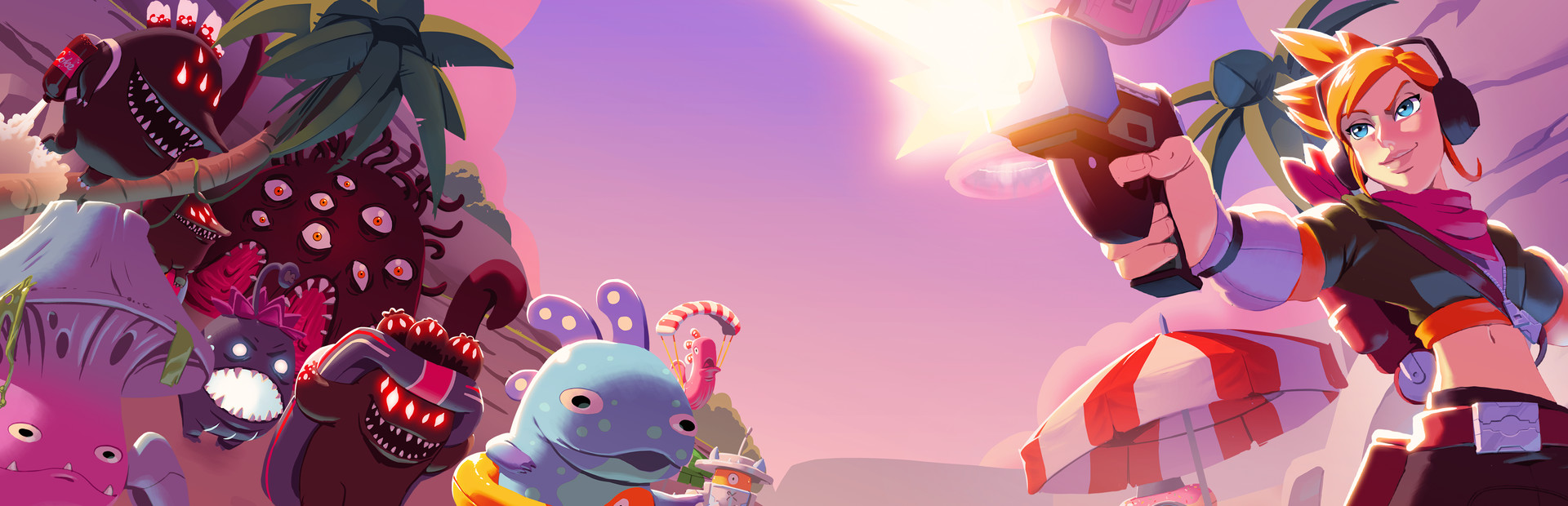
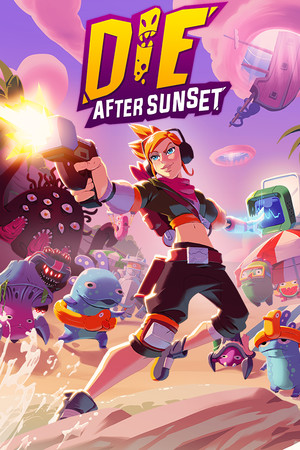
My honest first reaction to Die After Sunset was one of cautious curiosity. Barcelona-based studio Playstark built something around a central mechanic that is quietly inspired: the alien Murkors are goofy, pool-noodle-waving cartoon creatures in direct sunlight, but the moment they step into shadow they darken, bulk up, and become genuinely threatening. That light-and-dark tension shapes how you move through each level, keeps your eyes on the environment rather than just the minimap, and gives the whole thing a sense of personality that the rest of the game sometimes struggles to match. The loop itself is tightly timed. You drop into one of five stages - the opening is set on Waikiki Beach, which tells you exactly what kind of tone to expect - and a countdown clock governs how long you have before a colossal boss materializes. Spend that window wisely: complete randomized mini-quests (stopping Murkors from stealing swimwear, rotating mirrors to direct a beam onto an idol, defending a generator from incoming waves), earn star ratings on each one, and crack open reward chests that offer a mix of health, shield, damage, or light stat upgrades alongside drones, turrets, grenades with varying effects, and oddball gadgets. Between runs, the Mukus currency you farm - literally named after a bodily secretion, which is very much a design choice - feeds a meta-progression tree with permanent unlocks like faster dodges, double jumps, and item vending machines. The three playable characters each carry distinct loadouts: April brings a pistol and charge shot, Rido packs a machine gun with a cyborg kick, and Hune is a Murkor experiment gone wrong with his own quirks to discover. Here is where the warmth I want to extend runs up against some genuine friction. The control feel is the most consistent complaint across virtually every review the game received at launch - aiming is floaty, aiming while rolling is awkward, and at launch April famously held machine guns sideways. Movement is fast but described by multiple outlets as lacking weight. The quest objectives are often under-explained: you arrive at an event marker and the title of the quest is roughly all the guidance you get, which means early runs are partially a tutorial in reading the game's own shorthand. The requirement to complete all five stages in a single run before any progress locks in is a significant commitment for a roguelite that, honestly, does not yet generate the kind of escalating power-fantasy momentum that makes a Hades or a Risk of Rain 2 feel compulsive. Critics who spent time with it noted that the power-up stacking never quite tips into the delirious overpowered feeling that the best games in this genre chase. Steam users have landed the game at a mixed rating (roughly 62% positive from a modest sample), and that split feels about right. What does work: the visual palette is vibrant without being exhausting, the stage geography rewards exploration with height variation and hidden chests tucked into dark caves, and the sound design escalates meaningfully when a boss arrives - the audio gets louder and more intense at exactly the right moment, which is a small but smart choice. For players who already love the roguelite rhythm and want something lighter in tone and shorter in individual session length than the genre heavyweights, Die After Sunset occupies a real niche. It is not a game trying to reinvent anything. It is a modestly-budgeted indie with one strong central idea that asked for more polish time than it received.

Indie & narrative
Tags
System Requirements
Minimum
- OS
- Windows 7 SP1+, Windows 8 and Windows 10
- Memory
- 8 GB RAM
- Storage
- 3 GB available space
- Graphics
- Nvidia GTX 650-Ti / AMD Radeon HD 7790
- Processor
- Intel® Core™ i5-4460, 3.20GHz / AMD FX™-6300
- Sound Card
- DirectX compatible sound card
Recommended
- OS
- Windows 7 SP1+, Windows 8 and Windows 10
- Memory
- 8 GB RAM
- Storage
- 3 GB available space
- Graphics
- GeForce GTX 1060 6GB / AMD RX 480 4GB
- Processor
- Intel(R) Core(TM) i5-6400 CPU @ 2.70GHz / AMD FX-8350
- Sound Card
- DirectX compatible sound card
Keep exploring
Community Discussion
Be the first to comment on Die After Sunset.
Reviews & Ratings
No ratings available
Game Info
- Developer
- Playstark
- Publisher
- PQube
- Release Date
- Aug 17, 2023