
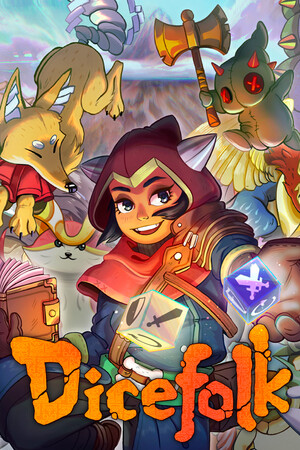
Dicefolk
If the deckbuilder roguelite grind has worn you down, Dicefolk's twist of handing you control over both sides of the battlefield is the shot of fresh strategy the genre desperately needed.
GamerScout Verdict
Strong pick for tactics fans who want a compact, mechanically original roguelite with real decision depth per turn.
Compare Prices(10 stores)
Every store in this table quotes us in euros, so the EUR figure is the price the seller actually set, not our arithmetic — which is why EUR is also the currency we rank in. We only list an offer here when the store gives us its price in euros, so nothing in this table is a number we invented.
Pick USD, PLN, GBP, CAD or AUD in the header and we convert from EUR at the European Central Bank reference rate — converted amounts are prefixed with ~. Your bank or the store may apply a different rate at checkout. We never hide offers based on where you are: everyone sees this whole table.
We may earn a commission when you buy games through links on this page — at no extra cost to you. It never affects our rankings or verdicts.
Price History
Screenshots & Media
About Dicefolk
I have a spreadsheet of every roguelite that has genuinely changed how I think about turn-based combat, and Dicefolk just made it onto that list. The core conceit sounds almost too simple to matter: instead of a card deck, you build and customize a set of dice, and instead of just managing your own team's moves, you also sequence your opponent's dice before each turn ends. That second part is where the real thinking happens. You are not just planning your chimera's actions, you are orchestrating the entire round, deciding whether to trigger the enemy's heavy attack before or after you rotate your shielded chimera to the lead position, or whether to bait a clash-attack result so your counter-passive fires at the right moment. It rewards the kind of layered thinking strategy fans live for, and it does it inside a run that can clock in at around 30 minutes. The three-chimera squad structure drives most of the decision-making outside of battles. You start each run with three straw-doll placeholders and gradually swap in chimeras pulled from shrine encounters, which offer a choice of three at a time, forcing you to weigh your current dice faces against what the new recruit actually does. There are over 100 hand-drawn chimeras in the pool, ranging from tanks that absorb punishment to fast attackers that punish rotation moves. Each one carries a passive ability that triggers off specific conditions, such as entering or leaving the leader slot, surviving an enemy attack, or reaching the end of a round. Building a trio whose triggers chain cleanly is the game's equivalent of finding a broken card combo in a deckbuilder, and it is deeply satisfying when it clicks. The talisman system, with Warrior, Storm, Wrath, and Pain options, shapes which chimeras populate your run and gates access to Trial Mode and the game's real ending, which gives progression-hunters a meaningful target beyond just finishing one loop. On top of chimera selection, you can craft new faces onto your dice, purchase additional dice with gold, equip individual chimeras with gear for passive stat bonuses, use goblin-fruit that punishes you mid-run but pays off at combat's end, pop single-use tokens for heals or debuffs, and chew Broodberries for permanent stat gains. That is a lot of interlocking systems for a game that visually reads as casual. The presentation is honest about its budget: flat, flash-game-adjacent art, sparse animation, and a soundtrack that serves atmosphere without being memorable. None of that should put you off. The developers clearly allocated their effort where it counts, which is the combat engine. The fair criticisms land in two places. First, chimeras do not grow or evolve during a run. They arrive fully formed, which makes them feel more like tools you slot in than creatures you invest in. Fans of monster-collector progression will feel that absence. Second, loot variety gets thin across extended play. Some reviewers and community members have flagged that item pools repeat noticeably, and that talisman runs start to blur together once you have cleared the game with each one. Runs are short enough that individual sessions stay punchy, but players chasing long-term depth comparable to Slay the Spire's daily challenge ecosystem may find the ceiling comes sooner than expected. Trial Mode modifiers help, but only so much. For strategy players who want something compact, genuinely novel at the mechanical level, and approachable without being trivial, Dicefolk is a confident recommendation. The first run will feel baffling for about five minutes, then the sequencing logic will click and you will spend the next hour mentally replaying every move order. That is exactly where I want a roguelite to put its weight.

Strategy & simulation
Tags
System Requirements
Minimum
- OS
- Windows 10 x64
- Memory
- 8 GB RAM
- DirectX
- Version 11
- Storage
- 500 MB available space
- Graphics
- HD Graphics 515
- Processor
- Intel Core i5-7200U
Recommended
- OS
- Windows 10 x64
- Memory
- 8 GB RAM
- Storage
- 500 MB available space
- Graphics
- Radeon HD 6570
- Processor
- Intel Core i5-3570K
DLC & Add-ons for Dicefolk1
Expansions, DLC packs and add-on content for this game. Click any item to see store offers.
Keep exploring
Community Discussion
Be the first to comment on Dicefolk.
Reviews & Ratings
No ratings available
Game Info
- Developer
- LEAP Game Studios
- Publisher
- Good Shepherd Entertainment
- Release Date
- Feb 27, 2024