
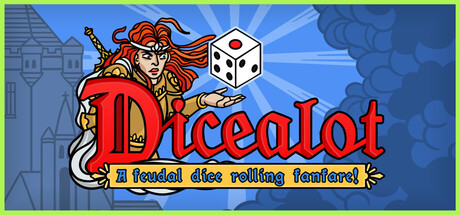
Dicealot
Farkle's 400-year-old push-your-luck DNA gets a roguelike overhaul in Camelot - genuinely compelling in short bursts, but the RNG ceiling will frustrate anyone expecting Slay the Spire levels of agency.
GamerScout Verdict
Best for players who want a chill but tense 20-minute roguelike loop and can stomach variance-heavy runs over deep build crafting.
Compare Prices(8 stores)
Every store in this table quotes us in euros, so the EUR figure is the price the seller actually set, not our arithmetic — which is why EUR is also the currency we rank in. We only list an offer here when the store gives us its price in euros, so nothing in this table is a number we invented.
Pick USD, PLN, GBP, CAD or AUD in the header and we convert from EUR at the European Central Bank reference rate — converted amounts are prefixed with ~. Your bank or the store may apply a different rate at checkout. We never hide offers based on where you are: everyone sees this whole table.
We may earn a commission when you buy games through links on this page — at no extra cost to you. It never affects our rankings or verdicts.
Price History
Screenshots & Media
About Dicealot
I sat down with Dicealot expecting a lightweight dice toy and walked away a dozen hours later having unlocked maybe half the weapon roster, still replaying Act 1 more than I'd like to admit. The core is a modernised take on Farkle - a folk dice game older than most strategy franchises I cover - translated into a turn-based roguelike structure where you roll six dice per turn, lock scoring combinations, and then decide whether to bank your damage or keep rolling for bigger combos at the risk of a Farkle: a total wipeout that hands the initiative straight back to the enemy. That single decision, repeated hundreds of times per run, is where all of Dicealot's tension lives. The strategic layer comes from three item categories you build between fights. PWR dice replace faces on your rolling pool and can skew your odds toward fives and ones - the two numbers that let you keep a turn alive even without a proper combo. Quest Dice, which function roughly like Balatro's Jokers, are rolled at the start of each encounter and apply modifiers for the whole fight: multipliers, bonus scoring conditions, the occasional punishing debuff if luck turns against you. Vassals are passive boons covering health, gold, and combat buffs. Holding a full six-dice scoring hand triggers a Rollover, letting you re-roll the entire pool and extend your turn indefinitely if probability keeps cooperating. When a Quest Dice multiplier synergises with back-to-back Rollovers, the damage numbers get absurd in the best way. The game also offers ten weapons as starting loadouts, each nudging the reroll count, starting dice composition, and available quest line - enough variation to feel meaningfully different across runs even if the structural depth isn't quite at deckbuilder levels. Here is where the strategy-focused part of my brain ran into a wall. Dicealot sits closer to the luck end of the luck-versus-skill slider than I prefer. Enemies deal damage through their own die rolls each turn, and outside of a couple of defensive mechanics, that incoming damage is largely unavoidable. Route selection at the start of each Act provides some agency over which enemies and bosses you face, and shops between encounters let you refine your build, but the Act structure itself is light on variety. Reviewers across the board noted that the route options feel thin quickly, and dying at the Act 2 or Act 3 boss means replaying all of Act 1 from scratch with no persistent unlocks carrying over mid-run. For players used to roguelikes with strong meta-progression cushions, the restart loop will sting. The dice physics also drew consistent criticism: the rolling animation can look like a die settles on one face before awkwardly flipping to another at the last second, which makes bad luck feel worse than it probably is. The presentation mostly makes up for those friction points. The art is genuinely charming, the Camelot setting leans into absurdist comedy rather than po-faced fantasy, and the audio feedback on a clean Rollover chain is satisfying. The development team has been actively patching since launch, with multiple updates improving feel in the weeks after release. Steam user reception sits at roughly 78 percent positive, and the Metascore lands around 73, which feels about right: this is a game that earns its audience through atmosphere and pick-up-and-play momentum rather than the kind of systemic depth that rewards spreadsheet obsession. If you need Balatro-tier build complexity, you will find Dicealot too RNG-dependent. If you want a 20-minute run that might accidentally become two hours, the loop is exactly as compelling as the better reviews suggest.

Strategy & simulation
Tags
System Requirements
Minimum
- OS
- Windows 7
- Memory
- 1 GB RAM
- DirectX
- Version 10
- Storage
- 200 MB available space
- Graphics
- 1GB Video Memory
- Processor
- 1.3GH
Keep exploring
Community Discussion
Be the first to comment on Dicealot.
Reviews & Ratings
No ratings available
Game Info
- Developer
- goodviewgames
- Publisher
- Yogscast Games
- Release Date
- Oct 9, 2025