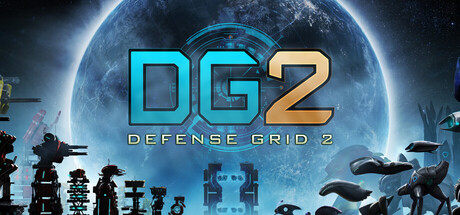
DG2: Defense Grid 2
The tower defense genre has a ceiling, and DG2 has been sitting near the top of it for over a decade. A meaty 21-map campaign, online co-op, PvP, and a full level editor make a strong case for staying installed.
GamerScout Verdict
Best for strategy players who want a deep, replayable tower defense with a genuine skill ceiling and enough modes to stay busy past the campaign.
Compare Prices(8 stores)
Every store in this table quotes us in euros, so the EUR figure is the price the seller actually set, not our arithmetic — which is why EUR is also the currency we rank in. We only list an offer here when the store gives us its price in euros, so nothing in this table is a number we invented.
Pick USD, PLN, GBP, CAD or AUD in the header and we convert from EUR at the European Central Bank reference rate — converted amounts are prefixed with ~. Your bank or the store may apply a different rate at checkout. We never hide offers based on where you are: everyone sees this whole table.
We may earn a commission when you buy games through links on this page — at no extra cost to you. It never affects our rankings or verdicts.
Price History
Screenshots & Media
About DG2: Defense Grid 2
I came into DG2 the same way I approach any competitive game: I wanted to know if there was a skill ceiling worth hitting. Tower defense is not my usual lane, but after about ten hours of building kill corridors and reworking my whole layout after a fast-mover wave blew through my defenses, I had my answer. There is absolutely a skill ceiling here, and it takes real work to reach it. The core loop is straightforward: you place towers, aliens march toward your power cores, you try to route them through as long and lethal a path as possible. What separates DG2 from the generic mobile-port noise is path manipulation. Towers block movement, so smart placement is not just about coverage, it is about architecture. You are building a maze while under fire. The new Boost Tower added in this sequel does no damage on its own, but it acts as a cheap path-blocker and a foundation for other towers, while also unlocking upgrade slots that can strip shields, boost damage range, or auto-detect cloaked enemies. Community opinions are split on whether this addition simplified the game or deepened it. Honest answer: both. It lowers the floor a little but it adds a second layer of build planning that keeps the meta interesting past your first playthrough. The tower roster includes Laser, Concussion, Cannon, Inferno, Meteor, Temporal, Tesla, Gun, and Missile types, each with distinct use cases against the alien variants: fast Racers, shielded units, heavily armored crawlers, and cloaked types. Temporal towers slow enemy movement and stack when overlapped, which is the kind of interaction that rewards map study rather than just raw firepower. Difficulty scales across Easy, Normal, Elite, and Competitive modes. Most of the community agrees that Elite is manageable with the right build, but Competitive is where the real test lives, and leaderboard chasing adds a scoring dimension the campaign alone does not deliver. The one-wave rewind feature (backspace on PC) removes the frustration tax of a bad early placement and keeps experimentation from becoming punishment. Multiplayer is present in both co-op and head-to-head PvP forms, plus local co-op. The PvP side has been criticized for feeling sluggish next to the solo game, and active online lobbies will depend entirely on when you buy in. The DG Architect level editor connects to Steam Workshop, which is the real long-tail answer to content longevity. For veterans who feel the 21 campaign maps run dry, Workshop fills the gap. Visually the game holds up reasonably well for its age, with tower animations that reward zooming in, and a dynamic soundtrack that ramps with wave intensity. The voice acting for the AI cast is a mixed bag, some reviewers loved the eccentric banter between characters like the British AI and the malfunctioning one, others turned it off immediately. The honest knock against DG2 is that it plays more like a refined expansion than a ground-up reinvention. DG1 veterans who valued the juggling meta and tighter tower interdependencies have legitimate gripes. For everyone else, and especially for anyone new to the series, this is a polished, deep, and mechanically honest game that will eat your afternoon without apology. The Aftermath DLC adds a further chapter if you finish the base content and want more.

Shooters
Tags
System Requirements
Minimum
- OS
- Windows 10 or later
- Memory
- 3 GB RAM
- DirectX
- Version 10
- Storage
- 2 GB available space
- Graphics
- DirectX 10 video card manufactured after 2006
- Processor
- Dual core CPU 2.0Ghz or faster
DLC & Add-ons for DG2: Defense Grid 22
Expansions, DLC packs and add-on content for this game. Click any item to see store offers.
Keep exploring
Community Discussion
Be the first to comment on DG2: Defense Grid 2.
Reviews & Ratings
Game Info
- Developer
- Hidden Path Entertainment
- Publisher
- Hidden Path Entertainment
- Release Date
- Sep 23, 2014