Deflector
A tight bullet-hell roguelite from a three-person Barcelona studio where your survival depends entirely on reading the room and sending enemy fire right back where it came from. Worth a look if Hades-style runs feel too passive.
GamerScout Verdict
Best for roguelite players who want a single sharp mechanic to master rather than a wide system to optimize.
Compare Prices(7 stores)
Every store in this table quotes us in euros, so the EUR figure is the price the seller actually set, not our arithmetic — which is why EUR is also the currency we rank in. We only list an offer here when the store gives us its price in euros, so nothing in this table is a number we invented.
Pick USD, PLN, GBP, CAD or AUD in the header and we convert from EUR at the European Central Bank reference rate — converted amounts are prefixed with ~. Your bank or the store may apply a different rate at checkout. We never hide offers based on where you are: everyone sees this whole table.
We may earn a commission when you buy games through links on this page — at no extra cost to you. It never affects our rankings or verdicts.
Price History
Screenshots & Media
About Deflector
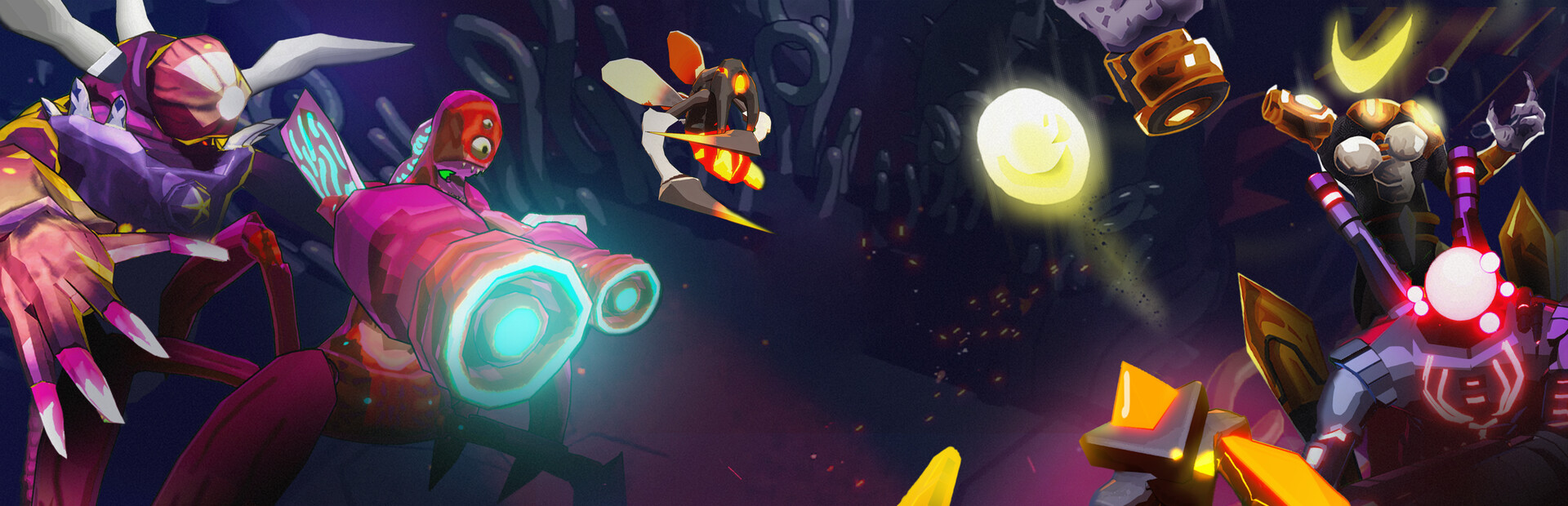
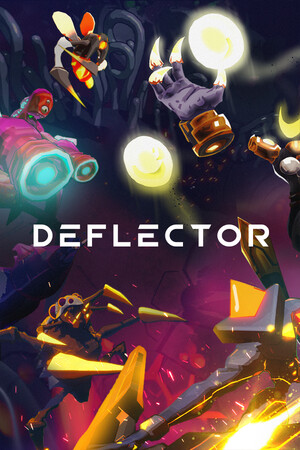
My first hour with Deflector felt like learning a secret handshake under gunfire. The premise is deceptively lean: you are a specimen dropped into a microscopic world overrun by viral organisms, and every room wants you dead. What separates this from a genre-standard twin-stick crawl is the deflection mechanic itself, which sits at the center of every decision you make. Incoming projectiles can be batted back at the enemies who fired them, timed with a single button press, and the margin for error shrinks fast as rooms escalate. It sounds simple and it genuinely is not. Learning which attack colors are deflectable and which ones demand a dash instead becomes the quiet skill floor the game never explicitly teaches you to respect. Once you do respect it, something clicks. The roster of playable Bioshells gives the loop real texture. You start with the Eradicator, a boomerang-slinger who can deflect their own returning weapon for bonus damage, which is as satisfying as it sounds. As you run and die and accumulate DNA through combat, more Bioshells unlock, each built around a different approach to the deflection concept: some lean melee, others stay at range, and the tonal difference between them is large enough that trying a new character genuinely does feel like a fresh angle on the same map. The nonlinear world structure adds to this. Rather than following a fixed path, you pick your route across a room overview board, choosing between healing stops, mutation vendors, and Cell Exchange Rooms depending on how battered you are. It keeps the meta-strategy layer present even when you are not actively in combat. The four biomes, Hollow Hive, Toxic Sea, Living Entrails, and Magnetic Fields, can be tackled in any order, though finishing one stiffens the remaining worlds. That design choice has a real edge to it. Players who rush a single path for familiarity will find subsequent runs punishing in ways that feel deliberate rather than arbitrary. The persistent upgrade system, split between permanent enhancements and run-specific activated mutations like Final Fury (plus 15% damage below 30% health) and Healing Mutation, gives you a steady sense of forward momentum across failed attempts without making the game trivially easier. Alongside the main run mode, Survival Chamber and Virus Strains offer additional structured challenges for players who want to stress-test a build outside the campaign. The heavy metal soundtrack deserves its own mention. It presses on your instincts in all the right ways, upbeat in the hub to let you breathe, and relentless inside hostile zones. The honest critique is that environment variety thins out more than you want it to. Rooms within a biome can start to look alike after several runs, and the visual design, while striking in its neon-against-dark palette, does not disguise repetition particularly well. Some players have noted the loop's motivational pull weakens once the novelty of deflection becomes routine, and that is a fair concern. The story is minimal, more mood and framing than narrative, which is fine, but do not come here expecting lore to carry you. The game lasts roughly nine to ten hours to complete the main path, which by roguelite standards is a reasonable investment without asking too much of your schedule. What Arrowfist built here, as a small first-release studio, is a game with a mechanical identity clear enough to fill a room on its own. It does not chase breadth. It trusts one idea, deflection, and dresses it in enough Bioshell variation and route choice to justify repeated runs. The community reception sits well above average, and the criticism that exists mostly points to pacing fatigue in longer sessions rather than anything broken at the core.

Indie & narrative
Tags
System Requirements
Minimum
- OS
- Windows 7/8/10 (64 bits)
- Memory
- 4 GB RAM
- Storage
- 2 GB available space
- Graphics
- 2 GB, GeForce GTX 660/Radeon R7 370
- Processor
- CPU: Intel Core i3-2125 (3.3 GHz)/AMD FX-4100 (3.6 GHz)
Recommended
- OS
- Windows 7/8/10 (64 bits)
- Memory
- 8 GB RAM
- Storage
- 2 GB available space
- Graphics
- 2 GB, GeForce GTX 760/Radeon R9 280
- Processor
- Intel Core i7-3820 (3.6 GHz)/AMD FX-8350 (4.0 GHz)
Keep exploring
Community Discussion
Be the first to comment on Deflector.
Reviews & Ratings
No ratings available
Game Info
- Developer
- Arrowfist Games
- Publisher
- SuperGG.com
- Release Date
- Mar 24, 2023