Deck of Haunts
Playing as the haunted house rather than the victim is exactly the premise deckbuilder fans have been waiting for, though RNG variance and thin late-game depth mean this mansion has a few rooms still under construction.
GamerScout Verdict
Strong pick for deckbuilder fans who enjoy villain-side strategy, but RNG-dependent card draw and shallow late-game variety cap its staying power.
Compare Prices(8 stores)
Every store in this table quotes us in euros, so the EUR figure is the price the seller actually set, not our arithmetic — which is why EUR is also the currency we rank in. We only list an offer here when the store gives us its price in euros, so nothing in this table is a number we invented.
Pick USD, PLN, GBP, CAD or AUD in the header and we convert from EUR at the European Central Bank reference rate — converted amounts are prefixed with ~. Your bank or the store may apply a different rate at checkout. We never hide offers based on where you are: everyone sees this whole table.
We may earn a commission when you buy games through links on this page — at no extra cost to you. It never affects our rankings or verdicts.
Price History
Screenshots & Media
About Deck of Haunts
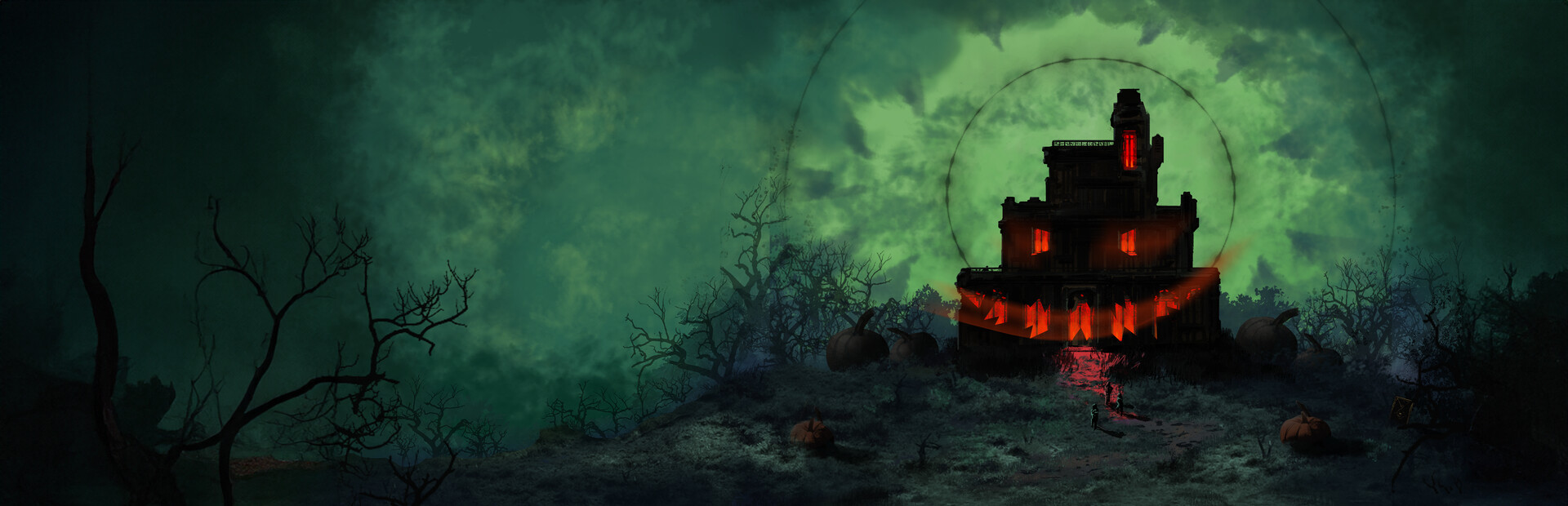
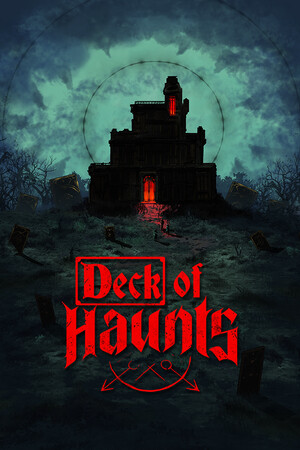
I sat down with Deck of Haunts expecting a novelty act, the kind of concept-first indie that burns bright for one run and then gets shelved. Forty minutes later I was genuinely stressed about a stone mason beelining for my heart room on night nineteen, juggling a hand of tension cards and trying to decide whether to lock a corridor or teleport the intruder into a dead-end thorn room. That opening hook is real, and it earns its spot on the wishlist of anyone who ever played Dungeon Keeper and wished the dungeon itself could fight back. The structure is clean enough to explain in thirty seconds but layered enough to reward reading tooltips carefully. Each run covers 28 nights. During daylight you spend essence, the currency harvested from defeated intruders, to expand the mansion by placing base rooms (kitchens, guest rooms, living rooms) and then upgrading those tiles into specialized chambers: mechanical rooms that add heart health, thorn rooms that passively chip intruders, sacrificial rooms that let you burn a card for a boost. At night, investigators file in through the front door and navigate toward your heart room, the literal beating organ that serves as your health pool at eight hit points. You counter them with action points spent on haunt cards pulled randomly from your deck. Cards split into four broad types: damage cards that cut physical health, drain cards that erode sanity, tension cards that multiply the damage sanity attacks deal, and building cards that reinforce rooms mid-haunt. Some cards only fire when a target is alone, so splitting groups apart, or letting one investigator sprint ahead of the pack, is a valid and satisfying tactical line. Stone masons skip the wandering entirely and arrow straight to the heart, forcing you to pivot from offense to corridor control fast. The deck-building layer is where the game earns its replay value but also where its ceiling shows. There are four starting decks to choose from, a balanced damage-and-sanity mix for beginners and pure-damage or pure-sanity builds that ramp investigator stats in exchange for build specialization. Additional decks unlock after completing runs. The roguelite retention loop, where your house and existing deck carry over between runs so each attempt starts marginally stronger, is sensible design that respects the player's time. The trouble is that card acquisition inside a run is purely random, and the pool is not deep enough to consistently produce the synergies the game implicitly promises. Runs can feel identical after the first ten nights, and critics at the mixed end of the reception range noted that the lack of a pre-run deck customization layer means you are often reacting to what the RNG allows rather than executing a plan you built. The optimal room layout also tends to collapse toward compact grids rather than sprawling gothic wings, which undercuts the mansion-building fantasy a little. Where the game genuinely differentiates itself from genre competition is atmosphere and legibility. The 3D isometric view of the house as both board and character is quietly brilliant. Watching investigators choose doors, split up, and regroup reads like a miniature horror film playing out on a tabletop, and because the card names and effects map directly to recognizable horror tropes, Chilling Cold, Oikophobia, Shifting Hallways, the learning curve is far shallower than the genre average. A new deckbuilder player who has seen one horror movie will understand what their cards do without needing a wiki. The developer has also been active post-launch with patches addressing balance, UI improvements including better human sorting and a fog-of-war effect on unexplored rooms, and new curated scenario missions. Steam user sentiment sits at 84 percent positive across over a thousand reviews, which is a healthier signal than the mixed critical consensus suggests. The honest verdict for strategy-minded players: this is not Slay the Spire depth, and it is not Dungeon Keeper breadth. It is a tightly scoped, thematically sharp roguelite that runs well, teaches itself quickly, has a Workshop for community content, and receives ongoing developer attention. The RNG-heavy card draw will frustrate players who want to feel in control of every run outcome, and the mansion-building freedom is narrower than the aesthetic implies. But as a session game for evenings when you want something spooky and tactically satisfying without a 200-hour commitment, it delivers that loop reliably.

Strategy & simulation
Tags
System Requirements
Minimum
- OS
- Windows 10
- Memory
- 8 GB RAM
- Storage
- 2 GB available space
- Graphics
- 3GB VRAM
- Processor
- 2.3 GHz
Keep exploring
Community Discussion
Be the first to comment on Deck of Haunts.
Reviews & Ratings
No ratings available
Game Info
- Developer
- Mantis
- Publisher
- DANGEN Entertainment
- Release Date
- May 7, 2025