Decarnation
Six hours inside a Parisian cabaret dancer's fracturing psyche, rendered in pixel art so expressive it made me flinch at a still frame. Psychological horror this intentional deserves your full attention and the lights off.
GamerScout Verdict
Unmissable for psychological horror fans who prioritize story and atmosphere over mechanical depth, with a soundtrack that will haunt you after credits roll.
Compare Prices(6 stores)
Every store in this table quotes us in euros, so the EUR figure is the price the seller actually set, not our arithmetic — which is why EUR is also the currency we rank in. We only list an offer here when the store gives us its price in euros, so nothing in this table is a number we invented.
Pick USD, PLN, GBP, CAD or AUD in the header and we convert from EUR at the European Central Bank reference rate — converted amounts are prefixed with ~. Your bank or the store may apply a different rate at checkout. We never hide offers based on where you are: everyone sees this whole table.
We may earn a commission when you buy games through links on this page — at no extra cost to you. It never affects our rankings or verdicts.
Price History
Screenshots & Media
About Decarnation
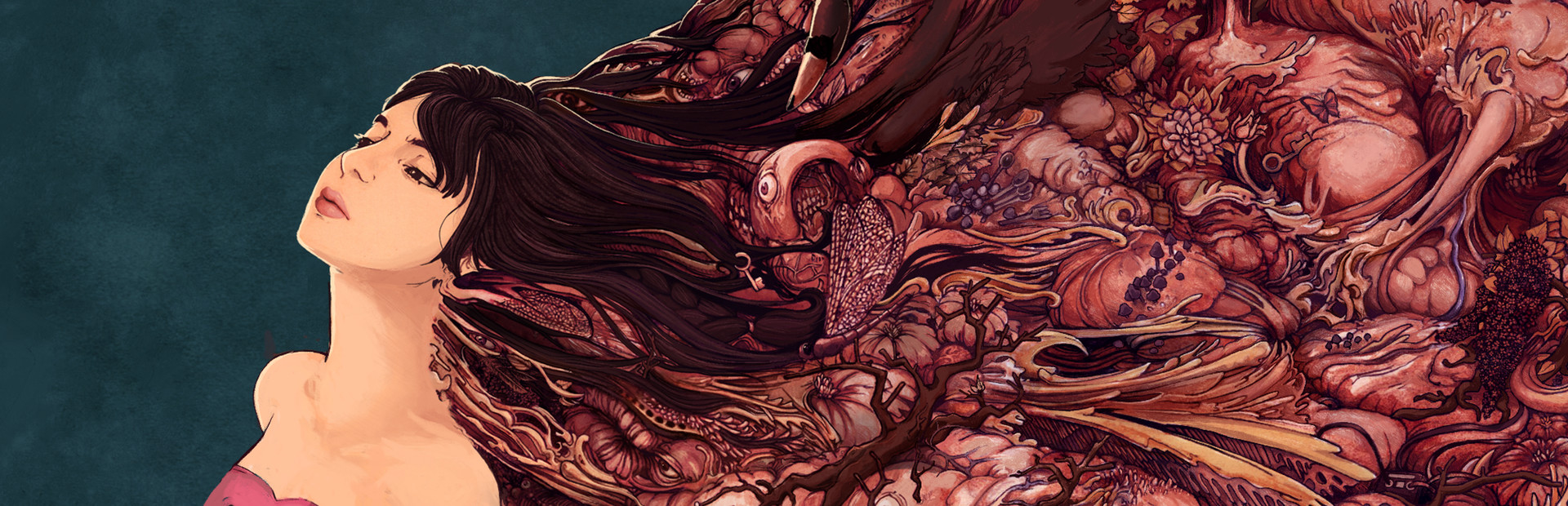
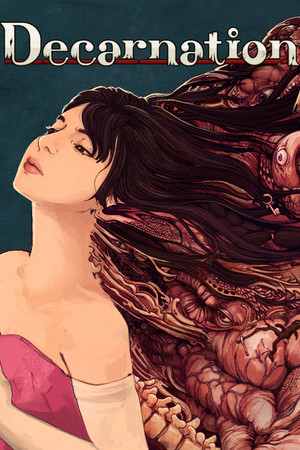
I went in expecting competent indie horror. What I got was Atelier QDB holding a mirror up to Gloria, a cabaret dancer in 1990 Paris whose life is quietly disintegrating before something far worse pulls her under, and refusing to look away. The setup is grounded and specific: a relationship fraying, a career being quietly retired, a sculptor who treats her body like property. Then a wealthy patron makes an offer, and the game opens up into one of the most unsettling inner landscapes I have spent time inside. Let me be clear about what kind of game this is, because the genre label "action adventure" is doing a lot of flattering work here. Decarnation is closer to an interactive psychological horror story than a mechanical experience. You explore environments from an isometric view, trigger conversations that carry the narrative, and occasionally step into one of over fifteen distinct gameplay interludes. There are rhythm minigames tied to Gloria's cabaret performances, cryptic puzzles, stealth segments, QTE sequences, and even a moment where the only way to silence a cruel inner voice is to hold it underwater. The combat, when it arrives, has Gloria scream at her enemies, a piece of symbolic design that lands harder than any weapon system could. The honest critique is that not all fifteen gameplay modes earn their place. A handful feel like speed bumps rather than story extensions, and some minigames repeat past their welcome. The stealth segments in particular drew criticism from multiple reviewers and I share the frustration. But the best of these interludes pull off something genuinely rare: they make the mechanic inseparable from what Gloria is feeling in that moment. Visually, this is where Atelier QDB earns every word of praise. The pixel art style uses enlarged, expressive character heads that read as uncanny and emotionally precise at once. The real-world Paris sections are warm and recognizable; step into Gloria's nightmare sequences and the palette corrodes into something Lovecraftian, Cronenbergian, and distinctly its own. Environments shift to reflect her mental state without announcing it, and the monster designs carry symbolic weight rather than functioning as pure scare delivery. The game draws openly from Satoshi Kon's Perfect Blue, David Lynch, and body horror traditions from Cronenberg to Junji Ito, but it synthesizes those influences into something with its own center of gravity rather than a checklist of references. The soundtrack deserves its own paragraph. Two distinct halves make up the audio identity here: bittersweet French pop by fleur et bleue that roots you in Gloria's daily life, and ambient horror scoring with contributions from Akira Yamaoka, the composer behind Silent Hill. That pairing sounds unlikely on paper and feels devastating in practice. Yamaoka's pieces are eerie when the walls are closing in and spirited when Gloria needs to push back, always timed precisely to the story's emotional beats. The soundscape alone justifies the six-hour runtime. The game carries a frank content warning covering kidnapping, depression, sexual threat, manipulation, and body horror among other heavy themes. Atelier QDB handles this material with genuine care rather than as shock currency, but prospective players should know exactly where they are being taken before they start. For anyone with tolerance for this territory and an appetite for psychological horror that treats its heroine as a full human being rather than a vessel for scares, Decarnation is a small game that asks large questions and mostly answers them with grace. The gameplay rough edges are real, but they do not undo what the writing, art, and sound build together.

Indie & narrative
Tags
System Requirements
Minimum
- OS
- Windows Vista/7/8/10
- Memory
- 1 GB RAM
- Storage
- 2 GB available space
- Graphics
- Must support OpenGL 2.1 or higher. Intel HD 3000 or better
- Processor
- 1.7+ GHz or better
Keep exploring
Community Discussion
Be the first to comment on Decarnation.
Reviews & Ratings
No ratings available
Game Info
- Developer
- Atelier QDB
- Publisher
- Shiro Unlimited
- Release Date
- May 31, 2023