
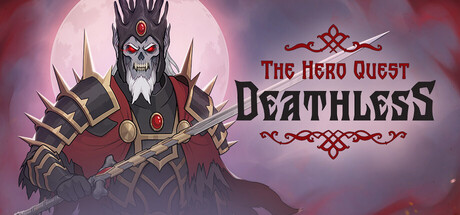
Deathless. The Hero Quest
Slay the Spire scratched an itch but left you wanting fairy-tale dread and war geese? Deathless wraps a tight AP-managed deckbuilder in Slavic folklore and makes every path decision feel like a genuine gamble.
GamerScout Verdict
Confident pick for deckbuilder fans who want positional strategy and a setting that isn't generic fantasy; easier difficulty layers make it newcomer-accessible too.
Compare Prices(7 stores)
Every store in this table quotes us in euros, so the EUR figure is the price the seller actually set, not our arithmetic — which is why EUR is also the currency we rank in. We only list an offer here when the store gives us its price in euros, so nothing in this table is a number we invented.
Pick USD, PLN, GBP, CAD or AUD in the header and we convert from EUR at the European Central Bank reference rate — converted amounts are prefixed with ~. Your bank or the store may apply a different rate at checkout. We never hide offers based on where you are: everyone sees this whole table.
We may earn a commission when you buy games through links on this page — at no extra cost to you. It never affects our rankings or verdicts.
Price History
Screenshots & Media
About Deathless. The Hero Quest
I've logged enough roguelike deckbuilders to recognise when a genre entry is phoning it in versus when it's actually done the design homework, and Deathless. The Hero Quest sits firmly in the second camp. The bones are familiar: action points gate your card plays each turn, you read enemy telegraphed intentions before committing, and after every fight you stand at a branching map node deciding whether the safer swamp route is worth the smaller reward. What separates it is the texture layered on top of all that, starting with one of the most underused mythological settings in games: Slavic folklore. You are fighting revenants, rusalkas, yaga witches, and giant war geese, not yet another orc horde, and the hand-painted art by Roman Papsuev makes every enemy card feel worth reading. The four heroes each carry a distinct mechanical identity, not just a reskinned stat block. Varvara the Fair plays as an agility-and-disruption specialist, using low-cost braid skills and crowd-control to reposition enemies across the 5x2 combat grid. Vasilisa the Wise runs a charge-based Nursemaid system where summoned helpers gain power over time, rewarding patience over aggression. Dobrynya Nikitich is the tanky bogatyr who leans into armor stacking and shield combos. Alyosha rounds things out as a melee-light-magic hybrid that handles varied relic combinations more cleanly than the other three, making him the recommended starting pick for anyone new to the system. Card types break down into Attack, Skill, Boon, and Grace tiers, and the Boon category in particular rewards players who actually read card interactions instead of just slamming damage. Relics add a welcome wrinkle: every relic has a downside attached, so picking the one that boosts your burst damage might also punish you for using consumables. The Dying mechanic is the one genuinely fresh idea in the combat loop. Defeating an enemy does not remove it from the board instantly; the corpse lingers, losing health each turn until it finally disappears. Some heroes can Vanquish the dying foe early for bonus effects, others use the body as a front-row meat shield to block attacks from the enemies behind it. It forces positional thinking that most deckbuilders do not bother with. Enemy telegraphing is also well implemented, every foe shows its next action, which means you can plan turns ahead rather than reacting blindly. The difficulty structure deserves a closer look because it is one of the better-designed onboarding systems in the genre. Cakewalk mode lets absolute beginners learn the card interactions without being punished for suboptimal lines. Hike is the recommended starting point for genre veterans, and completing it on Hike unlocks Feats of Glory, a stackable modifier system that progressively raises stakes, shuffling enemy positions at battle start, removing the Defenseless status from enemies, boosting enemy Vigor on kills, and more. Each Feat layer also improves run rewards, so the difficulty investment pays off mechanically. The Prestige system runs parallel, unlocking additional cards and hero-specific modifiers as you level up to rank 7. Newcomers should not be intimidated; the transparency here is genuinely good. Colored card highlights show playability and bonus conditions at a glance, tooltips are informative, and the map always marks story-critical nodes clearly. Where the game pulls its punches slightly is on narrative presentation and late-run balance. The Lore Corner collects bestiary entries and relic descriptions that fill in the world of Belosvet piece by piece, but there is no voice acting, and the story beats land with less impact than the visual design deserves. The final boss, Koschey the Deathless, is a notable spike above the rest of the content, borderline its own separate game, which some players will love and others will find discouraging after a long run. Run length sits at 30 to 45 minutes per attempt, which keeps sessions manageable, but seasoned players may find the default difficulty too forgiving before the Feats of Glory system opens up. The Steam community has settled at a Very Positive aggregate, and the post-launch 1.1 update added a new opening cinematic, refreshed victory animations, and a new enemy type, suggesting the developers are not treating the 1.0 release as the finish line. For a turn-based strategy player who wants a deckbuilder with actual positional depth and a setting worth caring about, this is a confident, well-finished package.

Strategy & simulation
Tags
System Requirements
Minimum
- OS
- Windows 10
- Memory
- 4 GB RAM
- Storage
- 2500 MB available space
- Graphics
- 2Gb Video Memory, capable of OpenGL 3.0+ support
- Processor
- Intel Core i3 or AMD FX 83XX
Recommended
Requires a 64-bit processor and operating system
Keep exploring
Community Discussion
Be the first to comment on Deathless. The Hero Quest.
Reviews & Ratings
No ratings available
Game Info
- Developer
- 1C Game Studios
- Publisher
- FOR-GAMES CR LTD
- Release Date
- Dec 12, 2024