
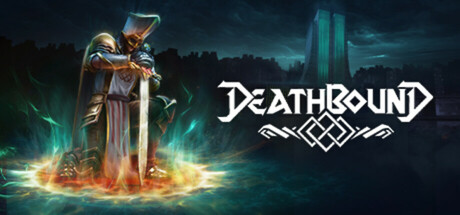
Deathbound
A soulslike that dares to ask what happens when you carry four dead strangers inside your head and have to make them cooperate mid-combat. Rough in places, genuinely original where it counts.
GamerScout Verdict
Worth it for soulslike fans willing to accept imprecise combat in exchange for a party system that actually has something to say.
Compare Prices(9 stores)
Every store in this table quotes us in euros, so the EUR figure is the price the seller actually set, not our arithmetic — which is why EUR is also the currency we rank in. We only list an offer here when the store gives us its price in euros, so nothing in this table is a number we invented.
Pick USD, PLN, GBP, CAD or AUD in the header and we convert from EUR at the European Central Bank reference rate — converted amounts are prefixed with ~. Your bank or the store may apply a different rate at checkout. We never hide offers based on where you are: everyone sees this whole table.
We may earn a commission when you buy games through links on this page — at no extra cost to you. It never affects our rankings or verdicts.
Price History
Screenshots & Media
About Deathbound
My first hour with Deathbound had me doing something I almost never do with a soulslike: stopping mid-fight to think about relationships. Not because the game is sentimental, but because the arrangement of your four Essences in the party slot actually changes how they perform. Pair a Church of Death zealot next to a Cult of Life heretic and they fight each other as much as the enemy. Pair warriors who shared beliefs in life and they buff each other in death. That friction, baked right into party composition, is the hook that makes Trialforge Studio's debut worth talking about. The setup is this: you play as Therone, a sword-and-shield officer for the Church of Death, sent into the ruins of Akratya on a crusade that goes immediately and fatally sideways. What follows is a game set in a post-apocalyptic world that disguises itself as dark fantasy. The city of Akratya is built on the bones of sports stadiums and parking garages, brutalist concrete draped in medieval iconography. It is a strange, genuinely interesting setting that reviewers have noted feels under-explored, the level design running linear and corridor-tight rather than letting the world breathe. That contrast between a rich fiction and a constrained map is probably the game's most recurring frustration. On the combat side, Deathbound spreads its mechanics across its cast the way a proper RPG would spread them across classes. Parrying belongs to one Essence, backstabbing to another, spells to a third. You switch between them with a button press, even mid-dodge and mid-attack, and idle characters slowly recover health while the active one takes damage. A shared sync meter builds during fights, and when it fills you can trigger a Morphstrike that combines the whole party's force into a single, cathartic blast. That is, genuinely, a satisfying system when it clicks. The problem is the surrounding combat, which multiple reviewers and a Steam rating sitting at roughly 70 percent positive agree is sluggish and imprecise, with hitboxes that occasionally embarrass the otherwise decent character animations. The combined health-and-stamina bar is a clever design choice, making low-health moments genuinely desperate, but it also means a bad ambush can spiral into a frustrating loop fast. Narrative attention is where the game earns its warmest coverage. Each Essence comes with their own backstory, introduced in brief cutscenes, and the way those histories intersect turns out to matter. Characters who knew each other in life bicker or support accordingly once they share a skull, and that interpersonal texture gives the party system a meaning most soulslike character builds simply do not have. The voice acting is divisive, ranging from convincing to clearly rushed depending on the character, but the writing behind the lines holds up. The ambient soundscape, heavy on eerie industrial groans and the silence of a dying city, does quiet atmospheric work throughout. Deathbound comes from a 20-person Brazilian studio, and the ambition-to-team-size ratio is visible in the cracks: some wayward hitboxes, the occasional unclear path forward, bosses that require character-switching to unlock in ways the game does not always signal clearly. But the concept earns its bruises. This is a studio that looked at the soulslike genre and asked a structural question rather than just repainting the surface. For players who care about that kind of creative risk-taking, those rough edges are negotiable. For players who need the precision of a FromSoftware title to stay engaged, this will test patience.

Indie & narrative
Tags
System Requirements
Minimum
- OS
- Windows 10 (64 Bit)
- Memory
- 8 GB RAM
- DirectX
- Version 12
- Storage
- 16 GB available space
- Graphics
- Nvidia GeForce GTX 950 or Radeon HD 7970
- Processor
- Intel Core i5 or AMD Ryzen 5
Recommended
- OS
- Windows 10 (64 Bit)
- Memory
- 16 GB RAM
- DirectX
- Version 12
- Storage
- 16 GB available space
- Graphics
- Nvidia GeForce GTX 1060 or AMD RX 580
- Processor
- Intel Core i7 or AMD Ryzen 7
Keep exploring
Community Discussion
Be the first to comment on Deathbound.
Reviews & Ratings
No ratings available
Game Info
- Developer
- Trialforge Studio
- Publisher
- Tate Multimedia
- Release Date
- Aug 8, 2024