
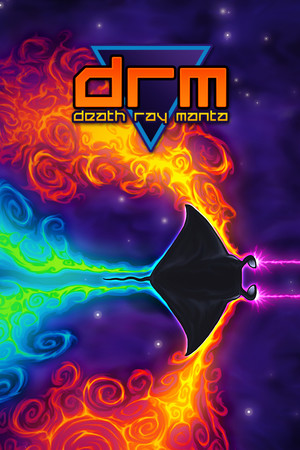
Death Ray Manta SE
If Geometry Wars and a Jeff Minter fever dream had a very small, very sincere child, it would look exactly like this - 32 screens of neon chaos with a synth heart beating underneath.
GamerScout Verdict
Best for arcade purists who want a tight, noisy, synth-soaked score-chaser with no fat and no hand-holding.
Compare Prices(5 stores)
Every store in this table quotes us in euros, so the EUR figure is the price the seller actually set, not our arithmetic — which is why EUR is also the currency we rank in. We only list an offer here when the store gives us its price in euros, so nothing in this table is a number we invented.
Pick USD, PLN, GBP, CAD or AUD in the header and we convert from EUR at the European Central Bank reference rate — converted amounts are prefixed with ~. Your bank or the store may apply a different rate at checkout. We never hide offers based on where you are: everyone sees this whole table.
We may earn a commission when you buy games through links on this page — at no extra cost to you. It never affects our rankings or verdicts.
Price History
Screenshots & Media
About Death Ray Manta SE
I kept coming back to Death Ray Manta SE the way you keep picking at a song you half-remember from a car radio in 1984. The premise is stripped to bone: one manta ray with lasers in its skull, spawned centre-screen, surrounded by mines, robots, laser-spitting foes, and the occasional wandering rabbit. Clear the arena, warp to the next screen, repeat across 32 sequentially ordered stages. There are no upgrades, no unlockable modes, no branching paths. What you get instead is something rarer in modern arcade design - a game that knows exactly what it is and refuses to apologise for any of it. The twin-stick controls are about as immediate as it gets: left stick moves, right stick fires a spread of laser beams that arc out slowly enough to make precise aiming largely unnecessary. Your shots can intercept incoming fire too, which gives the weapon a defensive quality that quietly rewards patience over panic. Each enemy death triggers a burst of multi-coloured pixels and a little text flourish - words of absurdist encouragement that flash and dissolve mid-battle. These messages are pure handcraft, the kind of personality injection a solo creative sensibility produces when no committee is involved. Collecting space gems before they vanish scores a double-point bonus on that stage, and chasing those while keeping the manta alive is where the tension actually lives. The real design risk - and the thing that will split players - is the visual noise. Neon trails follow every moving object. Destroying obstacles adds particle debris to a screen that already has a lot happening. The colour palette is psychedelic in the old-school sense: brash, flashy, occasionally overwhelming. A few reviewers noted that deaths sometimes feel like the screen swallowed you rather than an enemy outright beat you, and that is a fair criticism. The lack of an online leaderboard stings a little for a game whose entire tension comes from score chasing. But the fixed level order is actually a considered choice: because every screen is the same sequence every run, pattern recognition builds naturally, and what felt chaotic on attempt three starts feeling readable by attempt eight. Mike Daw's synth soundtrack deserves its own sentence. It builds as arenas are cleared, accelerating in lock-step with your confidence, and it is one of the better examples of audio-as-pacing I have heard in this genre. The retrowave production sits somewhere between a Commodore demo scene tape and a John Carpenter score, which for a game about a laser-armed fish in deep space is just about exactly right. The whole experience runs in short, sharp bursts - median playtime data suggests a couple of hours per run-through - which means it fits into a lunch break or a late-night thirty-minute session with equal comfort. It does not try to be a hundred-hour game and that self-awareness is the quietest kind of craft.

Indie & narrative
Tags
System Requirements
Minimum
- OS
- Tested on Windows 7 and above.
- Memory
- 4 GB RAM
- DirectX
- Version 9.0
- Storage
- 100 MB available space
- Graphics
- A recent graphics card, onboard might be dicey.
- Processor
- A processor capable of playing a number of modern games.
- Sound Card
- Any recent onboard sound and up
Keep exploring
Community Discussion
Be the first to comment on Death Ray Manta SE.
Reviews & Ratings
No ratings available
Game Info
- Developer
- The Future Of Videogames
- Publisher
- Thalamus Digital
- Release Date
- Sep 17, 2015