
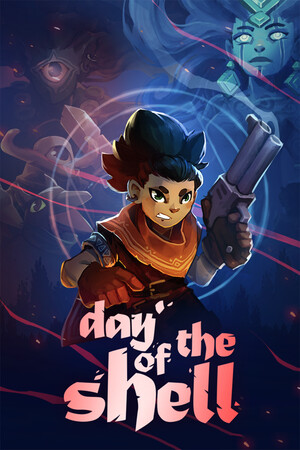
Day of the Shell
XCOM stripped to its skeleton, then given a roguelite heartbeat. One click per turn sounds like a gimmick until positioning kills you on island three.
GamerScout Verdict
Worth a session for tactics fans who want XCOM's tension at half the commitment, but thin content limits replay for roguelite veterans.
Compare Prices(7 stores)
Every store in this table quotes us in euros, so the EUR figure is the price the seller actually set, not our arithmetic — which is why EUR is also the currency we rank in. We only list an offer here when the store gives us its price in euros, so nothing in this table is a number we invented.
Pick USD, PLN, GBP, CAD or AUD in the header and we convert from EUR at the European Central Bank reference rate — converted amounts are prefixed with ~. Your bank or the store may apply a different rate at checkout. We never hide offers based on where you are: everyone sees this whole table.
We may earn a commission when you buy games through links on this page — at no extra cost to you. It never affects our rankings or verdicts.
Price History
Screenshots & Media
About Day of the Shell
My first few runs of Day of the Shell reminded me why I fell into grid-based tactics in the first place: that specific pleasure of reading a battlefield and committing to a move you can't undo. Duper Games, a debut French indie studio out of Montpellier, built their entire design around a single rule. Every action, whether moving one tile or firing your revolver, counts as one turn, and most enemies act roughly every three of your turns. You can track their countdown by hovering over them. It sounds like a simplification, but in practice it compresses XCOM-style cover logic into a rhythm that never lets you coast. Half-cover reduces incoming accuracy, full cover blocks damage entirely until the pillar crumbles, and mud tiles punish greedy repositioning. The moment-to-moment tension is real. The build system runs on Warden's blessings, relics, and runes. Blessings are run-specific modifiers you assemble over a playthrough spanning three biomes of ten-plus islands each, with a boss capping every world. Runes are the permanent meta-layer, bought back at your home island after each death and slowly widening your passive toolkit across attempts. On paper that is a clean, two-tier progression structure that strategy players will recognise immediately. The problem is the pool is thin. After a handful of runs you have seen the majority of what the blessing and relic libraries contain, and the three weapons, revolver, shotgun, and bow, feel more similar than their descriptions suggest due to limited modifiers on top of them. The RNG that governs which blessings appear can strand you with a set that has no synergy, and a lucky early relic can make a run feel trivially easy. Neither outcome reflects your decision-making, which undercuts the tactical premise. Visually, the game is doing something right. The isometric art is colorful and readable in the way tactics games desperately need. Attack percentages, movement ranges, and environmental hazards are all marked with clear, bright cues, so you are never squinting to understand the board state. Reviewers have compared the aesthetic to Bastion, which is fair given the vibrant floating-island backdrops. Audio is mostly solid too, though some players have reported the soundtrack cutting out mid-run, leaving only combat grunts, and there are occasional freezes between turns on certain platforms. For a debut release these are fixable bugs, and the development team has shown responsiveness to community feedback with post-launch updates. Here is where I land on the newcomer question. Day of the Shell is actually a reasonable first tactical roguelite. The one-click rule removes the action-point paralysis that drives beginners away from genre entries like XCOM or Into the Breach, and the tutorial pop-ups are snappy without being condescending. A seasoned player will exhaust the content in roughly six hours; a newcomer will get more mileage simply because learning the cover interactions and blessing combos takes longer when nothing is familiar. Steam's user base sits at a mixed reception, around 69 percent positive from several hundred reviews, and that split is honest: the core is genuinely clever, the surrounding content is just sparse. Day of the Shell is a debut that got the hardest part right. The tactical engine is clean, fast, and more demanding than its interface suggests. What it needs is more of everything around that engine: more enemy archetypes, more blessing variety, more map layouts. If Duper Games keeps updating, this foundation is worth watching. Right now, treat it as a short, sharp tactics fix rather than a deep roguelite you will replay for months.

Strategy & simulation
Tags
System Requirements
Minimum
- OS
- Windows 10
- Memory
- 8 GB RAM
- DirectX
- Version 12
- Graphics
- Nvidia GeForce GTX 1050 or equivalent
- Processor
- Intel Core i5 8300H 2.30GHz or equivalent
Recommended
- OS
- Windows 10
- Memory
- 8 GB RAM
- DirectX
- Version 12
- Graphics
- Nvidia GeForce GTX 1050 or equivalent
- Processor
- Intel Core i5 8300H 2.30GHz or equivalent
Keep exploring
Community Discussion
Be the first to comment on Day of the Shell.
Reviews & Ratings
No ratings available
Game Info
- Developer
- Duper Games
- Publisher
- Goblinz Publishing
- Release Date
- Jul 29, 2025