
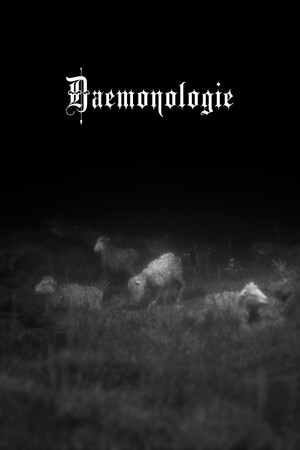
Daemonologie
Thirty minutes to hang someone. You will not be certain you chose correctly. That quiet dread is exactly what Katanalevy intended, and it lands.
GamerScout Verdict
A thirty-minute gut-punch for players who want history to feel like something they did, not something they read.
Compare Prices(8 stores)
Every store in this table quotes us in euros, so the EUR figure is the price the seller actually set, not our arithmetic — which is why EUR is also the currency we rank in. We only list an offer here when the store gives us its price in euros, so nothing in this table is a number we invented.
Pick USD, PLN, GBP, CAD or AUD in the header and we convert from EUR at the European Central Bank reference rate — converted amounts are prefixed with ~. Your bank or the store may apply a different rate at checkout. We never hide offers based on where you are: everyone sees this whole table.
We may earn a commission when you buy games through links on this page — at no extra cost to you. It never affects our rankings or verdicts.
Price History
Screenshots & Media
About Daemonologie
I finished Daemonologie in a single sitting, pushed back from my desk, and sat in silence for a while. That is not a hyperbolic reaction to a half-hour point-and-click. It is a reasonable response to a piece of interactive craft that uses its brevity as a blade. You arrive in a small Scottish village in the late 1600s, dispatched by church authority to root out a witch. Six villagers remain. You have four days to interview them, cross-reference their accusations, and on the fifth morning name your condemned. Simple enough, except the game refuses to hold your hand, the dialogue is written in old Scots that gives every exchange a texture of genuine historical dread, and the people you are interrogating are vivid, contradictory, and frightened in ways that feel real. The core loop is: talk, gather information, cross-reference. But the dialogue tree has a second branch sitting right beside "Talk" at all times, and that branch is torture. The game will eventually force you down it to progress. Katanalevy constructs the torture sequences as grim little minigames where you pull iron clamps from a villager's tongue or crush fingers in a vise, timed by mouse-hold mechanics. They are not fun. They are designed not to be. You perform the cruelty rather than observe it from a cinematic distance, and the discomfort of that gap between "I am playing a game" and "I am doing this" is the entire argument the game is making. The accusation the village levels at itself mirrors what the player levels at themselves by the end. The visual language is scratchy white-on-black hand-drawn pixel art, angular and deliberately raw, like something from an old woodblock print that has survived several floods. Stop-motion nightmare sequences close out each day, faceless figures moving with an unsettling weight through prophetic imagery that is cryptic enough to feel earned rather than cheap. The original soundtrack underscores all of it with something that sits between folk drone and requiem, rarely melodic, mostly textural. It roots the mood without ever trying to explain it. A small developer caring this much about soundscape in a thirty-minute game is the kind of handcraft detail I will go to bat for every time. The legitimate criticism is that the interwoven narratives across multiple playthroughs mean a first run can leave you genuinely uncertain whether your conclusion tracked, and a small number of players have found that ambiguity frustrating rather than fertile. The game does not resolve cleanly. It resolves the way history resolves: someone hangs, you collect payment, you leave. Whether you identified the right person matters less than the process required to identify anyone at all, and players who want a satisfying mystery-box resolution rather than a moral gut-punch may find the ending deliberately withholding. That is a feature, not an oversight. But know what you are walking into. Daemonologie sits in a specific lineage of short folk horror games that use interaction itself as the medium of argument, and it belongs near the top of that shelf. It is a solo developer's serious work that deserves the attention it quietly earned. Take notes as you play. You will want them.

Indie & narrative
Tags
System Requirements
Minimum
- OS
- Windows 10
- Memory
- 8 GB RAM
- Storage
- 600 MB available space
- Graphics
- GeForce GTX 1050 / Radeon RX 560
- Processor
- Intel Core i5-8400 / Ryzen 3 3200G
Keep exploring
Community Discussion
Be the first to comment on Daemonologie.
Reviews & Ratings
No ratings available
Game Info
- Developer
- Katanalevy
- Publisher
- Oro Interactive
- Release Date
- Oct 1, 2024
