Cyber Shadow
One developer, years of obsessive craft, and a cyborg ninja that earns every new trick the hard way. If NES-era difficulty sounds like a feature rather than a warning, pay attention.
GamerScout Verdict
Built for players who treat death counts as a badge and want their reflexes genuinely tested by one of indie's most obsessive solo labors.
Compare Prices(7 stores)
Every store in this table quotes us in euros, so the EUR figure is the price the seller actually set, not our arithmetic — which is why EUR is also the currency we rank in. We only list an offer here when the store gives us its price in euros, so nothing in this table is a number we invented.
Pick USD, PLN, GBP, CAD or AUD in the header and we convert from EUR at the European Central Bank reference rate — converted amounts are prefixed with ~. Your bank or the store may apply a different rate at checkout. We never hide offers based on where you are: everyone sees this whole table.
We may earn a commission when you buy games through links on this page — at no extra cost to you. It never affects our rankings or verdicts.
Price History
Screenshots & Media
About Cyber Shadow
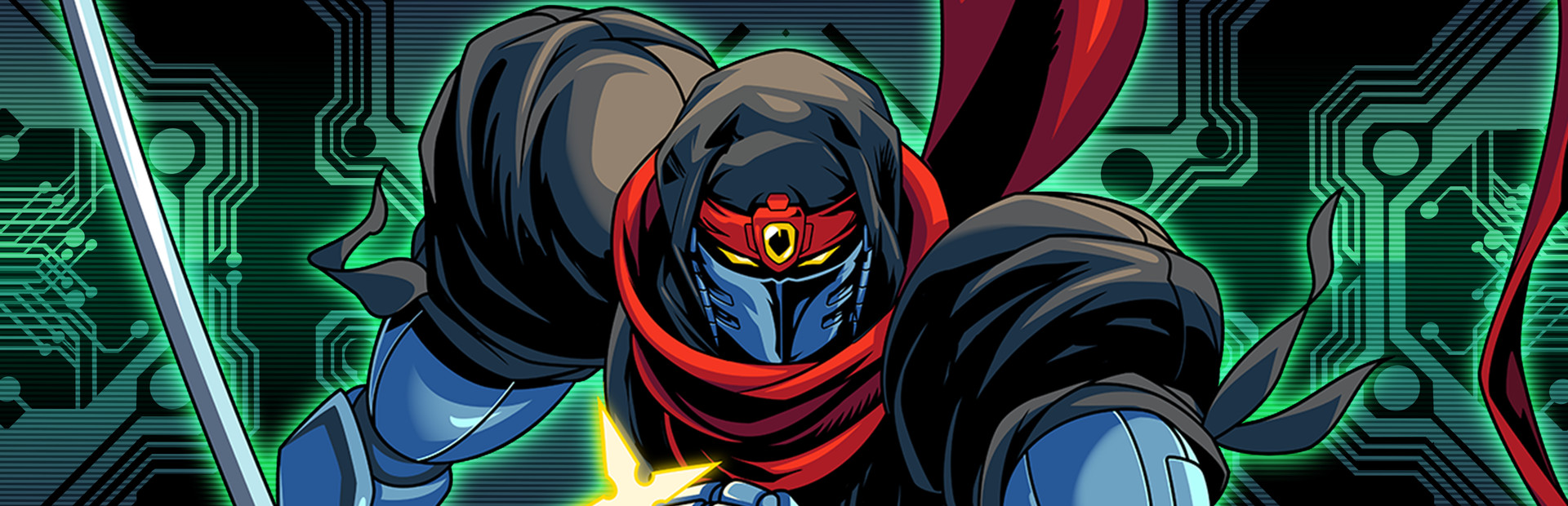
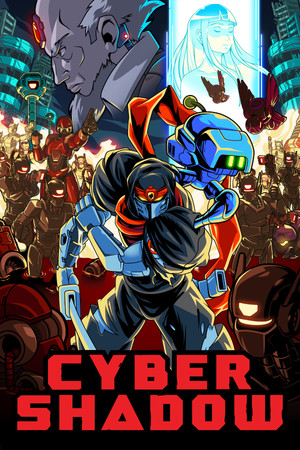
I have a soft spot for the kind of project that begins as a solitary obsession and ends up being something critics actually argue about, and Cyber Shadow is exactly that. Aarne "MekaSkull" Hunziker built this almost entirely by himself, a fact that becomes quietly astonishing once you see how much coherent craft is packed into every screen. The 8-bit pixel work across the ruined corridors of Mekacity is not an aesthetic shortcut - it is a deliberate, hand-polished language. Levels range from subway tunnels and disposal facilities to shattered skylines, and each one carries its own visual personality without ever feeling like wallpaper. The structure is pure action-platformer, linear by design and unapologetically so. You start with a katana and a jump and that is genuinely all. The game's logic is to strip Shadow down to almost nothing and then, after each boss or major encounter, restore one piece of what a ninja should be: a shuriken throw, a downward stab, a wall slide, a dash that lets you chain kills across a screen without touching the ground. That escalation is the emotional spine of the game. By the final third, the movement vocabulary is generous enough that some encounters start to feel like a short, violent improvisation, and that is when Cyber Shadow is at its absolute best. The checkpoint system earns genuine praise here too - you can spend in-game currency at rest points to buy a temporary tool like a spinning blade drone or a Swag Blade chainsaw, giving you a small tactical cushion before a boss retry without removing the sting. The difficulty is the honest centerpiece of the conversation. This is not a game that softens its NES-era DNA. Enemy knockback will send Shadow flying off platforms above spike pits with an enthusiasm that feels almost personal. Some reviewers counted over three hundred deaths before reaching credits, which is a data point worth sitting with. The parry - a directional tap that deflects projectiles into collectible orbs - is one of the most satisfying moves in the game when it lands, but because it shares the d-pad with movement, the window for mistiming is punishing. The wall-slide ability also arrives later than genre habits might lead you to expect, and there is a stretch of early-to-mid game where the ability rewards feel thin. Players who bounced off the original Ninja Gaiden because of unfair enemy placement will find some of the same friction here, albeit softened by smarter checkpoint density. What lifts Cyber Shadow above a pure nostalgia exercise is the soundtrack and the story delivery. The music, composed by Enrique Martin and produced by Jake Kaufman, operates at a level that makes certain boss arenas feel genuinely cinematic even at eight bits of visual resolution. It is moody and propulsive in exactly the right moments, and the kind of score that keeps looping in the background of your day. The story itself, told through 8-bit cutscenes and in-level dialogue with Shadow's robot companion L-Gion, is more layered than the premise suggests. There is a quietly tragic arc involving a dying Master, her desperate father Dr. Progen, and Shadow's fractured memories that rewards attention. It does not have the space to fully breathe inside a six-to-eight hour runtime, but it earns its ending. Set pieces like a motorcycle chase across a broken highway and a section where you pilot a mech suit add genuine variety without breaking the game's tone. This is not the game for players who want a relaxed session after work. It also is not for anyone expecting The Messenger's self-aware humor or Shovel Knight's generous scope. What it is, for the right player, is one of those rare solo-developer projects where the obsession of the creator is legible in every pixel and every note, and where clearing a punishing gauntlet leaves a specific kind of quiet satisfaction that only this genre delivers.

Indie & narrative
Tags
System Requirements
Minimum
- OS
- Windows XP SP3
- Memory
- 1 GB RAM
- Storage
- 250 MB available space
- Graphics
- ATI Radeon X1300 / Nvidia GeForce 6600 GT / Intel HD 3000 or better
- Processor
- 2.0GHz or more, 32-bit
Keep exploring
Community Discussion
Be the first to comment on Cyber Shadow.
Reviews & Ratings
Game Info
- Developer
- Aarne "MekaSkull" Hunziker
- Publisher
- Yacht Club Games
- Release Date
- Jan 26, 2021