Cuban Missile Crisis: Ice Crusade
Post-nuclear Cold War gone sideways, with a hybrid RTS-plus-turn-based operational layer that rewards patience and punishes anyone who charges in without reading the fog-of-war first.
GamerScout Verdict
Best for Blitzkrieg veterans and Cold War alt-history fans willing to overlook uneven mission design and dated AI behavior.
Compare Prices(8 stores)
Every store in this table quotes us in euros, so the EUR figure is the price the seller actually set, not our arithmetic — which is why EUR is also the currency we rank in. We only list an offer here when the store gives us its price in euros, so nothing in this table is a number we invented.
Pick USD, PLN, GBP, CAD or AUD in the header and we convert from EUR at the European Central Bank reference rate — converted amounts are prefixed with ~. Your bank or the store may apply a different rate at checkout. We never hide offers based on where you are: everyone sees this whole table.
We may earn a commission when you buy games through links on this page — at no extra cost to you. It never affects our rankings or verdicts.
Price History
Screenshots & Media
About Cuban Missile Crisis: Ice Crusade
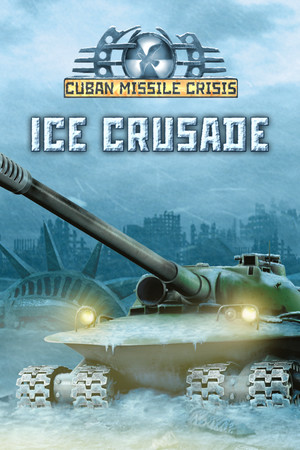
My first instinct when loading Ice Crusade was to treat it like a standard post-2010 RTS and rush the first objective. The game corrected that instinct within about four minutes by sending a windstorm through the desert that erased two thirds of my forward infantry. That is the kind of systems-first design that gets my attention: environments that behave like variables in a battle plan rather than pretty backdrops. Ice Crusade sits on the Blitzkrieg engine, which means the tactical DNA is old but proven. The hybrid structure is the interesting part: you operate on a turn-based theater map, deploying battle groups, capturing resource centers, and maneuvering Soviet or American forces across post-nuclear North America and northern Mexico, then drop into real-time tactical missions when armies make contact. The turn-based layer forces you to think about logistics before any shooting starts, and the real-time layer punishes sloppy positioning hard. Fuel management for individual vehicles adds a supply-line consideration that keeps you honest at the operational level. Artillery like the Tyulpan 240mm self-propelled mortar and the Akatsia self-propelled gun aren't just damage numbers; getting them into position without exposing them to counter-battery fire is a small puzzle every engagement. The Convair-49 helicopter super unit is satisfying when you've earned the resource situation to field it properly. The weaknesses are real and worth knowing before you spend time here. The AI has a stubborn fixation on recapturing radar installations regardless of tactical sense, which veteran players will recognize as a pattern they can exploit rather than a genuine threat. Fog of war is thick and the AI reads artillery launches faster than feels fair in some scenarios. Scenario mission design across both campaigns is uneven: some objectives are tense and well-constructed, others feel like generic holding actions with no memorable hook. Community feedback consistently points to the scenario quality as the game's softest spot. On the technical side, Windows 10 and 11 compatibility appears solid, though you will need to manually edit the config file to force a modern screen resolution, which is a minor but unnecessary friction point for 2025. The tutorial leans on too many notice boxes and could be tightened significantly. For the right player this is still a worthwhile spend. If you lived through Blitzkrieg or its expansions and want a post-apocalyptic alternative-history spin on that formula, the hybrid operational layer adds genuine strategic texture that the base Blitzkrieg game lacks. Playing the original Cuban Missile Crisis: The Aftermath first is strongly recommended, both for story context and to calibrate your expectations on mechanics. The mod community has produced at least one substantial total-conversion effort, which extends the lifespan noticeably beyond the base campaign content. Newcomers to this style of RTS should not be scared off by the operational map: the turn-based portion is slow-paced enough that you can think through each move, and the real-time missions are short enough to replay when you get them wrong.

Strategy & simulation
Tags
System Requirements
Minimum
- OS
- Windows® XP (SP3) / Vista (SP1) / Windows® 7
- Memory
- 512 MB RAM
- Storage
- 2 GB available space
- Graphics
- 64 Mb VRAM and more
- Processor
- 800 MHz and above
Keep exploring
Community Discussion
Be the first to comment on Cuban Missile Crisis: Ice Crusade.
Reviews & Ratings
No ratings available
Game Info
- Developer
- G5 Software
- Publisher
- Fulqrum Publishing
- Release Date
- Mar 25, 2015