
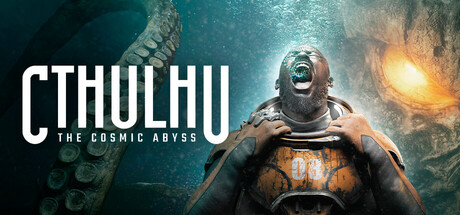
Cthulhu: The Cosmic Abyss
If you like detective games that trust you to think, this first-person Lovecraftian puzzler has some genuinely compelling investigation tools, but arrives with enough rough edges to make patience a prerequisite.
GamerScout Verdict
Best for detective-game fans who want Lovecraft done differently, budget for bugs and bring patience for the fiddly interaction system.
Compare Prices(10 stores)
Every store in this table quotes us in euros, so the EUR figure is the price the seller actually set, not our arithmetic — which is why EUR is also the currency we rank in. We only list an offer here when the store gives us its price in euros, so nothing in this table is a number we invented.
Pick USD, PLN, GBP, CAD or AUD in the header and we convert from EUR at the European Central Bank reference rate — converted amounts are prefixed with ~. Your bank or the store may apply a different rate at checkout. We never hide offers based on where you are: everyone sees this whole table.
We may earn a commission when you buy games through links on this page — at no extra cost to you. It never affects our rankings or verdicts.
Price History
Screenshots & Media
About Cthulhu: The Cosmic Abyss
My first few hours with Cthulhu: The Cosmic Abyss felt like discovering a game that nobody had quite made before, and by the final chapter I understood exactly why: the good ideas and the frustrating ones are inseparable, welded together in a package that rewards patience and punishes impatience in roughly equal measure. Big Bad Wolf, the studio behind The Council and Vampire: The Masquerade - Swansong, knows how to build a mechanically interesting detective game, and this is their most ambitious attempt yet. The setup plants you in 2053 as Noah, an occult investigator working for Ancile, a secret Interpol division, paired with an AI companion called Key who is implanted directly in his brain. That futuristic framing is one of the smartest choices the game makes: it reinterprets classic Lovecraftian detective tools as diegetic tech, so the magnifying glass becomes a sonar scanner and the detective's notebook becomes the Vault, a physical mind-map space where you drag clues together and draw connections to form deductions. The Vault is genuinely satisfying to use, and the sonar mechanic pulls double duty as both a clue-finder and a puzzle element in its own right. The investigation systems are layered enough that they carry the whole experience. Two difficulty modes, Exploration and Investigation, give you control over how much hand-holding you receive, and on the harder setting the game commits fully to making you earn every deduction. The seven-chapter structure spans roughly 15 hours and escalates steadily from a flooded house investigation into the depths of Ocean-I, a Pacific mining facility, and eventually into R'lyeh itself, where physics stops cooperating. Each chapter introduces a new trick: inverted gravity, non-Euclidean geometry, spaces that logically should not exist. The corruption meter running underneath all of this tracks Noah's deteriorating sanity, wrong deductions, overusing Key's analysis function without enough energy, and careless play all push it higher. Six different endings exist, with the true ending locked behind keeping that meter in check across the entire run. That is a legitimate replay hook, even if a single run will take most players well past ten hours. Here is where the enthusiasm needs to be tempered. The fiddly first-person interaction system, requiring pixel-precise cursor alignment to pick up items, causes real friction that has nothing to do with puzzle difficulty. The autosave is inconsistent, meaning mistakes can cost you replayed sections rather than just corruption points. Several reviewers flagged bugs that required restarts, and the stamina system tied to Key's analysis function feels tacked on rather than integral, since energy pickups are common enough to largely neuter it. The story's villain is largely forgettable, and some sections drag well past the point where the pacing justifies it. The horror itself leans more toward pervasive dread than active fear, there are no combat options and creatures function as obstacles to route around rather than genuine threats, which fits Lovecraft in theory but can flatten tension in practice. For players who bounced off the combat-heavy Alone in the Dark or wanted more detective meat in the 2018 Call of Cthulhu, this is the closest thing to a direct answer. It draws comparisons to the Frogwares Sherlock Holmes games and The Sinking City for good reason, the clue-linking Vault system is a direct evolution of that lineage. It does not top either of those benchmarks cleanly, but the futuristic setting gives it a distinct identity. If the tech issues get patched and you have the patience for a game that genuinely refuses to point at the answer, there is a compelling investigation here worth finishing.

Catch-all
Tags
System Requirements
Minimum
- OS
- Windows 10 - 11
- Memory
- 12 GB RAM
- DirectX
- Version 12
- Storage
- 16 GB available space
- Graphics
- NVIDIA GeForce GTX 1060, 6 GB or AMD Radeon RX 590, 8 GB or Intel Arc A580, 8 GB
- Processor
- Intel Core i7-8700K or AMD Ryzen 5 1600X
Recommended
- OS
- Windows 11
- Memory
- 16 GB RAM
- DirectX
- Version 12
- Storage
- 16 GB available space
- Graphics
- NVIDIA GeForce RTX 3070, 8 GB or AMD Radeon RX 6750 XT, 12 GB or Intel Arc B580, 12 GB
- Processor
- Intel Core i5-12600K or AMD Ryzen 5 7600
DLC & Add-ons for Cthulhu: The Cosmic Abyss2
Expansions, DLC packs and add-on content for this game. Click any item to see store offers.
Keep exploring
Community Discussion
Be the first to comment on Cthulhu: The Cosmic Abyss.
Reviews & Ratings
No ratings available
Game Info
- Developer
- Big Bad Wolf
- Publisher
- Nacon
- Release Date
- Apr 16, 2026

