
Cross Blitz
Thirty-plus hours of story campaigns plus a near-endless roguelite mode, all running on a lane-based card system that rewards build obsessives and forgives newcomers in equal measure.
GamerScout Verdict
Best for deckbuilding fans who want a structured story mode alongside a Slay the Spire-style roguelite with genuine positional depth.
Compare Prices(7 stores)
Every store in this table quotes us in euros, so the EUR figure is the price the seller actually set, not our arithmetic — which is why EUR is also the currency we rank in. We only list an offer here when the store gives us its price in euros, so nothing in this table is a number we invented.
Pick USD, PLN, GBP, CAD or AUD in the header and we convert from EUR at the European Central Bank reference rate — converted amounts are prefixed with ~. Your bank or the store may apply a different rate at checkout. We never hide offers based on where you are: everyone sees this whole table.
We may earn a commission when you buy games through links on this page — at no extra cost to you. It never affects our rankings or verdicts.
Price History
Screenshots & Media
About Cross Blitz
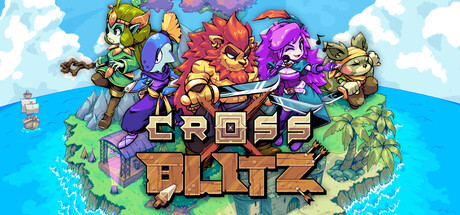
My gut reaction walking into Cross Blitz was skepticism: another indie deckbuilder in a genre already drowning in Slay the Spire imitators. Two hours later I had a spreadsheet of relic synergies open in a second window and I hadn't noticed the time pass. That's the clearest signal I can give you about what this game actually is. The foundation is a lane-based card combat system built on a four-by-four board, split evenly between you and your opponent. Positioning is a genuine decision, not decoration. Each player starts with 20 life points and a hand of five cards drawn from a 30-card deck, with mana growing by one each turn, so your opening curve matters and your late-game payoff needs planning to reach. Decks are assembled from minions, spells, and traps, plus up to four equipped relics that act as passive modifiers shaping your entire strategy. Card copy limits vary wildly per card, with some minions stackable up to eight copies and others restricted to a single slot, which means every build decision has a clear opportunity cost attached. On top of all that, Blitz Burst cards serve as match-finishing bombs that reward you for building toward a specific win condition rather than jamming value generically. Cross Blitz splits its content across two distinct modes. Fables is the story campaign: five separate character storylines, each with its own starting deck, talent tree, and hex-map progression. Redcroft the lion pirate, Violet the pop-star sorceress, Quill the mouse thief, and the rest each play differently enough that replaying the mode with a new character is a genuine strategic reset, not a cosmetic one. Battles in Fables can be immediately replayed after a loss with no penalty, making it genuinely low-pressure to experiment with deck swaps and relic combinations before progressing. The writing is light-hearted and character-driven, with enough personality to make you care about the outcome of each chapter. One legitimate gripe: the 1.0 release shipped with the Fables storyline ending on a cliffhanger rather than a complete conclusion, which is a valid frustration if you burn through all five campaigns expecting a full wrap-up. Tusk Tales, the roguelite mode, runs a randomized branching map in the Slay the Spire mold, rewarding Husks and Souls currencies for meta-progression upgrades between runs. Daily Hunts add optional difficulty modifiers for harder Souls farming, and the game no longer forces you to pick up cards after every fight, a change the community explicitly pushed for during Early Access and that significantly tightened the drafting feel. For anyone who has bounced off deckbuilders because the roguelite loop felt cold and mechanical: Fables mode functions as a 30-plus-hour structured tutorial that introduces mechanics gradually, teaches card archetypes through actual story context, and lets you fail and iterate without run-ending consequences. That is a genuinely newcomer-friendly ramp that most genre entries skip entirely. The difficulty spikes in Tusk Tales are real and occasionally feel like the enemy got a relic that shouldn't exist at that tier, a balance roughness the developers have addressed repeatedly through patches but haven't fully ironed out. Spell card information also flashes too briefly on screen during opponent turns, making it harder than it should be to learn counter-strategies on the fly. Neither issue is a dealbreaker, but both are visible seams. The visual presentation is pixel art with a GBA-era confidence to it, all bold outlines and expressive sprite work, backed by an energetic soundtrack that fits the pirate-world setting without overstaying its welcome. No voice acting, which is the right call for the tone. Cross Blitz is a pure single-player experience; a planned multiplayer mode was cancelled as the solo content grew in scope, so if PvP is your requirement, look elsewhere. What you get instead is a mechanically dense, generously sized deckbuilder built by a two-person studio with no microtransactions, no wait timers, and no free-to-play friction anywhere in the package.

Strategy & simulation
Tags
System Requirements
Minimum
- OS
- Windows 10
- Memory
- 4 GB RAM
- Storage
- 600 MB available space
- Graphics
- NVIDIA GeForce GT 320, 1 GB or AMD Radeon HD 6570, 1 GB
- Processor
- Intel Core 2 Duo E6750 or AMD Phenom II X2 550
Recommended
- OS
- Windows 10
- Memory
- 4 GB RAM
- Storage
- 600 MB available space
- Graphics
- NVIDIA GeForce GT 320, 1 GB or AMD Radeon HD 6570, 1 GB
- Processor
- Intel Core 2 Duo E6750 or AMD Phenom II X2 550
Keep exploring
Community Discussion
Be the first to comment on Cross Blitz.
Reviews & Ratings
No ratings available
Game Info
- Developer
- Tako Boy Studios LLC
- Publisher
- The Arcade Crew
- Release Date
- Nov 24, 2025