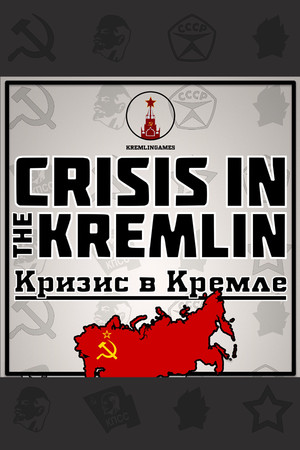
Crisis in the Kremlin
Ruling the Soviet Union from 1985 onward sounds like a history lecture until your economy implodes and three factions are simultaneously plotting your removal. Worth every confused hour for political sim fans.
GamerScout Verdict
Best for political sim veterans who want Cold War ideology as a mechanical system and can tolerate a steep, under-explained learning curve.
Compare Prices(6 stores)
Every store in this table quotes us in euros, so the EUR figure is the price the seller actually set, not our arithmetic — which is why EUR is also the currency we rank in. We only list an offer here when the store gives us its price in euros, so nothing in this table is a number we invented.
Pick USD, PLN, GBP, CAD or AUD in the header and we convert from EUR at the European Central Bank reference rate — converted amounts are prefixed with ~. Your bank or the store may apply a different rate at checkout. We never hide offers based on where you are: everyone sees this whole table.
We may earn a commission when you buy games through links on this page — at no extra cost to you. It never affects our rankings or verdicts.
Price History
Screenshots & Media
About Crisis in the Kremlin
I have a soft spot for games that punish you for not reading the manual, and Crisis in the Kremlin makes no apologies about being exactly that kind of game. You step into the shoes of the General Secretary of the Communist Party of the Soviet Union, starting in 1985, and from the first month the interconnected webs of faction loyalty, budget sliders, science points, and regional unrest are all ticking down simultaneously. There is no tutorial to speak of. The community has produced translated guides sourced from Russian-language forums precisely because the game does not hold your hand, and those guides are practically a requirement before your second run. The faction system is where the real decision-making lives. Five political alignments - Stalinist, conservative, moderate, reformist, and liberal - each want incompatible things from you. Tilt too far toward liberalization and the hardliners start engineering your removal via the Politburo. Crack down too hard and the reformists peel away, dragging republic loyalty with them. The monthly event system compounds this: random pop-up decisions shaped by your chosen character force you to choose between historical routes and alternate-history gambits, and the downstream consequences are rarely telegraphed clearly. Budget allocation across military, pensions, construction, Soviet Republics, and environment is genuinely meaningful - cut agriculture and food shortages follow, boost the military and the KGB smiles while the general population does not. For strategy and simulation fans who want historical texture, the alternate-history ceiling is surprisingly high. Multiple endings branch out toward perestroika, world communism, nuclear war, or full Soviet collapse, and a determined player can keep the USSR alive well past 1991 into stranger territory. The game is not pretty by any modern standard. The UI is functional at best, the localization has rough edges throughout, and feedback on why specific disasters are unfolding is frequently absent. You will watch a republic slide toward independence without a clear read on which of your decisions triggered it. That opacity is a genuine flaw, not a design choice worth celebrating. Where Crisis in the Kremlin earns its Very Positive Steam rating is in replay value and ideological breadth. Running a conservative playthrough where you suppress reform feels mechanically different from a liberal run where you chase free elections and trade deals with the West. Playing as different historical figures - Gorbachev, Yeltsin analogs, hardliner alternatives - shifts starting faction relations and available event branches in ways that change the strategic math from the opening months. For the price point, the content density is hard to argue with, and the developer went on to build a small series of related titles covering Eastern Europe and China, which speaks to a consistent creative direction. I would not recommend this as a first political sim. Something like Victoria 3 or even Tropico gives newcomers the feedback loops they need to learn by doing. But if you have already logged time in that space and want something rawer, more opaque, and rooted in a genuinely fascinating historical inflection point, Crisis in the Kremlin rewards the patience it demands. Bring a guide, expect at least two failed runs before things click, and accept that some collapses will feel arbitrary. The ones that do not will feel earned in a way few games manage.

Strategy & simulation
Tags
System Requirements
Minimum
- OS
- Windows XP SP2+ (64-bit), Windows 7 SP1+ (32-bit, 64-bit)
- Memory
- 2 GB RAM
- DirectX
- Version 9.0c
- Storage
- 2 GB available space
- Graphics
- DX9 (shader model 3.0) or DX11 with feature level 9.3 capabilities
- Processor
- SSE2 instruction set support
Recommended
- OS
- Windows 7 SP1+, Windows 8, 8.1, Windows 10, etc (32-bit, 64-bit)
- Memory
- 3 GB RAM
- DirectX
- Version 9.0c
- Storage
- 2 GB available space
- Graphics
- DX9 (shader model 3.0) or DX11 with feature level 9.3 capabilities
- Processor
- SSE2 instruction set support
Keep exploring
Community Discussion
Be the first to comment on Crisis in the Kremlin.
Reviews & Ratings
No ratings available
Game Info
- Developer
- Nostalgames
- Publisher
- Nostalgames
- Release Date
- Mar 20, 2017