Cossacks II: Napoleonic Wars
Forget clicking units into blobs, this one makes you think like a Napoleonic general, with formation discipline, fatigue, and coal supplies deciding battles before a single musket fires.
GamerScout Verdict
Worth it for Napoleonic tactics purists willing to tolerate a dated interface and solo-only strategic mode.
Compare Prices(7 stores)
Every store in this table quotes us in euros, so the EUR figure is the price the seller actually set, not our arithmetic — which is why EUR is also the currency we rank in. We only list an offer here when the store gives us its price in euros, so nothing in this table is a number we invented.
Pick USD, PLN, GBP, CAD or AUD in the header and we convert from EUR at the European Central Bank reference rate — converted amounts are prefixed with ~. Your bank or the store may apply a different rate at checkout. We never hide offers based on where you are: everyone sees this whole table.
We may earn a commission when you buy games through links on this page — at no extra cost to you. It never affects our rankings or verdicts.
Price History
Screenshots & Media
About Cossacks II: Napoleonic Wars
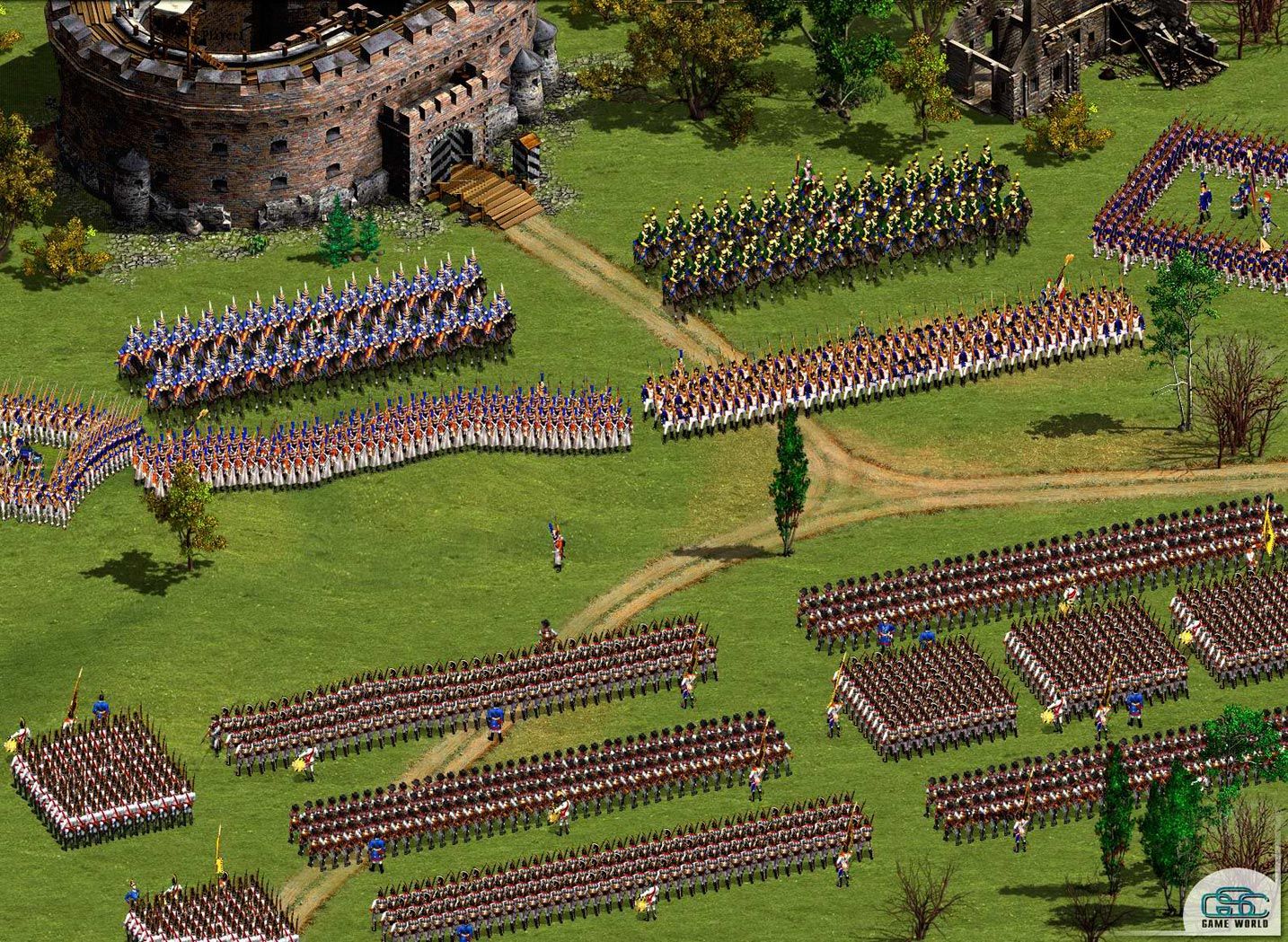
I have a soft spot for strategy games that punish the lazy, and Cossacks II: Napoleonic Wars punishes the lazy with ruthless efficiency. Where most RTS titles reward whoever clicks fastest, this one rewards whoever marches smartest. The core loop is built around formations that are not just cosmetic: column gets your men down the road without sapping their fatigue, but leaves them exposed to artillery, while line formation maximises musket output at the cost of mobility, and square is your last resort when cavalry closes in from every angle. Get the formation call wrong and your morale bar collapses, your regiment breaks, and you lose control of those men entirely until they can be reformed. That is a level of period authenticity that most Napoleonic-themed games gesture at and then quietly ignore. The decision layer goes deeper once you factor in the resource system. Food keeps your troops from losing morale between engagements, coal is literal gunpowder consumed shot by shot, and road control is arguably the most important strategic variable in the game. Soldiers travelling on roads lose no fatigue, which means every river crossing and every town on the map network is genuinely worth fighting over, not for arbitrary victory points, but because controlling those roads is how you keep a rested, coherent army in the field. That kind of systemic coherence is rare and worth appreciating. The AI, at harder difficulties, understands this too, and will probe flanks and exploit exhausted formations rather than simply rushing the nearest unit cluster. The Battle for Europe mode layers a turn-based strategic map on top of the real-time battles, letting you pick from France, Russia, Prussia, Austria, Egypt, or Great Britain and work toward continental dominance. Think of it as a simplified Risk board that contextualises each real-time engagement, with your commander earning promotions over time, which gradually unlocks light infantry, engineers, cavalry, artillery, and eventually elite units. The progression is slow but logical. The limitation that hurts most is that Battle for Europe cannot be played in multiplayer, so the strategic map layer is a purely solo experience. Multiplayer is limited to skirmish and historical battles modes for up to seven players, which feels thin by modern standards. Honestly, the criticisms that have followed this game since its original 2005 release are not wrong. Fans of the first Cossacks will notice the step back in raw content: fewer playable nations, a narrower technology tree, and a smaller pool of single-player maps. The interface becomes strained when managing large formations simultaneously with economic tasks, and the economic management itself can feel like an unfinished system when a resource dries up mid-battle with little recourse. The zoom is limited in one direction, defensive building dynamics can produce river-stalemate scenarios that feel more like the Western Front than Austerlitz, and the online player base in 2026 is close to zero. A built-in map editor exists, but the modding community never reached the scale that would make long-term content discovery comfortable. For a specific kind of strategy player, one who reads about reloading intervals and appreciates why the square formation existed, this game still delivers something almost no other RTS does at this budget level: genuine Napoleonic tactical logic encoded into real mechanics. Newcomers willing to lose the first five or six battles before the formation and fatigue systems click into place will find a game with real depth under its dated exterior. Everyone else should look at Cossacks 3 or Total War: Empire first.

Strategy & simulation
Tags
System Requirements
Minimum
- Sound
- Sound card with DirectX 9.0 support
- Video
- Video Card with 128MB dedicated memory and DirectX 9 Compatible
- Memory
- 512 MB
- DirectX®
- 9.0 or higher
- Processor
- 1.4 GHz CPU
- Hard disk space
- 1.8GB
- Operating system
- Windows® XP and higher
Keep exploring
Community Discussion
Be the first to comment on Cossacks II: Napoleonic Wars.
Reviews & Ratings
Game Info
- Developer
- GSC Game World
- Publisher
- GSC Game World
- Release Date
- Aug 26, 2011