Cossacks: European Wars
Sixteen nations, up to 8,000 units on screen, and a logistics system that punishes you for forgetting to pay your mercenaries. Age of Empires II never hit this hard.
GamerScout Verdict
Worth it for RTS veterans who want historical asymmetry and logistical pressure at a scale most modern games still don't attempt.
Compare Prices(9 stores)
Every store in this table quotes us in euros, so the EUR figure is the price the seller actually set, not our arithmetic — which is why EUR is also the currency we rank in. We only list an offer here when the store gives us its price in euros, so nothing in this table is a number we invented.
Pick USD, PLN, GBP, CAD or AUD in the header and we convert from EUR at the European Central Bank reference rate — converted amounts are prefixed with ~. Your bank or the store may apply a different rate at checkout. We never hide offers based on where you are: everyone sees this whole table.
We may earn a commission when you buy games through links on this page — at no extra cost to you. It never affects our rankings or verdicts.
Price History
Screenshots & Media
About Cossacks: European Wars
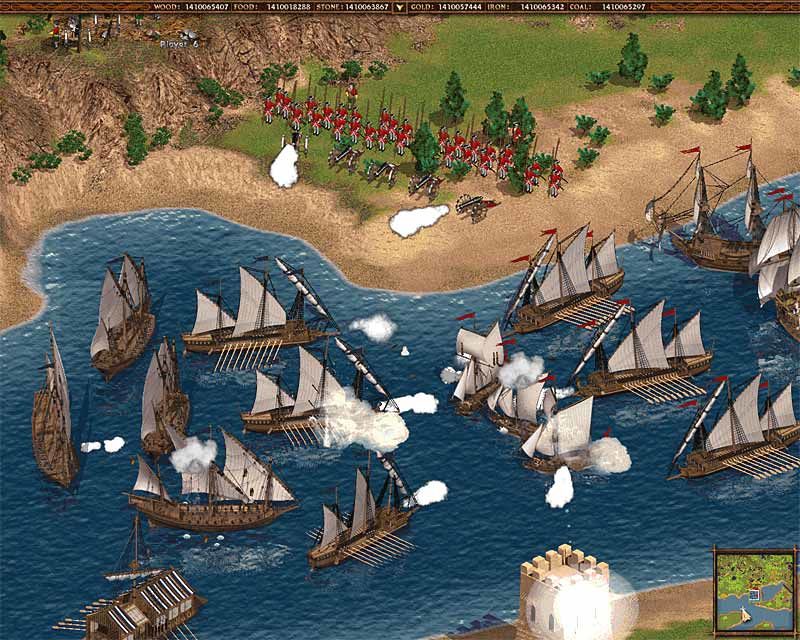
I keep a mental bracket of early-2000s RTSes that aged surprisingly well, and Cossacks: European Wars sits near the top of that list for anyone who cares about scale and historical asymmetry. GSC Game World built something genuinely unusual here: a 17th-to-18th century real-time strategy where the unit cap isn't 200 or even 500 - it's 8,000, and the game is designed to fill that number. Watching a massed column of pikemen trade volleys with musketeers across an open map while your artillery pounds a city wall is a spectacle that no contemporaneous RTS could match on sheer troop count alone. The mechanical depth rewards players who treat resource flow as seriously as combat. Six resources - gold, wood, food, stone, iron, and coal - all feed into the war machine in ways that matter. Miss a gold payment and your mercenary units rebel. Let food production slip and your army starts to starve. Musketeers burn through ammunition when they fire, so a supply chain collapse mid-battle is a real threat. The market operates on fluctuating prices, meaning that mindless resource dumping will devalue your own trading position. That kind of systemic pressure is closer to a light grand-strategy than a typical skirmish RTS. For newcomers, the learning curve here is real but not unfair - if you treat the first couple of skirmish games as tutorials and accept a few early defeats, the systems click into place. The game never holds your hand, but it also never lies about how it works. The sixteen playable nations are where the game's longevity lives. Each nation carries distinct architectural styles, technology access, and unique units that genuinely change how you play. England dominates at sea. Austria fields strong light and heavy cavalry. Russia packs six unique 17th-century unit types including Don Cossacks and the formidable Vityaz. Ukraine's Hetman is arguably the most powerful single unit in the game, but it drains gold so aggressively that building more than a handful is an economy death sentence. The technology tree runs to over 300 upgrades, and the unit formations - column, line, and square - aren't cosmetic: they carry real combat bonuses and reflect the linear infantry doctrines of the period. Advancing from the 17th century into the 18th completely reshapes the battlefield, replacing pike blocks with musketeers and grenadiers who can use bayonets at close range. That century transition is the best design decision in the game. The problems are real, though, and the Steam re-release didn't fix most of them. The campaign AI suffers from the classic "everyone targets only you" syndrome in skirmish mode, making multi-opponent games feel artificial. Unit pathfinding has always been rough, with troops getting wedged in terrain or wandering off assignment in large engagements. Multiplayer balance with nation selection on random was notoriously broken - certain nation matchups were effectively decided before the first peasant left the town hall, a problem that Cossacks 3 had to patch heavily when it rebuilt the original formula from scratch. The interface has minimal hotkeys, meaning large-army management demands sustained mouse endurance. None of this is dealbreaking for someone buying a twenty-plus-year-old RTS at a catalogue price, but go in with appropriate expectations. If your interest is the modernised version of this formula, Cossacks 3 is the cleaner entry point. But European Wars still holds up as a historically detailed, mechanically demanding RTS with a unit scale and resource model that most of the genre still hasn't matched. The five campaigns covering conflicts from the Thirty Years' War to the Ukrainian independence war are punishingly hard and historically grounded. The skirmish mode with random map generation has the kind of replayability that kept people running sessions well over a decade after release. For an RTS player who wants logistics pressure alongside their battlefield spectacle, this remains worth the time investment.

Strategy & simulation
Tags
System Requirements
Minimum
- Sound
- Sound card with DirectX 9.0 support
- Video
- Video Card with 64MB dedicated memory and DirectX 9 Compatible
- Memory
- 512 MB
- DirectX®
- 9.0 or higher
- Processor
- 1.4 GHz CPU
- Hard disk space
- 350MB
- Operating system
- Windows® XP / Vista™ / Windows® 7
Keep exploring
Community Discussion
Be the first to comment on Cossacks: European Wars.
Reviews & Ratings
Game Info
- Developer
- GSC Game World
- Publisher
- GSC World Publishing
- Release Date
- Aug 26, 2011