
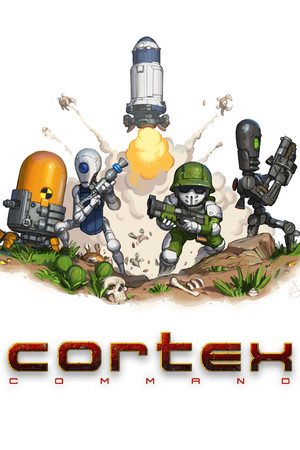
Cortex Command
A physics sandbox disguised as an RTS with teeth: brilliant destruction, broken AI, and a modding community that refused to let it die.
GamerScout Verdict
Worth it for sandbox-tolerant strategy players who load up Workshop mods first; too rough and unfinished for anyone expecting a polished campaign.
Compare Prices(7 stores)
Every store in this table quotes us in euros, so the EUR figure is the price the seller actually set, not our arithmetic — which is why EUR is also the currency we rank in. We only list an offer here when the store gives us its price in euros, so nothing in this table is a number we invented.
Pick USD, PLN, GBP, CAD or AUD in the header and we convert from EUR at the European Central Bank reference rate — converted amounts are prefixed with ~. Your bank or the store may apply a different rate at checkout. We never hide offers based on where you are: everyone sees this whole table.
We may earn a commission when you buy games through links on this page — at no extra cost to you. It never affects our rankings or verdicts.
Price History
Screenshots & Media
About Cortex Command
My spreadsheet instincts lit up the moment I understood what Cortex Command actually is: a 2D side-scrolling tactical sandbox where you play as a disembodied brain ordering soldiers, mechas, and diggers down from orbit, mining gold from fully destructible terrain to fund the next wave, all while trying to keep your cortex alive inside a hand-built bunker. On paper it sits somewhere between a real-time tactics game and a chaotic action platformer. In practice it is something stranger and more interesting than either label suggests, and also considerably rougher than both. The core loop has genuine pull. You control one unit at a time, cycling between them with a button press, and you can set the others to AI modes like mining, patrolling, or guarding. Gold dug from the terrain goes straight into a buy menu where you order reinforcements dropped in by landing craft. The factions, which include robot armies, clone troopers, and alien units, each carry distinct weapon loadouts and movement quirks that actually change how you approach bunker assaults. The bunker editor, where you lay tunnels, place turrets, and pre-deploy units before a mission kicks off, is the closest thing to a genuine strategic layer the base game offers. Standalone scenarios like Bunker Breach and the wave-defense modes are where the fun concentrates, because the campaign's turn-based overworld is thin and repetitive, functioning more as a loose wrapper than a satisfying metagame. The problems are not subtle. The AI pathfinding is erratic at best and mission-ending at worst. Units spontaneously combust. Ladders collapse under the weight of whoever climbs them, which matters enormously if your chosen faction lacks jetpacks. The interface for restarting a scenario requires navigating back to the main menu, which in 2025 reads as absurd. Performance is tied to a single-core engine architecture that shows its age on modern hardware. Critics scored it at 44 on Metacritic and the criticism was fair: this is a game that shipped feeling unfinished after eleven years of development, and the seams show constantly. Here is where the story gets more interesting though. After Data Realms went quiet, the community took the released source code and built the Cortex Command Community Project, which improves performance, modding support, and base gameplay meaningfully. Workshop support on the Steam version already gives you access to new factions, full mod campaigns like Void Wanderers, and content rebuilds that dwarf the vanilla offering. The mod ecosystem covers new factions with original sprites, overhauled weapon rosters, RPG progression layers, and entirely new game modes. For a strategy player willing to treat the base game as a platform rather than a finished product, the ceiling on hours-per-dollar is genuinely high. Approaching Cortex Command the same way you would approach an early Dwarf Fortress or a pre-1.0 RimWorld, meaning with tolerance for rough friction and curiosity about emergent chaos, unlocks something that its Metacritic score will never tell you. That said, I cannot in good conscience recommend it to players who need polished AI opponents, a structured tutorial that respects your time, or online multiplayer. Local co-op and versus for up to four players works, but the split-screen chaos on an already unstable physics engine is a gamble. If your tolerance for jank is low, the first hour will end your run. If you are the kind of player who spent weekends digging into Wargame: Red Dragon's deck builder or optimizing a Paradox campaign mid-war, you will find enough signal under the noise to keep coming back, especially once the Workshop mods are running.

Strategy & simulation
Tags
System Requirements
Minimum
- OS
- Microsoft® Windows® XP / Vista / 7
- Memory
- 1GB RAM
- Processor
- 1GHz processor
- Additional
- Should run on any PC released within the past 5 years.
- Video Card
- 640x480 (VGA) resolution monitor
- Hard Disk Space
- 150MB HDD space
Recommended
- OS
- Microsoft® Windows® XP / Vista / 7
- Memory
- 2GB RAM
- Processor
- 3GHz or faster
- Additional
- Should run on any PC released within the past 5 years.
- Video Card
- 1920x1080 (full HD 1080p) resolution monitor
- Hard Disk Space
- 150MB HDD space
Keep exploring
Community Discussion
Be the first to comment on Cortex Command.
Reviews & Ratings
Game Info
- Developer
- Data Realms
- Publisher
- Data Realms, LLC
- Release Date
- Sep 28, 2012