
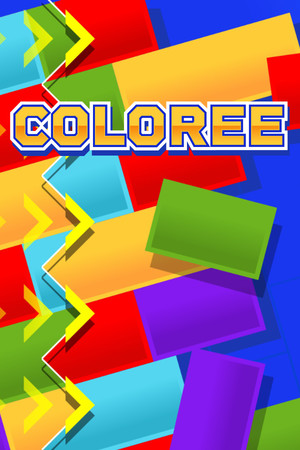
Coloree
Eighty levels of click-and-drag colour sorting that starts meditative and quietly turns into a spatial logic gauntlet. Worth a look if your puzzle shelf needs something with zero noise.
GamerScout Verdict
Best for patient puzzle fans who want clean spatial logic and zero handholding in a compact, no-frills package.
Compare Prices(2 stores)
Every store in this table quotes us in euros, so the EUR figure is the price the seller actually set, not our arithmetic — which is why EUR is also the currency we rank in. We only list an offer here when the store gives us its price in euros, so nothing in this table is a number we invented.
Pick USD, PLN, GBP, CAD or AUD in the header and we convert from EUR at the European Central Bank reference rate — converted amounts are prefixed with ~. Your bank or the store may apply a different rate at checkout. We never hide offers based on where you are: everyone sees this whole table.
We may earn a commission when you buy games through links on this page — at no extra cost to you. It never affects our rankings or verdicts.
Price History
Screenshots & Media
About Coloree
I went into Coloree expecting something disposable, a five-minute palate cleanser you forget by Tuesday. What I found instead was a small game with a surprisingly honest difficulty curve that earns its own quietude. The premise is genuinely stripped back: each level gives you a geometric grid populated with coloured segments, and a reference picture showing what that grid should look like. Your job is to drag selection boxes over areas to swap and cycle the colours until the two images match. One mechanic, eighty levels, no tutorial bloat, no score penalties for thinking slowly. The core interaction feels almost embarrassingly simple at first. You left-click and drag a rectangle, everything inside shifts colour, and you work backward from the target picture to figure out the sequence of moves. Early levels are genuinely relaxing in the way that a slow Sunday crossword is relaxing. The issue, and also the reward, is that the spatial reasoning required scales quickly. By the mid-game you are mentally simulating three or four box placements simultaneously, because each drag affects every segment it touches, not just the ones you are focused on. There is a real satisfaction in collapsing a messy grid into a clean picture in fewer moves than you expected, and a particular kind of quiet frustration when you can see the solution but keep overshooting it by one column. The game carries no story, no unlockable characters, no meta-progression layer. Whether that reads as elegant minimalism or as thinness depends entirely on what you are asking from a casual puzzle game. The visual style is clean and flat, almost diagrammatic, which suits the logic-first approach. There is an ambient quality to the presentation that holds up across the estimated six-to-twelve hours the eighty levels represent. That runtime is honest rather than padded, and the game has the good sense to end when the content ends rather than recycling the same shapes endlessly. The honest caveats are worth naming. Coloree has almost no community presence and only a handful of Steam reviews, so if you value social proof or active developer communication, you will find very little of it here. There is no move counter displayed in a way that creates competitive tension, no leaderboard, no hint system for the moments when you genuinely cannot see the path. If you get stuck, you are on your own. That suits a certain kind of player and alienates another. The game also makes no attempt to explain its colour-cycling logic in formal terms, so the first few levels function as implicit onboarding whether you want them to or not. What Core Loop Games got right is the thing small puzzle games most often get wrong: the feel of each interaction is clean enough that failure never feels like the game cheating you. Every mistake in Coloree is legible, and that clarity is worth something.

Indie & narrative
Tags
System Requirements
Minimum
- OS
- Windows XP+
- Memory
- 2 GB RAM
- DirectX
- Version 9.0c
- Storage
- 250 MB available space
- Graphics
- Shader model 2 capable card
- Processor
- SSE2 instruction set support
Recommended
Requires a 64-bit processor and operating system
Keep exploring
Community Discussion
Be the first to comment on Coloree.
Reviews & Ratings
No ratings available
Game Info
- Developer
- Core Loop Games
- Publisher
- Core Loop Games
- Release Date
- Dec 18, 2020