
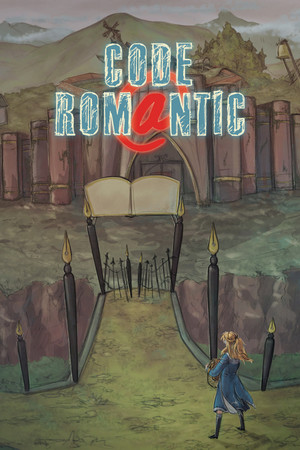
Code Romantic
Somewhere between a C# textbook and an otome, this post-apocalyptic visual novel actually succeeds at both halves without embarrassing itself on either side.
GamerScout Verdict
Best for VN fans and coding newcomers who want real C# fundamentals delivered through a genuinely likeable romance story.
Compare Prices(4 stores)
Every store in this table quotes us in euros, so the EUR figure is the price the seller actually set, not our arithmetic — which is why EUR is also the currency we rank in. We only list an offer here when the store gives us its price in euros, so nothing in this table is a number we invented.
Pick USD, PLN, GBP, CAD or AUD in the header and we convert from EUR at the European Central Bank reference rate — converted amounts are prefixed with ~. Your bank or the store may apply a different rate at checkout. We never hide offers based on where you are: everyone sees this whole table.
We may earn a commission when you buy games through links on this page — at no extra cost to you. It never affects our rankings or verdicts.
Price History
Screenshots & Media
About Code Romantic
I'll level with you: I came into Code Romantic with spreadsheet-brain fully engaged, ready to dismiss it as a shallow edutainment gimmick. I left genuinely impressed by how deliberately the design holds together. The premise drops you into a dystopian world where sentient machines can only be stopped by programmers, and protagonist Mina Lovelace is enrolled in a makeshift academy - housed in an abandoned literary-themed amusement park, of all places - to learn how to hack the robot army. The setting is specific and weird enough to pull you in, and the writing earns its sci-fi credentials without drowning in lore dumps. The puzzle system is where Code Romantic distinguishes itself from every other learn-to-code product on the market. Unlike Zachtronics-style games that invent fictional programming languages, this one teaches real C# through over 50 puzzles built around actual syntax. The mechanic is click-to-fill: you see live code with blanks, click a gap, pick the correct token from a shortlist, and the in-game dictionary sidebar will explain what a semicolon, a curly bracket, or a class definition actually does if you ask it to. It is scaffolded carefully, covering material roughly equivalent to an AP Computer Science or intro college course. Riddles between chapters break the pacing tension, which is a small but smart touch. Veterans of C# will find the difficulty ceiling low, but the point was never to replace a bootcamp. The game succeeds at exactly what it sets out to do: make syntax feel approachable by attaching it to stakes you actually care about. The visual novel side is linear - no branching paths, no dialogue choices that alter outcomes. Some players will feel the absence of agency keenly. The two leads, Mina and Leon, have real chemistry and the main romance earns its emotional payoff, but the supporting cast gets limited screen time due to the game's tight structural focus on the puzzle loop. That is a fair trade-off in my view: the more the story pauses to breathe, the more the coding puzzles risk feeling like homework. The watercolor art is genuinely lovely, the animations are rougher than you might want (a known issue the developer patched over time), and the original soundtrack fits the tone without calling attention to itself. One honest flag: the first game ends on unresolved threads - the fate of several characters and the identity of a traitor remain open, clearly seeding sequels. If you need closure, know that going in. Who is this for? Anyone curious about programming who has bounced off dry tutorial sites. Visual novel fans who want the puzzle layer to mean something. Educators looking for a classroom-adjacent companion tool. Code Romantic is not a replacement for a real CS course, but it is a legitimately good on-ramp that respects the subject matter and the player's time across 14 chapters and more than 50,000 words of dialogue. The Steam review score sits near the top of its sample for a reason.

Strategy & simulation
Tags
System Requirements
Minimum
- OS
- Windows 7 (64 bit)
- Memory
- 2 GB RAM
- Storage
- 3 GB available space
- Graphics
- DirectX compatible card
- Processor
- 2.2 GHz
Recommended
Requires a 64-bit processor and operating system
Keep exploring
Community Discussion
Be the first to comment on Code Romantic.
Reviews & Ratings
No ratings available
Game Info
- Developer
- prettysmart games
- Publisher
- prettysmart games
- Release Date
- Apr 29, 2020