Cobra Kai: The Karate Kid Saga Continues
Low expectations, solid punches, this licensed brawler does far more with its eight-character roster and upgrade trees than a Karate Kid tie-in has any right to do. Fan of the show or genre tourist, there is real fun buried here.
GamerScout Verdict
Best for Cobra Kai fans and brawler veterans who can overlook budget visuals in exchange for a deeper combo system than the license suggests.
Compare Prices(9 stores)
Every store in this table quotes us in euros, so the EUR figure is the price the seller actually set, not our arithmetic — which is why EUR is also the currency we rank in. We only list an offer here when the store gives us its price in euros, so nothing in this table is a number we invented.
Pick USD, PLN, GBP, CAD or AUD in the header and we convert from EUR at the European Central Bank reference rate — converted amounts are prefixed with ~. Your bank or the store may apply a different rate at checkout. We never hide offers based on where you are: everyone sees this whole table.
We may earn a commission when you buy games through links on this page — at no extra cost to you. It never affects our rankings or verdicts.
Price History
Screenshots & Media
About Cobra Kai: The Karate Kid Saga Continues
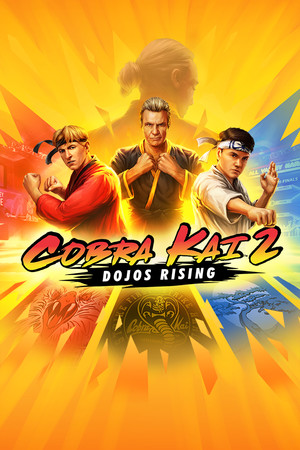
My first instinct when I loaded this up was pure skepticism, licensed beat 'em ups have a long history of pocketing the IP money and shipping early. What I got instead was a side-scrolling brawler that takes its genre seriously enough to build actual mechanical depth around the dojo-vs-dojo premise. You pick a side at the start: Cobra Kai or Miyagi-Do. That choice locks in your four-character squad and determines your elemental flavor, fire-based aggression for Cobra Kai with Miguel, Johnny, Tory, and Hawk; ice-inflected defensive techniques for Miyagi-Do with Sam, Daniel, Robby, and Demetri. The real-time character swap is the mechanical spine of the whole thing. You can tag in a fresh fighter mid-combo, and the game rewards combo-chain rank-ups with fallen character revivals, which means managing your squad rotation is actually a skill worth developing, not just a cosmetic toggle. The combat system has more going on than the cartoon art style implies. Basic punch and kick strings are only the entry point. You layer in dojo-specific special moves on the left trigger, character-exclusive abilities on the right, environmental weapon pickups via the bumpers, ground attack variations when enemies get knocked prone, and a timed parry that replenishes health if you catch the window. The developers reportedly drew inspiration from Turtles in Time and Final Fight for pacing, and Overwatch-style skill trees for the upgrade structure, and you can actually feel those reference points at work. A dozen distinct enemy types force you to read each encounter rather than mash through it; some glow red when going invincible and telegraphing an incoming strike, which pushes you to learn the parry timing rather than ignore it. None of this is Streets of Rage 4 precision, but it clears the bar for a fun weekend brawler convincingly. The weaknesses are real, though. Visuals are budget-tier, character models look like an early PS2 era approximation of the show cast, and the environments, while recognizable (the mini-golf arcade, LaRusso Auto showroom, the shopping mall), are flat and texturally forgettable. Only four of the show's main actors reprised their roles, so several characters are voiced by soundalikes whose line deliveries sit at an awkward distance from what fans will remember. The story is thin even by beat 'em up standards, both campaigns follow essentially the same plot from opposite angles, and you need to complete both to unlock the true ending and final boss, which is either good value or obligatory busywork depending on your patience. Attack angles are also locked to left-right only, meaning crowd control relies on repositioning rather than sweeping diagonal strikes, a limitation that feels dated. On PC specifically, Steam players have reported the control implementation needs a small setup step to get a gamepad working properly, which is a minor friction point for a genre that absolutely wants a controller. On the positive side, the original composers of the TV series, Leo Birenberg and Zach Robinson, wrote an entirely original soundtrack for the game, and it actually earns its keep, the music builds on the show's 80s aesthetic in a way that keeps the tone from ever feeling cheap. Co-op is also consistently cited as the mode that smooths over the game's rougher edges; two players swapping characters and chaining abilities together is where the combat system reveals its best face. This is a game that knows its lane. It is not competing with the top shelf of the brawler genre. It is a well-constructed licensed product with genuine mechanical ambition, made for Cobra Kai fans who want to throw fire punches as Hawk and ice kicks as Sam, and for brawler fans who can forgive dated visuals in exchange for an upgrade system with actual teeth.

Catch-all
Tags
System Requirements
Minimum
- Processor
- AMD FX-4350, 4.2 GHz / Intel Core i5-3470, 3.20 GHz
- Memory
- 4 GB RAM
- Graphics
- Radeon HD 6870, 1 GB / GeForce GTX 650 Ti, 1 GB
- DirectX
- Version 11
- Storage
- 6 GB available s…
Recommended
- OS
- Windows 10 (64-bit OS required)
- Processor
- AMD Ryzen™ 3 1200 / Intel® Core™ i5 2.5GHz
- Memory
- 8 GB RAM
- Graphics
- AMD Radeon™ RX 470 / NVIDIA® GeForce…
Keep exploring
Community Discussion
Be the first to comment on Cobra Kai: The Karate Kid Saga Continues.
Reviews & Ratings
Game Info
- Developer
- Flux Games
- Publisher
- GameMill Entertainment
- Release Date
- Jan 5, 2021