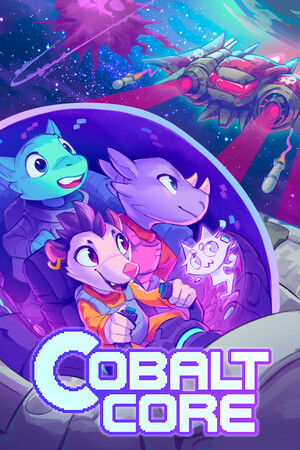
Cobalt Core
If you bounced off Slay the Spire because combat felt static, Cobalt Core fixes exactly that problem by welding a positioning layer onto every card you play.
GamerScout Verdict
Confident buy for Slay the Spire veterans who want positioning depth added to every card decision, with caveats on fixed boss variety.
Compare Prices(5 stores)
Every store in this table quotes us in euros, so the EUR figure is the price the seller actually set, not our arithmetic — which is why EUR is also the currency we rank in. We only list an offer here when the store gives us its price in euros, so nothing in this table is a number we invented.
Pick USD, PLN, GBP, CAD or AUD in the header and we convert from EUR at the European Central Bank reference rate — converted amounts are prefixed with ~. Your bank or the store may apply a different rate at checkout. We never hide offers based on where you are: everyone sees this whole table.
We may earn a commission when you buy games through links on this page — at no extra cost to you. It never affects our rankings or verdicts.
Price History
Screenshots & Media
About Cobalt Core
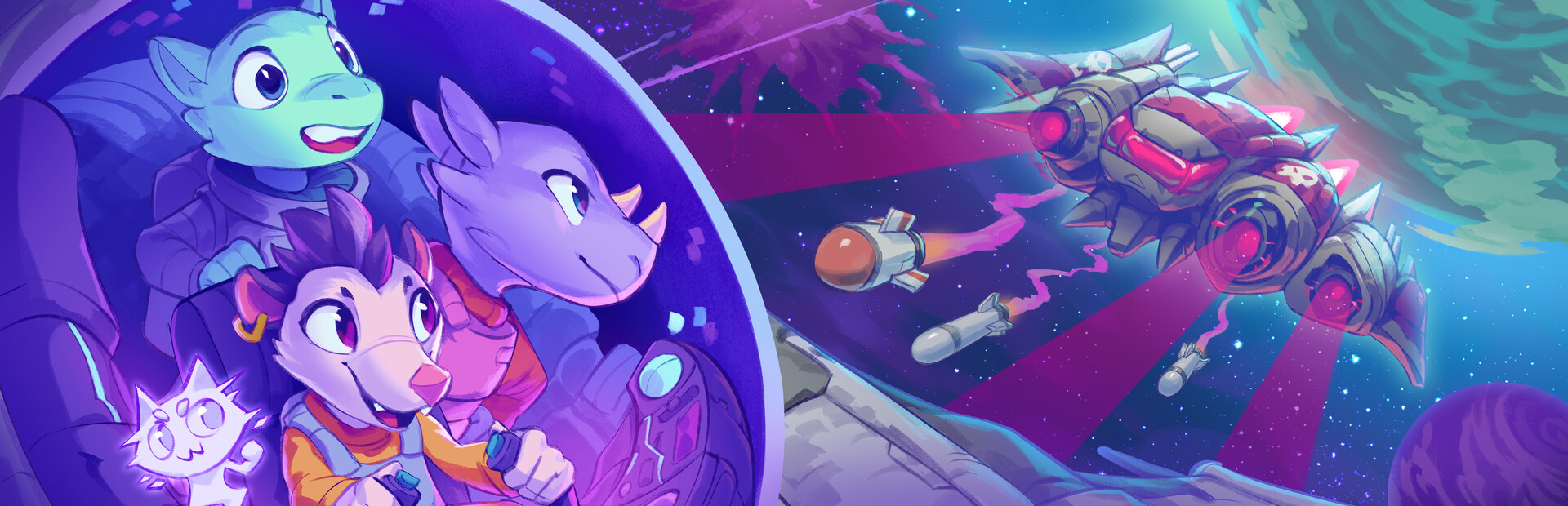
I have a personal litmus test for deckbuilders: can I explain the core decision loop in one sentence, and does it still hide twenty hours of depth underneath? Cobalt Core passes that test harder than almost anything released in 2023. The central idea is deceptively simple. Both your ship and the enemy ship sit on a single horizontal axis, and every card you play has positional consequences. Move cards slide you left or right. Attack cards fire from fixed hardpoints on your hull. If your cannon is not lined up with any part of the enemy ship, the shot misses entirely. That constraint turns what could be a straightforward damage race into a constant geometric puzzle, and it never stops being tense. The crew system is where the strategy really compounds. You pick three characters from a roster of eight, and each one contributes their own card set to your shared deck. Starting trio Dizzy, Riggs, and Peri cover the fundamentals reasonably well, with shield cards, movement specialists, and raw firepower respectively. Unlock Isaac and you gain access to drone mechanics that occupy a third band of space between the ships, adding intercept angles and mid-lane hazards to track. Drake brings space-pirate aggression. Max introduces a hacking and card-order manipulation style that rewards players who want to treat hand sequencing as its own mini-game. Each crew combination produces a genuinely different deck topology, and the five available ships each change the hardware layer too. One starts with a single cannon and missile bay; another has twin cannons where only one fires at a time, rewarding positional cycling to alternate fire lanes. The combinatorial math here is real, not inflated marketing math. Between battles you navigate a starmap, choosing routes that weigh repair stops against card upgrade nodes against optional elite encounters. Beating an elite is optional, but the artifact rewards justify the risk if your hull rating can take it. Artifacts are the permanent-buff layer that separates a competent run from an absurd one. Starting a battle with a pre-loaded shield, or redirecting enemy missiles back at their source, can redefine your whole defensive plan mid-run. The upgrade paths on cards also branch, so the same card can evolve in meaningfully different directions, and deck-thinning via removal nodes matters enough that skipping a removal stop genuinely costs you late-game consistency. So where does it fall short? Critics and community voices both flag the same structural issue: boss encounters are fixed, not procedurally varied. Once you have logged several successful runs, the final stages stop surprising you at the strategic level even as execution stays demanding. Some players also feel that certain character cards, once identified as optimal, become default choices rather than situational tools, narrowing the perceived build variety on repeat playthroughs. The story unlocks are gated behind successful run completions, which means a losing streak delays narrative payoff in a way that can feel punitive rather than roguelike-fair. These are legitimate criticisms. They do not sink the game, but newcomers who expect infinite procedural freshness from every enemy encounter will eventually notice the ceiling. For the audience most likely to be reading this right now, meaning Slay the Spire veterans who want a different decision space, or strategy players who liked FTL's spatial logic but wanted more card-to-card synergy depth, Cobalt Core is a well-constructed purchase. The tutorial is gentle without being condescending, the character banter contextualizes the run-based structure thematically, and the daily challenge mode keeps the mid-term variety fresh after your first handful of wins. The soundtrack, for what it is worth, genuinely holds up across many hours, which matters more than people admit in a game you will restart repeatedly.

Strategy & simulation
Tags
System Requirements
Minimum
- OS
- Windows 7
- Memory
- 2 GB RAM
- Storage
- 500 MB available space
- Graphics
- yeah we got those
- Processor
- Anything, really
- Sound Card
- ideally
Recommended
Requires a 64-bit processor and operating system
Keep exploring
Community Discussion
Be the first to comment on Cobalt Core.
Reviews & Ratings
Game Info
- Developer
- Rocket Rat Games
- Publisher
- Brace Yourself Games
- Release Date
- Nov 8, 2023