Closer the Distance
Playing a ghost who can only nudge the living, not command them, is the most honest grief simulator I've seen packaged as a life-management game. An 11-hour gut-punch with real replay teeth.
GamerScout Verdict
Best for Life is Strange fans ready to feel genuinely powerless as they try to hold a grieving small town together.
Compare Prices(8 stores)
Every store in this table quotes us in euros, so the EUR figure is the price the seller actually set, not our arithmetic — which is why EUR is also the currency we rank in. We only list an offer here when the store gives us its price in euros, so nothing in this table is a number we invented.
Pick USD, PLN, GBP, CAD or AUD in the header and we convert from EUR at the European Central Bank reference rate — converted amounts are prefixed with ~. Your bank or the store may apply a different rate at checkout. We never hide offers based on where you are: everyone sees this whole table.
We may earn a commission when you buy games through links on this page — at no extra cost to you. It never affects our rankings or verdicts.
Price History
Screenshots & Media
About Closer the Distance
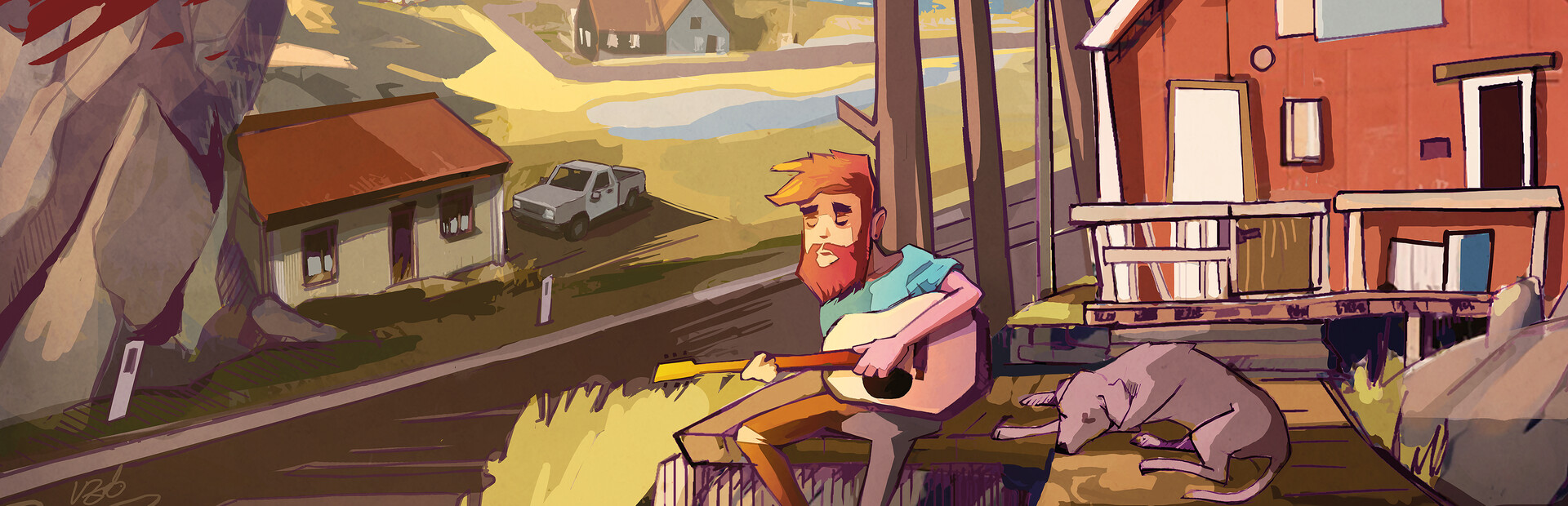
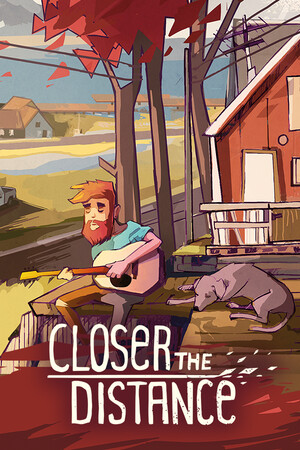
I don't usually gravitate toward life sims, but Closer the Distance caught me off-guard with a structural hook I hadn't seen before: you are dead before the tutorial ends. You play as Angela, a young woman from the small town of Yesterby, killed in a car accident, who persists as an invisible presence trying to hold her community together from beyond. That premise alone earns Osmotic Studios attention, but what keeps the game interesting is how honestly it translates the powerlessness of grief into mechanical form. The core loop sits somewhere between The Sims and a point-and-click adventure, viewed from a rotatable isometric camera where house walls turn transparent to reveal whoever you're watching. You start by influencing Angela's younger sister Conny, the only person who can actually hear Angela's voice, and from there the web expands to include characters like Zek (Angela's boyfriend, guilt-ridden and itching to leave town), physician Galya, and a cast of roughly thirteen townspeople with their own daily routines, need bars, and emotional states. You manage hunger, sleep, self-care, and emotional metrics for each character you're allowed to touch, but the ceiling is capped at five directly influenced characters at any point, which critics noted was a deliberate design choice rather than a shortcoming. You can suggest actions; you cannot force them. When a character's personality conflicts with your guidance, they simply push back, and watching a well-intentioned nudge snowball into a worse outcome is the game's most quietly devastating trick. The time-management layer is real and can stress players who prefer contemplative pacing. Multiple conversations fire simultaneously, and you physically cannot watch all of them at once, so information gaps accumulate. A rewind feature and day-restart option soften the edges for players who want a cleaner narrative pass, but the built-in chaos is part of the point: life in Yesterby does not pause for you to process your feelings. Critics split on this. Some found the urgency an inspired ludonarrative choice; a smaller contingent felt the context-switching clashed with the slow, mournful tone. Both reads are defensible. Where the game earns its 85 Metacritic score and near-89% positive Steam rating is in its writing and voice work. Characters like Conny, Melville (the isolated carpenter burning through alcohol and renovation projects), and River (the project manager haunted by a friend's opposition) feel written, not generated. A single playthrough runs roughly eleven hours, and the choices-matter architecture gives a second run genuine variation rather than cosmetic difference. The autumnal visual style, described by multiple reviewers as a more angular Kentucky Route Zero, and a strong voice cast round out a presentation that punches above its budget. The camera occasionally gets tangled when switching characters quickly, and some players flagged performance choppiness, worth noting if you are on a lower-spec machine (minimum asks for an i5-6600K and a Radeon R9 270-class GPU). For the audience asking whether this is worth buying right now: if you finished Disco Elysium's emotional beats and wished someone would attach them to a lighter management layer, or if Life is Strange's community focus resonated with you, this belongs in the cart. Pure systems players chasing optimization loops will find the action vocabulary too narrow. But Osmotic Studios built something that sits in a category of its own, and that is a genuinely rare thing to say about a sim.

Strategy & simulation
Tags
System Requirements
Minimum
- OS
- Windows 10
- Memory
- 8 GB RAM
- DirectX
- Version 11
- Graphics
- AMD Radeon r9 200
- Processor
- Intel Core i5-6600K
Recommended
- OS
- Windows 10
- Memory
- 16 GB RAM
- DirectX
- Version 11
- Graphics
- Nvidia GeForce RTX 2070
- Processor
- AMD Ryzen 7 2700
Keep exploring
Community Discussion
Be the first to comment on Closer the Distance.
Reviews & Ratings
Game Info
- Developer
- Osmotic Studios
- Publisher
- Skybound Games
- Release Date
- Aug 1, 2024