Chants of Sennaar
Decoding five fictional languages across a Babel-inspired tower is one of the most quietly radical things a puzzle game has asked me to do in years. If you have patience and curiosity, this one pays out.
GamerScout Verdict
Unmissable for fans of Outer Wilds and Obra Dinn who want a quieter, more contemplative puzzle experience with genuine linguistic soul.
Compare Prices(8 stores)
Every store in this table quotes us in euros, so the EUR figure is the price the seller actually set, not our arithmetic — which is why EUR is also the currency we rank in. We only list an offer here when the store gives us its price in euros, so nothing in this table is a number we invented.
Pick USD, PLN, GBP, CAD or AUD in the header and we convert from EUR at the European Central Bank reference rate — converted amounts are prefixed with ~. Your bank or the store may apply a different rate at checkout. We never hide offers based on where you are: everyone sees this whole table.
We may earn a commission when you buy games through links on this page — at no extra cost to you. It never affects our rankings or verdicts.
Price History
Screenshots & Media
About Chants of Sennaar
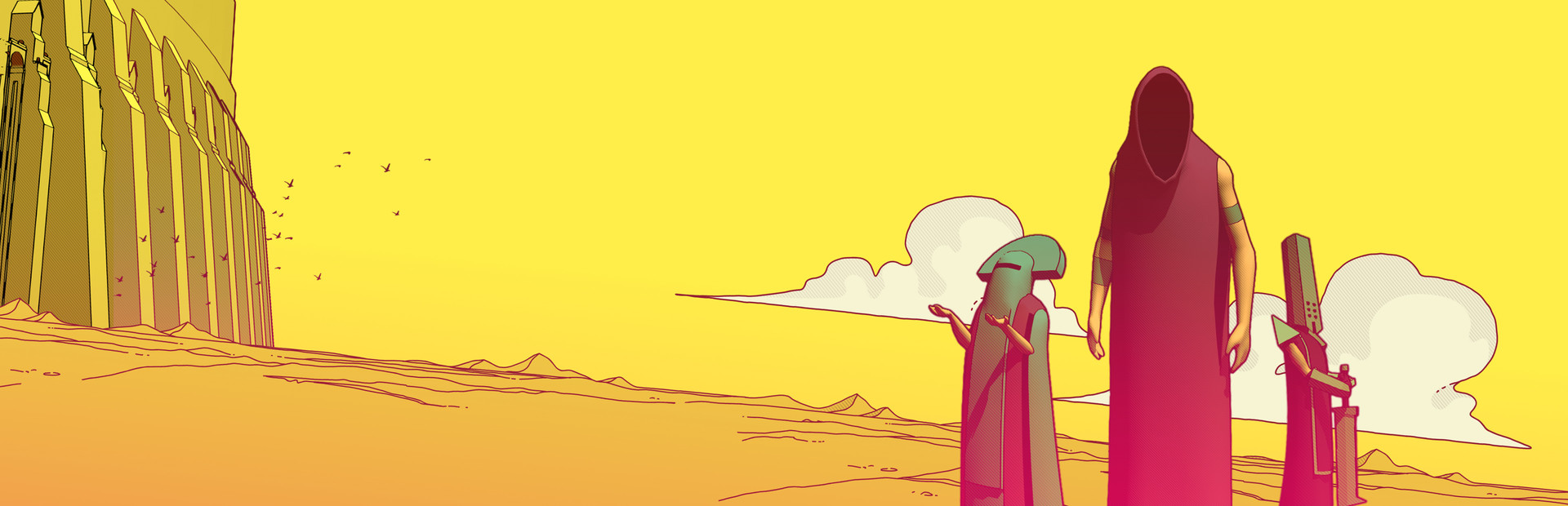
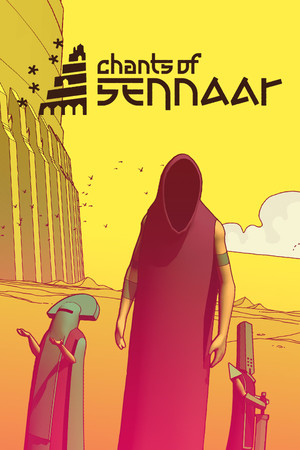
I sat down with Chants of Sennaar expecting a pleasant afternoon puzzle game and lost track of two full evenings. That quiet disorientation at the start, where every sign, every murmured glyph from a robed stranger, means absolutely nothing to you, is not an accident. It is the whole thesis. Rundisc, a two-person French studio, built their entire game around the sensation of arriving somewhere foreign and slowly, painstakingly, finding your footing. You play as the Traveler, a cloaked figure ascending a vast tower whose five civilizations have been sealed off from one another for so long that language itself became a wall. Your job is to dismantle that wall, one logograph at a time. The core loop is deceptively simple on paper. You observe the world, pick up context clues from murals, architecture, lever puzzles, and overheard exchanges, then form hypotheses in your in-game journal. When you have gathered enough evidence, the journal prompts you to match glyphs to small illustrations. Get it right and the symbols light up with a satisfying chime; from that point on, confirmed words float above their glyphs wherever they appear in the world. It sounds gentle, and in stretches it genuinely is. But abstract words, things like "fear" or "transform" or grammatical negation, can push you to the edge of your patience before a single environmental detail snaps everything into place. That moment of sudden clarity, where a whole sentence you have been staring at resolves into meaning, is the closest a puzzle game has come to replicating the genuine high of learning a language. The hint system, which subtly highlights what is actionable on screen, keeps the experience from tipping into pure frustration without ever handing you the answer outright. The art deserves its own sentence. The palette shifts completely with each floor of the tower, moving from warm monastic yellows and reds through cooler warrior blues and whites, and the flat Franco-Belgian comic shading gives every scene a handcrafted, almost woodblock-print weight. The soundscape is equally considered: NPCs never speak words, just soft vocal tones that sound like speech, which is quietly funny and quietly poignant all at once. The ambient texture of bells, pings, and scribbling sounds adds atmosphere without ever becoming noise. This is a studio that understands that restraint is its own kind of craft. Not everything holds together with the same precision. The stealth sections that appear in a handful of floors feel genuinely out of place, an awkward gear shift in a game otherwise built for unhurried observation. Some players who want a deeper linguistic challenge will find that the notebook system corrects small errors a bit too generously. And the loop of arriving on a new floor and starting a fresh language from scratch can feel defeating mid-game, even if that disorientation is thematically intentional. The ending also arrives with a plot-heaviness that some will find earned and others will find slightly at odds with the sparse, ambient storytelling that precedes it. These are real friction points, not dealbreakers. For anyone drawn to Outer Wilds, Return of the Obra Dinn, or Heaven's Vault, this sits in that same territory of games that respect your intelligence and reward genuine attention. The runtime lands in the sweet spot of eight to thirteen hours depending on how carefully you read the world, and the completion rate on Steam achievements is remarkably high for the genre, which says something about how well the pacing keeps people invested. It was named one of the top ten games of 2023 by The New York Times, won Best Indie at the 2024 New York Game Awards, and sits at Overwhelmingly Positive on Steam. That consensus is not hype. It is a small, handcrafted thing that knows exactly what it wants to say and says it without wasting a single glyph.

Indie & narrative
Tags
System Requirements
Minimum
- OS
- Windows 10 64-bit
- Memory
- 8 GB RAM
- Storage
- 601 MB available space
- Graphics
- 1GB VRAM, Intel HD Graphics 530
- Processor
- AMD FX-6300/Intel Core i3-6100
Recommended
- OS
- Windows 10 64-bit
- Memory
- 8 GB RAM
- Storage
- 601 MB available space
- Graphics
- 1GB VRAM, AMD Radeon HD 5850/Nvidia GeForce GTX 460
- Processor
- AMD FX-6300/Intel Core i3-6100
Keep exploring
Community Discussion
Be the first to comment on Chants of Sennaar.
Reviews & Ratings
Game Info
- Developer
- Rundisc
- Publisher
- Focus Entertainment
- Release Date
- Sep 5, 2023