
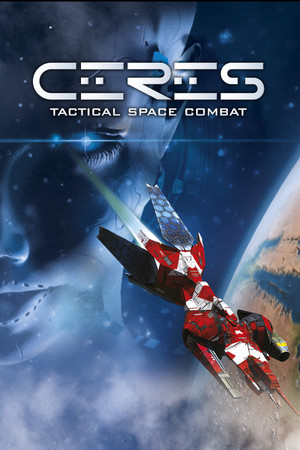
Compare Ceres prices across 50+ stores and find the best deal. Developed by Jötunn Games. Published by Iceberg Interactive. Released on 10/16/2015. Available on PC, Mac, Linux. Genres: Action, Indie, RPG, Simulation, Strategy. Metacritic score: 74/100.

If Mount and Blade in space with hectic fleet micromanagement sounds like your spreadsheet nightmare or your dream session, Ceres lands squarely in one of those two camps for you, and there is no middle ground.

I've spent enough time with tactical space sims to recognize the specific ache of a game that almost nails it, and Ceres is precisely that ache in interactive form. Built nearly single-handedly by Icelandic developer Tryggvi Hákonarson at Jötunn Games, this is a real-time-with-pause fleet commander that draws its DNA from Homeworld, Elite, and even the obscure Paradroid, then wraps it in an open-solar-system structure that lets you trade, pirate, mercenary, or mission-run at your own pace. The pitch is exciting: Earth is gone, four warring factions control the remnants of Sol, alien lifeforms are pouring through a malfunctioning gate, and you start with one ship and ambitions to match the chaos. On paper, the systems stack up well. Your fleet scales from small corvettes up to battleships, each vessel customizable down to fixed versus rotating turret emplacements, armor plating, sensors, and countermeasures. Captains level up, earn perks, and develop distinct combat identities over time. The hacking mechanic stands out: rather than just shooting enemies, you can launch cyber-attacks to disable systems or seize control of hostile ships outright, then press the advantage with boarding drones to capture the hull intact. Combat salvage feeds a trading loop where you sell spoils at space stations, refit ships, and hire new crew from a character market that tracks individual skill progression. In a post-Earth solar system divided into faction-controlled risk zones, there is genuine freedom in how you build your operation, whether that means running trade caravans or hunting pirates for loot. For a strategy-minded player, those interlocking systems are quietly thrilling when they click. Here is the honest accounting though: Ceres lands a 74 on Metacritic and sits at a 52 percent positive rating from 127 Steam user reviews, and those numbers tell a story the marketing does not. The 3D movement system is the game's central liability. Plotting a course in full three-dimensional space requires adjusting camera angle before committing a grid-based waypoint, with SHIFT held to shift the grid vertically, and that process under fire is genuinely punishing. Fleet pathfinding has a formation-damage bug that was a documented problem at launch. The tutorial covers the mechanics, technically, but the sequencing is poor enough that multiple reviewers reported going back to it mid-campaign because a mission revealed mechanics they had never been taught. Expect five or more hours before you feel competent, not comfortable, just competent. The UI is functional but small-text heavy, the graphics are openly dated even by 2015 indie standards, and there is no multiplayer despite the obvious suitability of the faction warfare for co-op or PvP. For the right player this is a manageable list of trade-offs. If you have finished the Homeworld remastered collection and want something looser and more freeform, if you tolerate old-school interface philosophy as a feature rather than a flaw, and if you find the captain-perk-plus-ship-module progression loop inherently satisfying regardless of polish level, Ceres has genuine hours in it. Just do the movement tutorial twice before touching the campaign, and treat every clumsy repositioning maneuver as an act of character building. The underlying decision space, faction navigation, fleet composition, cyber versus kinetic loadouts, is real. The packaging around it is rough. Diego, Scout Team

Ceres
ActionIndieRPGSimulationStrategy

Ceres

Oct 16, 2015Jötunn GamesIceberg Interactive
GamerScout Says

If Mount and Blade in space with hectic fleet micromanagement sounds like your spreadsheet nightmare or your dream session, Ceres lands squarely in one of those two camps for you, and there is no middle ground.

PCMacLinux
Best Price Available
0.00
at N/A
Historical low: $2.84

Compare Prices(0 stores)

Loading prices...

We may earn a commission when you buy games through links on this page — at no extra cost to you. It never affects our rankings or verdicts.

Screenshots & Media

Screenshot

About Ceres

I've spent enough time with tactical space sims to recognize the specific ache of a game that almost nails it, and Ceres is precisely that ache in interactive form. Built nearly single-handedly by Icelandic developer Tryggvi Hákonarson at Jötunn Games, this is a real-time-with-pause fleet commander that draws its DNA from Homeworld, Elite, and even the obscure Paradroid, then wraps it in an open-solar-system structure that lets you trade, pirate, mercenary, or mission-run at your own pace. The pitch is exciting: Earth is gone, four warring factions control the remnants of Sol, alien lifeforms are pouring through a malfunctioning gate, and you start with one ship and ambitions to match the chaos. On paper, the systems stack up well. Your fleet scales from small corvettes up to battleships, each vessel customizable down to fixed versus rotating turret emplacements, armor plating, sensors, and countermeasures. Captains level up, earn perks, and develop distinct combat identities over time. The hacking mechanic stands out: rather than just shooting enemies, you can launch cyber-attacks to disable systems or seize control of hostile ships outright, then press the advantage with boarding drones to capture the hull intact. Combat salvage feeds a trading loop where you sell spoils at space stations, refit ships, and hire new crew from a character market that tracks individual skill progression. In a post-Earth solar system divided into faction-controlled risk zones, there is genuine freedom in how you build your operation, whether that means running trade caravans or hunting pirates for loot. For a strategy-minded player, those interlocking systems are quietly thrilling when they click. Here is the honest accounting though: Ceres lands a 74 on Metacritic and sits at a 52 percent positive rating from 127 Steam user reviews, and those numbers tell a story the marketing does not. The 3D movement system is the game's central liability. Plotting a course in full three-dimensional space requires adjusting camera angle before committing a grid-based waypoint, with SHIFT held to shift the grid vertically, and that process under fire is genuinely punishing. Fleet pathfinding has a formation-damage bug that was a documented problem at launch. The tutorial covers the mechanics, technically, but the sequencing is poor enough that multiple reviewers reported going back to it mid-campaign because a mission revealed mechanics they had never been taught. Expect five or more hours before you feel competent, not comfortable, just competent. The UI is functional but small-text heavy, the graphics are openly dated even by 2015 indie standards, and there is no multiplayer despite the obvious suitability of the faction warfare for co-op or PvP. For the right player this is a manageable list of trade-offs. If you have finished the Homeworld remastered collection and want something looser and more freeform, if you tolerate old-school interface philosophy as a feature rather than a flaw, and if you find the captain-perk-plus-ship-module progression loop inherently satisfying regardless of polish level, Ceres has genuine hours in it. Just do the movement tutorial twice before touching the campaign, and treat every clumsy repositioning maneuver as an act of character building. The underlying decision space, faction navigation, fleet composition, cyber versus kinetic loadouts, is real. The packaging around it is rough. Diego, Scout Team

Tags

singleplayerachievementstrading-cardscloud-savestier:aaaReal-Time with PauseFleet CommanderCyber-WarfareShip CustomizationCaptain ProgressionFaction SandboxBoarding MechanicsSolar System ExplorationSolo DevHardcore Learning Curve

Steam Deck & Linux

Steam Deck Playable

Valve rates this game Steam Deck Playable.

System Requirements

Minimum

OS
Windows 7, Windows 8
Memory
2 GB RAM
DirectX
Version 9.0
Storage
2 GB available space
Graphics
1 GB nVidia Geforce GT460 or equivalent, 500 MB ATI HD4850 or equivalent
Processor
Intel Pentium G3220 @ 3.00GHz or equivalent AMD processor and above
Sound Card
DirectX 9 Compatible Audio
Additional Notes
Minimum Resolution: 1024 x 768. Maximum screen size is around 25 inches. UI does not scale.

Recommended

OS
Windows 7, Windows 8
Memory
4 GB RAM
DirectX
Version 9.0
Storage
2 GB available space
Graphics
1 GB nVidia Geforce GTX660 or equivalent, 1 GB ATI HD7850 or equivalent
Processor
Intel i5 3.2 GHz or equivalent AMD processor and above
Sound Card
DirectX 9 Compatible Audio
Additional Notes
Minimum Resolution: 1024 x 768. Maximum screen size is around 25 inches. UI does not scale.

Community Discussion

Be the first to comment on Ceres.

Reviews & Ratings

Metacritic
74

Game Info

Developer
Jötunn Games
Publisher
Iceberg Interactive
Release Date
Oct 16, 2015

Price Alert

Get notified when the price drops below your target!

Create Alert

Price History

2026-06-102.84(lowest)

Buy smarter: helpful guides

Looking for more? See games like Ceres

Frequently asked questions about Ceres

How much does Ceres cost?

Ceres pricing changes often and varies by store, edition and region. The live price table on this page compares the cheapest in-stock key and store offers across 50+ verified shops, so you always see the current lowest price before you buy.

Where can I buy Ceres cheapest?

Compare Ceres prices across every verified store in the price table on this page. We list the cheapest in-stock key and store offers, updated regularly, so you always see the best current deal before you buy.

What platforms is Ceres available on?

Ceres is available on PC, Mac, Linux.

When was Ceres released?

Ceres was released on 16 October 2015.

Who developed Ceres?

Ceres was developed by Jötunn Games and published by Iceberg Interactive.

Is Ceres worth buying?

Ceres holds a Metacritic score of 74/100, making it one of the standout Action titles. See the full reviews, ratings and how-long-to-beat times on this page to decide.