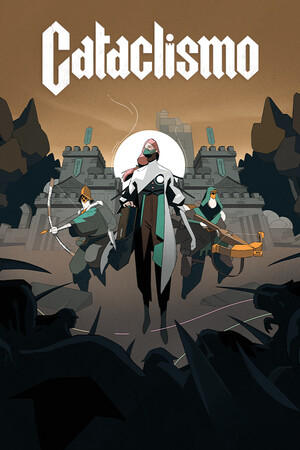
Cataclismo
Part horde defender, part medieval Lego set: if optimizing firing angles and wall toughness tiers sounds like a good Tuesday night, Cataclismo was built for you.
GamerScout Verdict
Built for players who want structural physics to determine whether their archers survive the night, not just how many towers they placed.
Compare Prices(7 stores)
Every store in this table quotes us in euros, so the EUR figure is the price the seller actually set, not our arithmetic — which is why EUR is also the currency we rank in. We only list an offer here when the store gives us its price in euros, so nothing in this table is a number we invented.
Pick USD, PLN, GBP, CAD or AUD in the header and we convert from EUR at the European Central Bank reference rate — converted amounts are prefixed with ~. Your bank or the store may apply a different rate at checkout. We never hide offers based on where you are: everyone sees this whole table.
We may earn a commission when you buy games through links on this page — at no extra cost to you. It never affects our rankings or verdicts.
Price History
Screenshots & Media
About Cataclismo
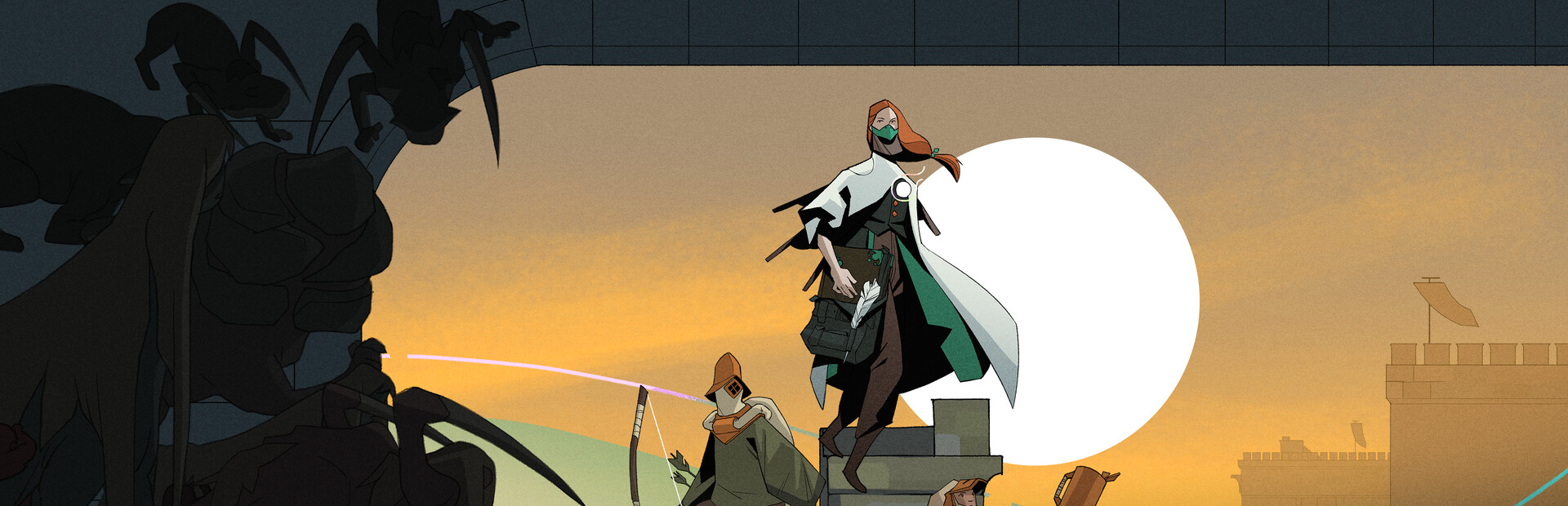
My first instinct when I loaded up Cataclismo was to treat it like a standard tower defense: plop some archers, call it a night, wait for dawn. That instinct will get your walls demolished inside three minutes. The real game here is structural physics applied to siege survival, and once that clicks, it becomes genuinely hard to stop. You are placing individual wood and stone blocks, stacking them according to stability rules, then watching the whole thing wobble and crumble when the Horrors find the one column you under-reinforced. Digital Sun took design cues from Age of Empires II, Warcraft III, and They Are Billions, and you can feel all three in the DNA, but the Lego-style construction layer sits on top of all of them as something entirely its own. The resource loop runs deeper than it first appears. You are tracking wood, stone, minerals, citizens, oxygen, and Mistfuel across a day-night cycle split into three distinct phases: a daytime build window, an evening prep alert, and the nocturnal assault itself. Oxygen is the constraint that forces vertical thinking, since building Air Filters and stacking walls higher is the main way to sustain population growth. Stone walls gain a Toughness bonus as they rise, so there is a genuine incentive to build tall rather than just wide. The physics model adds consequence: knock out a load-bearing block mid-siege and the column above it collapses, which can wipe your own archers as easily as the attackers. That tension between efficient construction and disaster risk is where most of the strategic interest lives. Positioning units is not passive either. Archers, ballistae, and cannoneers each have preferred height tiers that unlock bonus damage, so a well-designed wall is one that funnels enemies into kill zones while placing each unit type at its optimal elevation. Campaign, Skirmish, and Endless modes cover different playstyles without feeling like padding. The campaign follows Iris, a time-manipulating commander whose save-and-reload ability is framed as an in-universe mechanic rather than a UI concession, which is a small but genuinely clever piece of world integration. The story runs a reasonable length with narrative-focused Expedition missions providing low-pressure breathers between dense fortress missions. Skirmish offers handmade maps for repeatable challenge, while Endless uses procedurally generated layouts and an objective-based point system for unlocking extra build options. The Steam Workshop integration matters here: copy-paste blueprint sharing means community-designed fortresses are available as starting templates, which flattens the learning curve considerably for players who find the block palette intimidating at first. A full map editor rounds out the package for the creative crowd. Where Cataclismo loses points is in the gaps the building system reveals when you look away from the walls. Non-defensive structures are snapped into place without the same granularity, and the economy layer is functional but thin. Resource placement decisions rarely require hard tradeoffs beyond the familiar more-mines-equals-more-stuff logic. Unit variety is also narrower than the combat depth suggests it should be. Critics landing around the Metacritic score of 82 consistently note that the wall-building receives all the design attention while everything adjacent to it feels comparatively undercooked. These are real complaints, not minor quibbles, and players who demand Paradox-depth city management from every building sim will hit the ceiling sooner than they might like. For the right player, though, those limitations are easy to work around. The real-time-with-pause control scheme means this is accessible to strategy fans who do not thrive under pure real-time pressure. Difficulty scales cleanly, the tutorial covers the core mechanics without condescension, and the Workshop means a newcomer can borrow a proven wall blueprint while learning the stability rules. If you have ever wanted to pressure-test a castle design you sketched on a napkin against actual physics and an actual horde, Cataclismo is the most direct path to doing exactly that.

Strategy & simulation
Tags
System Requirements
Minimum
- OS
- Windows® 10 (64-bit)
- Memory
- 8 GB RAM
- DirectX
- Version 11
- Storage
- 10 GB available space
- Graphics
- NVIDIA® GeForce® GTX 760 (2 GB) / AMD® Radeon™ R9 270X (2 GB)
- Processor
- Intel® Core™ i7-4770 (quad-core) / AMD® FX-Series™ FX-9590 (quad-core)
Recommended
- OS
- Windows® 10 (64-bit)
- Memory
- 12 GB RAM
- DirectX
- Version 12
- Storage
- 10 GB available space
- Graphics
- NVIDIA® GeForce® GTX 1050 Ti (4 GB) / AMD® Radeon™ RX 570 (4 GB)
- Processor
- Intel® Core™ i7-6700 (quad-core) / AMD® Ryzen™ 5 1500X (quad-core)
Keep exploring
Community Discussion
Be the first to comment on Cataclismo.
Reviews & Ratings
Game Info
- Developer
- Digital Sun
- Publisher
- Hooded Horse
- Release Date
- Mar 20, 2025