
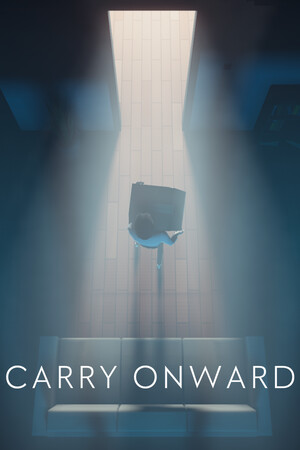
Carry Onward
A solo-dev grief sim you can finish before bedtime, built around one quietly devastating question: what do you keep, and what do you finally let go?
GamerScout Verdict
Best for walking-sim fans who want a compact, emotionally honest single-sitting experience with low mechanical demands.
Compare Prices(0 stores)
Loading prices...
We may earn a commission when you buy games through links on this page — at no extra cost to you. It never affects our rankings or verdicts.
Price History
Screenshots & Media
About Carry Onward
I normally track decision trees the way a general tracks troop movements, so a top-down narrative micro-game about a widower packing boxes is not exactly my usual territory. That said, I respect tight, intentional design, and Carry Onward has a clear thesis it executes with focus: your choices reveal character, not just story outcomes. That is the entire mechanical hook, and for what it is, it holds together. You play as Thomas, a man packing up the home he shared with his late wife. The top-down perspective, with simplistic 3D art visually comparable to 12 Minutes, sets a quiet, contained stage. Each room holds interactive objects, and touching them does not open an inventory screen. Instead it surfaces a small set of word choices that shape how Thomas internally processes that memory. His voiced internal monologue responds to your selection, and the other two options are then locked out for that run. That single-selection-per-object design, combined with five distinct endings, is the entire replay loop. It is a small loop, but it is deliberate. A second or third run, adjusting which choices you make with the photographs and keepsakes, takes under an hour total, and you will notice genuine tonal differences in Thomas's voice-over delivery depending on the emotional direction you push him. The production is a first solo project, and that shows in places. Critics noted inconsistency in how the music and voice-over interact at certain points, and character movement can feel clunky. The visual presentation is modest by any measure. If you are the kind of player who uses technical roughness as a dealbreaker, the game gives you that ammunition quickly. But reviewers who connected with the material tended to find the rough edges faded fast, because the writing lands its emotional beats with more reliability than a lot of higher-budget walking sims manage. From a pure systems perspective there is almost nothing to analyze: no branching stat checks, no inventory management, no fail states. What there is instead is a pacing exercise. The game is designed to be finished in a single sitting, and that constraint is doing real work. Grief, in actual human experience, does not come with a skill ceiling. Carry Onward seems to understand that, and it respects the subject enough not to gamify it beyond the choice-and-response loop. The five endings mean the word 'replayable' technically applies, but you are not chasing achievements here. You are sitting with a version of Thomas who is a little more bitter, or a little more hopeful, depending on the path you took. Who is this for? Fans of short-form narrative games such as Unpacking or What Remains of Edith Finch who want something even more compact and are not put off by indie-first-project production values. It is not for players who need mechanical depth to stay engaged, and it is not for anyone in a fragile headspace who did not sign up for a quiet gut-punch. For the right audience, especially at its asking price, the runtime-to-emotional-impact ratio is genuinely strong for a debut release.

Strategy & simulation
Tags
System Requirements
Minimum
- OS
- Windows 7
- Memory
- 2 GB RAM
- Storage
- 2 GB available space
- Graphics
- Nvidia GeForce GTS 450, 1 GB | AMD Radeon HD 5770, 1 GB
- Processor
- Intel Core i5-2300 | AMD Phenom II X4 965
Recommended
Requires a 64-bit processor and operating system
Keep exploring
Community Discussion
Be the first to comment on Carry Onward.
Reviews & Ratings
No ratings available
Game Info
- Developer
- Andrey Chudaev
- Publisher
- Andrey Chudaev
- Release Date
- Jul 21, 2023