
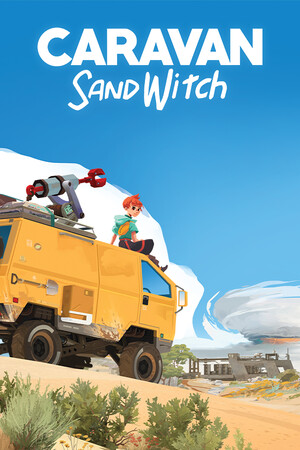
Caravan SandWitch
A combat-free road trip through a quietly dying world, built by two people who grew up in Provence and poured that love of limestone and light into every corner of Cigalo.
GamerScout Verdict
Worth it for players who want a handcrafted world to sit inside for a weekend without anything trying to kill them.
Compare Prices(9 stores)
Every store in this table quotes us in euros, so the EUR figure is the price the seller actually set, not our arithmetic — which is why EUR is also the currency we rank in. We only list an offer here when the store gives us its price in euros, so nothing in this table is a number we invented.
Pick USD, PLN, GBP, CAD or AUD in the header and we convert from EUR at the European Central Bank reference rate — converted amounts are prefixed with ~. Your bank or the store may apply a different rate at checkout. We never hide offers based on where you are: everyone sees this whole table.
We may earn a commission when you buy games through links on this page — at no extra cost to you. It never affects our rankings or verdicts.
Price History
Screenshots & Media
About Caravan SandWitch
I want to talk about the silence between objectives, because that is where Caravan SandWitch actually lives. Studio Plane Toast, a small French studio founded by two childhood friends, made their debut here, and the craft behind that debut is hard to miss once you slow down enough to notice it. The world of Cigalo, a sun-baked planet abandoned by a megacorp called the Consortium after it stripped the place bare, carries the unmistakable texture of somewhere real. The limestone formations, the bleached roads, the electrical storm permanently bruising the horizon: it all traces back to the designers' own landscape in southern France, and that specificity of place gives the whole thing an emotional grounding that most open-world games spend three times the budget trying and failing to manufacture. You play as Sauge, returning home after six years away to follow a distress signal from her long-missing sister Garance. The hook is personal, not epic. There is no combat here, no health bar, no penalty for falling from a derelict tower. What there is: a yellow van, a planet full of scattered circuit board components in four rarity tiers, and a steady drip of van upgrades that gate your access to the map in a loose Metroidvania rhythm. First you build a scanner to detect points of interest. Then a grappling hook that doubles as a zipline for reaching high ledges and prying open locked doors. Then an antenna upgrade for hacking door pads and Toaster terminals, which are small lore drops dressed as a community social network. Each upgrade also earns a brief VR simulation test sequence that functions as a quiet moment of reflection before the world opens further. The progression never feels steep, but it does feel considered. The honest tension in any review of this game is that its strengths and its frustrations are almost the same thing. The quest structure is built entirely around driving to a location and interacting with something, and if that loop loses you around hour four, it will not dramatically reinvent itself by hour seven. A handful of reviewers flagged that juggling multiple active side quests, all wearing the same structural shape, can cause them to blur into a to-do list rather than a narrative. Some players also found the van handling awkward over rough terrain, with the camera fighting the environment in tighter spaces. These are real friction points. But I'd argue the game earns its repetition through sheer world-building density: the robot community with its own grief and rituals, the frog-like native inhabitants of Cigalo, the Consortium remnants scattered like industrial fossils across the sand. Side quests delivered through the Toaster app let supporting characters comment on each other's messages in real time, turning what could be a dry quest log into something closer to a neighbourhood group chat with genuine warmth. Where the game absolutely holds is in its atmosphere and pacing. The cell-shaded visual style, with its bold colours and Moebius-adjacent sensibility, makes climbing a ruined tower to look out over the electrical storm genuinely breathtaking. There are multiple endings built around a binary choice near the finale, and the story threads around the mysterious Sand Witch figure and the Consortium's abandoned facility TARAASK land with more weight than the cozy-game label would suggest. The community on Steam sits at 89 percent positive from over 1,500 reviews, and critics at Eurogamer and Rock Paper Shotgun both flagged it as a pleasant place to spend time. At eight to ten hours for a full run, it knows when to end, which for a game in this space is genuinely rare.

Indie & narrative
Tags
System Requirements
Minimum
- OS
- Windows 10/11
- Memory
- 8 GB RAM
- DirectX
- Version 11
- Storage
- 5 GB available space
- Graphics
- GeForce GTX 1050 Ti / Radeon RX 570
- Processor
- AMD Ryzen 3 3100 / Intel Core i3-8100
Recommended
- OS
- Windows 10/11
- Memory
- 16 GB RAM
- DirectX
- Version 11
- Storage
- 5 GB available space
- Graphics
- GeForce GTX 3050 / Radeon RX 5600XT
- Processor
- AMD Ryzen 7 1700X / Intel Core i5-8600K
Keep exploring
Community Discussion
Be the first to comment on Caravan SandWitch.
Reviews & Ratings
Game Info
- Developer
- Studio Plane Toast
- Publisher
- Dear Villagers
- Release Date
- Sep 12, 2024