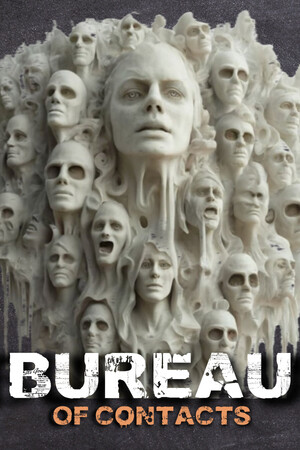
Bureau of Contacts
Phasmophobia made you fear the ghost. Bureau of Contacts makes you fear your own mouth - one careless word to the spirit box and the hunt turns against you fast.
GamerScout Verdict
Best for co-op horror squads who want a ghost that punishes careless chatter, not just jump-scare reflexes.
Compare Prices(1 stores)
Every store in this table quotes us in euros, so the EUR figure is the price the seller actually set, not our arithmetic — which is why EUR is also the currency we rank in. We only list an offer here when the store gives us its price in euros, so nothing in this table is a number we invented.
Pick USD, PLN, GBP, CAD or AUD in the header and we convert from EUR at the European Central Bank reference rate — converted amounts are prefixed with ~. Your bank or the store may apply a different rate at checkout. We never hide offers based on where you are: everyone sees this whole table.
We may earn a commission when you buy games through links on this page — at no extra cost to you. It never affects our rankings or verdicts.
Price History
Screenshots & Media
About Bureau of Contacts
I kept second-guessing myself before speaking out loud, which is not something I expected from a co-op horror game on a budget. Bureau of Contacts puts you and up to three other Bureau agents inside cursed locations - a Victorian manor, a bunker, an asylum - and tasks you with identifying, investigating, and ultimately exorcising whatever entity has taken up residence there. The twist that separates it from Phasmophobia and its many imitators is a neural-network-driven ghost system: the apparition actively listens to your proximity chat, reads the tone of what you say, and adjusts its behavior in real time. Call it aggressive and it escalates. Try to reason with it and it might give you something useful. The moment you realize that muttering frustration to a friend over voice chat was just heard and processed by the ghost, something genuinely unsettling shifts in the room. The dual-threat structure is the game's smartest design call. The location itself works as a second adversary, scattering environmental traps that chip away at your mental health meter and degrade your situational awareness. A "Mold on the Ceiling" trap triggers a coughing fit that masks the sound of an approaching ghost. Oily floor spills from spectral hands can drag you instantly under the map. These are not random annoyances - they are coordinated pressure tools that sync with whatever the ghost is already doing to you. That tandem design creates a kind of compound dread that the genre rarely achieves. The investigation loop itself is more layered than it first appears. Standard evidence gathering - thermometer readings, spirit box sessions, visual clues - feeds into identifying the ghost type, but identification is only the midpoint. Once you know what you are dealing with, the game opens up each ghost's personal backstory: who they were, how they died, where their remains ended up. Uncovering that history is what enables the exorcism ritual, and skipping straight to a rushed banishment means missing out on extra rewards and, more importantly, missing the only real narrative texture the game offers. Ghost types share behavioral traits rather than having entirely unique patterns, so you cannot simply memorize a spreadsheet and bulldoze through - you have to stay curious and cautious at the same time. Where it stumbles is real. The map design offers no in-game map, which reads as intentional tension but lands closer to frustrating aimlessness in practice, especially early on. Solo play is viable but lonely and punishing, and the progression system - leveling your agent to unlock new spells, tools, and investigation gear - can feel thin between sessions if you are not running it with a full squad. Some players have also noted that after extended play the ghost AI's unpredictability starts to feel less like genuine intelligence and more like a restricted pattern set that just reshuffles itself. The exorcism rituals and the Among Us-style betrayal mechanic (where one agent may receive a hidden objective that works against the team) add real variety, but both need a little more structure around them to land consistently. None of that undercuts what MIROWIN has actually built here. This is a small studio doing something genuinely unusual with a generative AI system at the core of a horror game's enemy design, and it works more often than it doesn't. The atmosphere - dark, close, architecturally oppressive - carries quiet craft in its sound design, the kind of ambient pressure that makes you hold your breath before rounding a corner. Community reception sits at around 81 percent positive across hundreds of Steam reviews, with recent feedback trending higher, which suggests the post-launch updates are landing. For a co-op horror night with friends who like to actually think between the screaming, this one earns its place in the rotation.

Indie & narrative
Tags
System Requirements
Minimum
- OS
- Windows 10
- Memory
- 8 GB RAM
- DirectX
- Version 11
- Network
- Broadband Internet connection
- Storage
- 15 GB available space
- Graphics
- NVIDIA GTX 970 / AMD equivalent or greater
- Processor
- Intel i5-4590 equivalent or greater. AVX2 instruction set support REQUIRED.
Recommended
- OS
- Windows 10
- Memory
- 16 GB RAM
- DirectX
- Version 12
- Network
- Broadband Internet connection
- Storage
- 15 GB available space
- Graphics
- NVIDIA GTX 1060 / AMD equivalent or greater
- Processor
- Intel i5-4590 equivalent or greater. AVX2 instruction set support REQUIRED.
Keep exploring
Community Discussion
Be the first to comment on Bureau of Contacts.
Reviews & Ratings
No ratings available
Game Info
- Developer
- MIROWIN
- Publisher
- MIROWIN
- Release Date
- Apr 12, 2025