Britannia
A digital port of Lewis Pulsipher's classic board wargame covering a millennium of British conquest, best appreciated by players who can treat a turn-based multiplayer session like a board game night.
GamerScout Verdict
Best for fans of tabletop wargames and historical strategy who want a faithful digital conversion over a modernised reimagining.
Compare Prices(9 stores)
Every store in this table quotes us in euros, so the EUR figure is the price the seller actually set, not our arithmetic — which is why EUR is also the currency we rank in. We only list an offer here when the store gives us its price in euros, so nothing in this table is a number we invented.
Pick USD, PLN, GBP, CAD or AUD in the header and we convert from EUR at the European Central Bank reference rate — converted amounts are prefixed with ~. Your bank or the store may apply a different rate at checkout. We never hide offers based on where you are: everyone sees this whole table.
We may earn a commission when you buy games through links on this page — at no extra cost to you. It never affects our rankings or verdicts.
Price History
Screenshots & Media
About Britannia
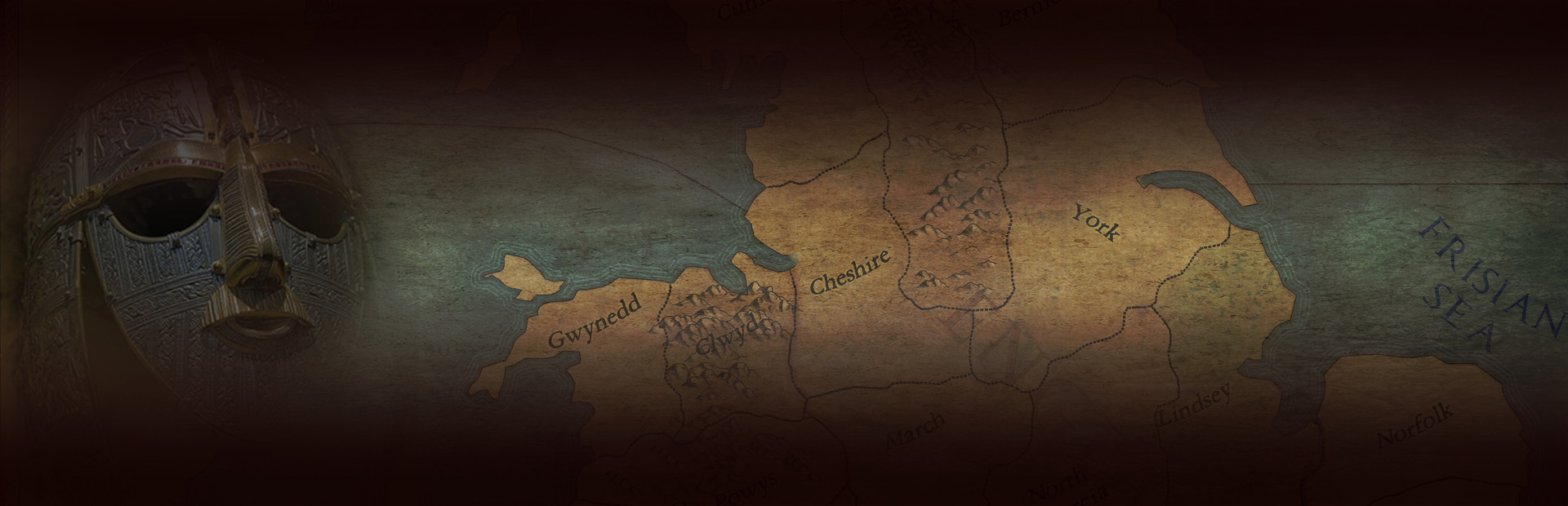
I've spent enough time with grand-strategy and wargame conversions to know that the hardest job is not recreating a ruleset on screen, it's convincing a digital audience to care about a game that was designed for a physical table. Britannia by Avalon Digital makes that case with mixed results, and whether it lands for you depends almost entirely on how you feel about source-faithful adaptations. This is a direct digital conversion of Lewis Pulsipher's 1980s board wargame, brought to PC with the same ruleset intact, covering the conflict for control of Britain from the Roman invasion of 43 A.D. through to the Norman Conquest of 1066. The core loop is asymmetric and turn-based across up to four players, with each player managing several distinct nations rather than a single faction. You might be steering the Romans to early dominance while simultaneously positioning the Romano-British remnants to survive the empire's inevitable withdrawal. Later, those same player slots cycle in Angles, Saxons, Picts, Norwegians, Danes, and Normans, among others, with each faction carrying faction-specific victory point objectives tied to historical outcomes. Scoring is not continuous: you tally points at specific turns, meaning early-game aggression can actively undermine your own late-game position if you overextend a faction that historically peaked and declined. That long-range planning dimension is genuinely rewarding for anyone who enjoys building towards a 200-turn endgame in a Paradox title. The good news is that Britannia's underlying design holds up. Each nation has five structured phases per turn, territory control feeds army replenishment through population growth mechanics, and the rules strongly discourage ahistorical play while still leaving room for meaningful "what if" pivots. Playing as Queen Boudica fighting Roman occupation, or positioning William the Conqueror's Normans for the final decisive push, produces moments of real strategic weight. The three available scenarios - the Roman invasion, the Germanic migrations of the 5th century, and the northern invasions culminating in 1066 - give returning players a reason to restart without grinding the same full timeline every time. Local co-op and online PvP are both supported, and the game shines brightest at four players, much as the tabletop version always did. The weaknesses are where the digital translation shows its seams. The UI reflects the era and scale of the original board game rather than modern strategy game conventions, and new players will likely feel the rules weight before they feel the strategic payoff. The solo experience is functional but the AI opposition is not going to tax experienced wargame players for long. Steam community reception sits in the "mostly positive" range with a modest review count, which suggests a niche but genuinely satisfied audience rather than a breakout title. There is no mod ecosystem to speak of, which is a missed opportunity given how much the board game community historically expanded on Pulsipher's base design with faction variants and alternate scenarios. For a newcomer to this style of game, Britannia is actually a reasonable starting point precisely because its rules are lighter than they look. Each faction's entry and exit is pre-scripted to historical timing, so you always know roughly what disruptions are coming and can plan against them. That predictability, which might bore a veteran, is a genuine teaching tool for players moving from lighter strategy games toward heavier wargame territory. Start with a three-player session on the Roman invasion scenario, read the manual's faction objectives before turn one, and the apparent complexity collapses into something manageable inside an hour.

Strategy & simulation
Tags
System Requirements
Minimum
- OS
- Windows 7/8/10
- Memory
- 2 GB RAM
- DirectX
- Version 9.0
- Storage
- 750 MB available space
- Graphics
- 512 MB NVIDIA GeForce 9600 or equivalent
- Processor
- 2.5 GHz Intel Dual Core
- Sound Card
- DirectX Compatible
Recommended
- OS
- Windows 7 or higher
- Memory
- 4 GB RAM
- DirectX
- Version 11
- Storage
- 2 GB available space
- Graphics
- 1024 MB DirectX 11 compatible
- Processor
- 2.5 GHz Intel Dual Core
- Sound Card
- DirectX Compatible
Keep exploring
Community Discussion
Be the first to comment on Britannia.
Reviews & Ratings
No ratings available
Game Info
- Developer
- Avalon Digital
- Publisher
- PID Games
- Release Date
- Apr 4, 2024