Braveland
King's Bounty trimmed down to its skeleton: if you want a low-friction entry point into hex-based army tactics, Braveland delivers it cleanly, but strategy veterans will hit the ceiling fast.
GamerScout Verdict
Solid entry-level hex tactics for genre newcomers; strategy veterans will exhaust its depth well before the credits roll.
Compare Prices(0 stores)
Loading prices...
We may earn a commission when you buy games through links on this page — at no extra cost to you. It never affects our rankings or verdicts.
Price History
Screenshots & Media
About Braveland
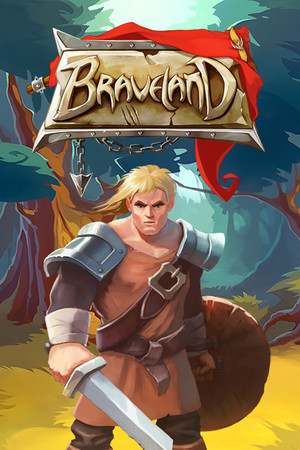
I have a spreadsheet that tracks roughly forty hex-grid strategy games by decision depth, and Braveland sits deliberately near the shallow end of that scale. That is not a dismissal. Tortuga Team built something that functions exactly as designed: a streamlined, hand-drawn army-tactics game that borrows the core combat DNA of King's Bounty and Heroes of Might and Magic, then strips away the overworld complexity so that the hex-grid fights themselves are the entire point. Knowing that going in changes how you evaluate it. The combat loop is simple but not brainless. You field up to five unit stacks drawn from a roster of 26 types including archers, scouts, footmen, healers, arbalesters, and golems. Each stack is a single token on the field with a count below it showing remaining numbers, and your hero sits off-grid casting support spells fuelled by a rage mechanic while your troops do the close-range work. Terrain obstacles on the hex grid can influence positioning, and pushing ranged units to the rear while leading with high-health melee is the kind of basic front-line thinking the game rewards. Boss fights at the end of each of the three chapters spike the difficulty noticeably, which is about the closest this game gets to a late-game test of your composition choices. That is genuinely the ceiling. Three chapters, around 50 battles total, and a linear map that does not let you replay completed encounters. Players who want to grind army compositions or min-max hero artifact loadouts will find the game closes the door on them early. From a strategy depth standpoint, the honest criticism is that unit variety is thinner than comparable titles, special abilities per unit are limited, and the level cap of 10 means your hero progression is over before you feel it begin. The map is almost entirely linear, with branching paths that exist mainly to grab a bonus or a troop pickup before rejoining the main road. There is no penalty for losing a battle beyond reduced gold, so the pressure that makes hex tactics interesting stays low. Difficulty can be adjusted at any point, which helps newcomers, but on normal and hard you will need to actually think about unit matchups and spell timing. A Survival mode exists for anyone who wants to test a composition outside the story, and that mode is the closest thing to replayable content the base game offers. Here is where I would push back against the instinct to dismiss Braveland entirely: for someone who has never touched the genre, this is a genuinely safe entry point. The tutorial is light but the mechanics surface themselves naturally. A new player can finish the three-chapter campaign and come out the other side understanding unit stacking, terrain use, spell timing, and army composition without ever having been overwhelmed. That kind of on-ramp has real value. The hand-drawn cartoon art is charming and runs without issue on hardware that predates most modern laptops. Steam sits at 80 percent positive across over a thousand reviews, which for a 2014 indie reflects a player base that went in with calibrated expectations. If Braveland clicks for you, the sequels Braveland Wizard and Braveland Pirate iterate on the formula with meaningful additions including talent trees and dungeon replay content. For anyone who logs 200 hours in Paradox titles or replays King's Bounty campaigns to optimise skeleton compositions, Braveland will feel like a prologue to a game that never arrives. For a younger sibling, a partner who is strategy-curious, or a commuter who wants something low-stakes that still asks for actual tactical thought, it earns its spot without embarrassment.

Strategy & simulation
Tags
System Requirements
Minimum
- OS
- Windows XP Service Pack 3 or later
- Memory
- 2 GB RAM
- DirectX
- Version 9.0
- Storage
- 500 MB available space
- Graphics
- NVIDIA GeForce GTX 260, ATI Radeon 4870 HD, Intel HD 3000, or equivalent card with at least 512 MB VRAM
- Processor
- 1.7 GHz Dual Core
- Sound Card
- DirectX Compatible Sound Card
Keep exploring
Community Discussion
Be the first to comment on Braveland.
Reviews & Ratings
No ratings available
Game Info
- Developer
- Tortuga Team
- Publisher
- Tortuga Team
- Release Date
- Mar 17, 2014