Brain Break
Sokoban rules, colored cubes, 20 escalating levels, and a push-only constraint that will make you rethink every move. A quiet little logic workout that earns its difficulty honestly.
GamerScout Verdict
Best for Sokoban fans wanting a short, low-stakes spatial puzzle fix without any narrative or system overhead.
Compare Prices(3 stores)
Every store in this table quotes us in euros, so the EUR figure is the price the seller actually set, not our arithmetic — which is why EUR is also the currency we rank in. We only list an offer here when the store gives us its price in euros, so nothing in this table is a number we invented.
Pick USD, PLN, GBP, CAD or AUD in the header and we convert from EUR at the European Central Bank reference rate — converted amounts are prefixed with ~. Your bank or the store may apply a different rate at checkout. We never hide offers based on where you are: everyone sees this whole table.
We may earn a commission when you buy games through links on this page — at no extra cost to you. It never affects our rankings or verdicts.
Price History
Screenshots & Media
About Brain Break
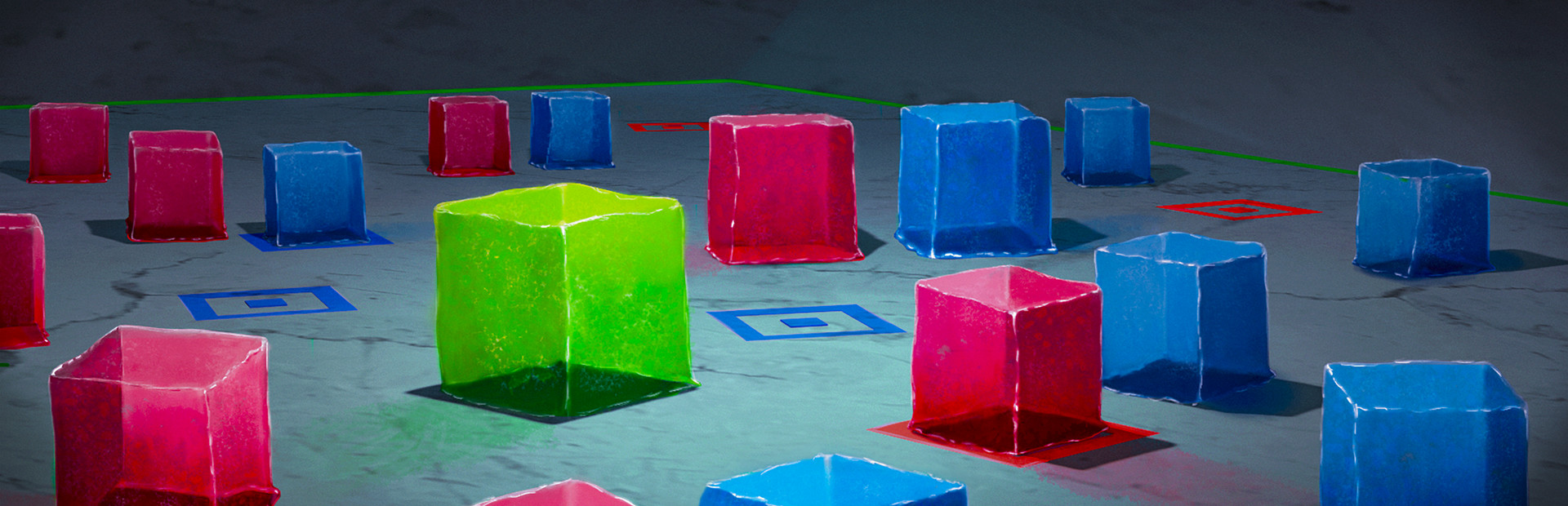
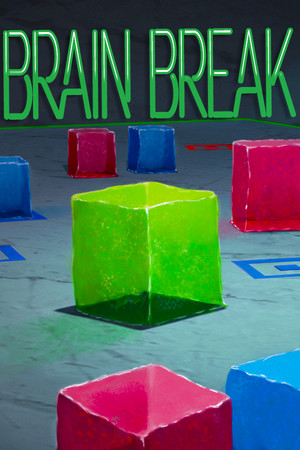
I have a soft spot for puzzle games that fit in a coat pocket, and Brain Break is very much that kind of thing. Astralis Games built this around a single, merciless rule borrowed from the Sokoban tradition: you can push a cube, but you cannot pull it back. That one constraint, applied across 20 top-down levels and a handful of distinct cube colors, is enough to produce some genuinely knotty situations by the time you hit the back half of the level list. The early stages ease you in gently, almost too gently, but the difficulty curve does eventually find its teeth. The visual language is clean and minimal, colored cubes against spare backgrounds, no distracting ornamentation. It is the kind of aesthetic that either reads as focused craftsmanship or budget frugality depending on your mood, and honestly it sits somewhere in between. The background music has been noted by the community as pleasant and atmospheric, but there is a reported absence of a volume control, which is a real quality-of-life miss for a game built around calm, deliberate thinking. A black-screen bug has also surfaced in community threads, affecting some players after they return to a session mid-progress. Neither issue is game-breaking for most, but they are worth knowing about before you sit down. What Brain Break does well is respect the logic of its own constraint. Each level is a small, self-contained spatial argument, and the satisfaction of finally working out the correct push sequence has that quiet, clicking-into-place feeling that good puzzle design produces. The 28 Steam achievements give completionists a reason to revisit, and cloud saves mean you can pick up on different machines without losing progress. The game is short by any measure, maybe two to three hours for a focused playthrough, and the developer seems aware of that, keeping the scope modest rather than padding it out. The Steam community sits at a roughly 73-percent positive rating across 146 reviews, which feels about right. It is not a landmark release, it has no aspirations to be one, and that honesty is part of its modest charm. Think of it as a brain-training lunch break rather than an evening commitment. If Sokoban-adjacent spatial puzzles are your genre, you will find enough genuine challenge here to justify the time. If you need narrative, progression systems, or anything beyond a cube-pushing ruleset, this will feel thin. Go in with the right expectations and Brain Break delivers exactly what it promises, nothing more, and crucially, nothing less.

Indie & narrative
Tags
System Requirements
Minimum
- OS
- Windows 7\8\10
- Memory
- 2 MB RAM
- DirectX
- Version 11
- Storage
- 102 MB available space
- Processor
- Intel Pentium D or AMD Athlon 64 X2
Keep exploring
Community Discussion
Be the first to comment on Brain Break.
Reviews & Ratings
No ratings available
Game Info
- Developer
- Astralis Games
- Publisher
- Astralis Games
- Release Date
- Nov 18, 2020