
Boxes: Lost Fragments
Thirty minutes in, I stopped caring about the thief premise and started caring deeply about a toy train set that was also, somehow, a locked box. That's the trick Boxes pulls on you.
GamerScout Verdict
Worth it for puzzle fans who prize craft and atmosphere over challenge - just don't expect a satisfying story ending.
Compare Prices(7 stores)
Every store in this table quotes us in euros, so the EUR figure is the price the seller actually set, not our arithmetic — which is why EUR is also the currency we rank in. We only list an offer here when the store gives us its price in euros, so nothing in this table is a number we invented.
Pick USD, PLN, GBP, CAD or AUD in the header and we convert from EUR at the European Central Bank reference rate — converted amounts are prefixed with ~. Your bank or the store may apply a different rate at checkout. We never hide offers based on where you are: everyone sees this whole table.
We may earn a commission when you buy games through links on this page — at no extra cost to you. It never affects our rankings or verdicts.
Price History
Screenshots & Media
About Boxes: Lost Fragments
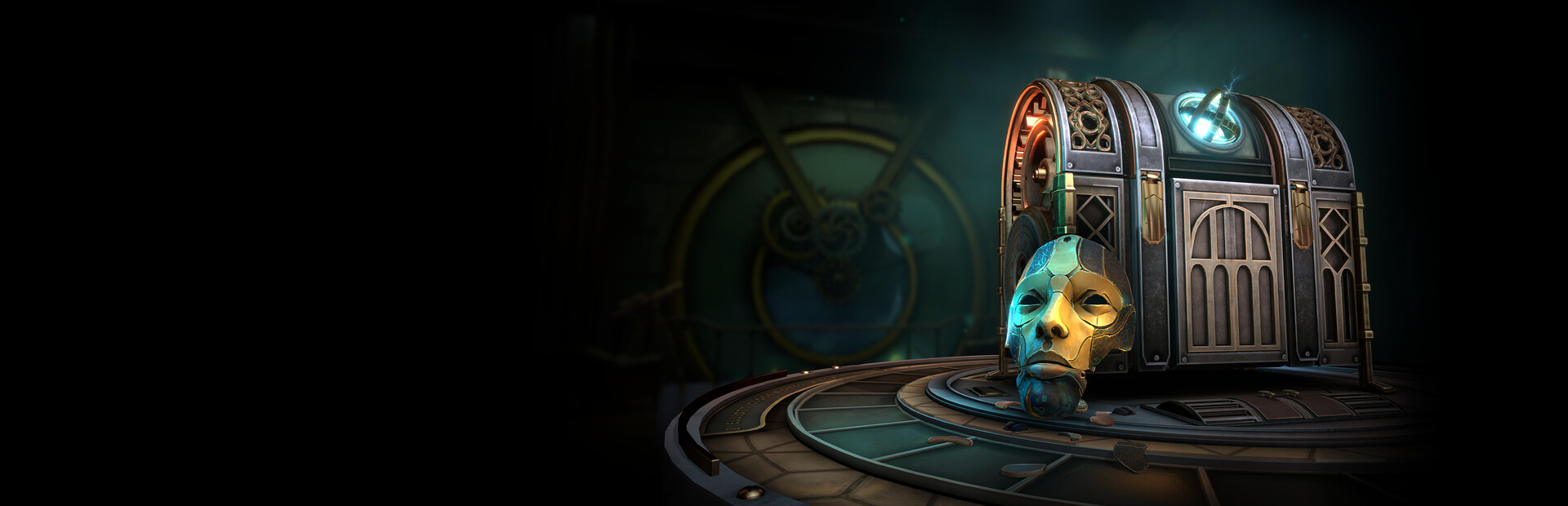
My first session with Boxes: Lost Fragments lasted longer than I planned, which is the highest compliment I know how to give a puzzle game. Big Loop Studios, the team behind the Doors: Paradox series, has built something that operates on a very specific frequency: the quiet, tactile pleasure of a mechanism yielding to your hands. The setup is thin on paper - you're a thief, you're trapped in a mansion, there are boxes - but the setup stops mattering approximately ten minutes after the tutorial. What takes over is pure, unhurried craft. The structure is five chapters, four boxes per chapter, plus a connecting floor puzzle that gates your passage to the next level. Each box is a self-contained world. You rotate a full 360 degrees around it, zooming into panels and faces, pulling drawers, turning keys, nudging gears, matching ciphers, and routing electric currents through switches. The puzzle vocabulary is genuinely wide: symbol matching, slider brainteasers, light-positioning puzzles, and a handful of surprises that break the mold entirely - a 2.5D platforming section hidden inside one box, a reflex-based challenge in another, a surreal perspective shift that makes a box's interior feel like a long corridor. The themed boxes themselves range from Victorian mechanical to ancient architectural to a Norse chest that opens like a tomb being unsealed. Each one earns its own identity. None of them feel like filler. The sound design deserves its own paragraph, or at least a quiet moment of appreciation. Music is essentially absent during play, and that absence is a choice that works. What fills the space instead is the click of a latch disengaging, the whir of a gear train starting up, the smooth slide of a panel that was always waiting to move. It accumulates into something almost meditative. The hint system, which highlights the next interactive area without solving anything for you, is thoughtfully calibrated - it respects your time without removing the satisfaction of working something out. You can also skip individual puzzles entirely if you hit a wall, which keeps the linear pace intact for players who care more about the journey than the friction. Where Boxes earns its few reservations: the story, delivered through letters tucked inside boxes, concerns a scientist and a robot named Aurora, and it lands with a predictable twist and an ending that reads more like a pause button than a conclusion. Fans of The Room series will also notice that Big Loop has studied that template extremely carefully - the visual language, the puzzle grammar, even the font choices in the title echo Fireproof's series closely enough to feel deliberate. That's not fatal, but it means Boxes rarely surprises players who have spent time with The Room or House of Da Vinci. The runtime, around three to four hours for most players, is honest for what the game is, though the abrupt cliffhanger will sting anyone who wanted closure. For the specific audience this is made for - people who find satisfaction in the sound of a lock disengaging, who treat a well-designed puzzle box as a form of small architecture, who want something that respects an evening without consuming a weekend - Boxes: Lost Fragments is close to exactly the thing. It knows what it is, it executes that thing with care, and it ends before it outstays its welcome, even if you wish it wouldn't.

Indie & narrative
Tags
System Requirements
Minimum
- OS
- Windows 7 or higher
- Memory
- 4 GB RAM
- DirectX
- Version 10
- Storage
- 8 GB available space
- Graphics
- Video card with 1024MB of VRAM
- Processor
- 2.8 GHz Dual Core Processor
Keep exploring
Community Discussion
Be the first to comment on Boxes: Lost Fragments.
Reviews & Ratings
No ratings available
Game Info
- Developer
- Big Loop Studios
- Publisher
- Snapbreak
- Release Date
- Feb 1, 2024