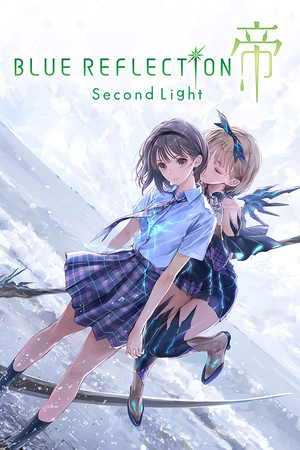
BLUE REFLECTION: Second Light
Friendship as a game mechanic, amnesia as a narrative engine, and magical girl transformations that actually mean something mechanically - Second Light earns its emotions the hard way.
GamerScout Verdict
Best for JRPG fans who want story-driven dungeons and escalating boss combat, and can tolerate an uneven back half.
Compare Prices(3 stores)
Every store in this table quotes us in euros, so the EUR figure is the price the seller actually set, not our arithmetic — which is why EUR is also the currency we rank in. We only list an offer here when the store gives us its price in euros, so nothing in this table is a number we invented.
Pick USD, PLN, GBP, CAD or AUD in the header and we convert from EUR at the European Central Bank reference rate — converted amounts are prefixed with ~. Your bank or the store may apply a different rate at checkout. We never hide offers based on where you are: everyone sees this whole table.
We may earn a commission when you buy games through links on this page — at no extra cost to you. It never affects our rankings or verdicts.
Price History
Screenshots & Media
About BLUE REFLECTION: Second Light
I went into Second Light expecting a forgettable Gust side-project and came out the other side surprised at how hard it hit. The setup sounds deceptively simple: protagonist Ao Hoshizaki gets pulled into a mysterious school floating on water, surrounded by girls who have lost their memories, with only the Heartscapes - dungeons built from fragments of each character's buried past - standing between them and oblivion. What the premise quietly conceals is a story that shifts tones with real intent. Daytime life at the academy is warm, slice-of-life, almost cozy. The moment you step into a Heartscape, the writing pivots: memory shards hovering near enemies, broken dialogue floating along walls, every dungeon a psychological excavation of whoever's past you are currently raking through. For an RPG fan who cares whether narrative and dungeon design are doing the same emotional work, this is genuinely satisfying architecture. The combat system is more layered than the pastel visuals suggest. Battles run on a real-time-with-pause timeline powered by Ether Points, which build passively and are spent to activate skills. Spend enough EP and characters level up their Gear, unlocking faster ether recovery and more powerful abilities, with Gear 3 triggering a full Reflector transformation that reworks the character's entire skill set for that fight. A combo multiplier stacks from 1.00 up to a ceiling of 10.00 across successive offensive actions, meaning boss fights are sustained escalation arcs rather than turn-by-turn attrition. When a boss's shield shatters, a One-on-One Infight kicks in - a real-time solo duel that breaks up the pacing in a welcome way. None of this is brutally difficult, and standard encounters can feel routine once your formula clicks, but boss fights specifically deliver the kind of back-and-forth that justifies learning the systems properly. Outside of combat, Second Light asks you to manage a school development loop that sits closer to an Atelier game than a traditional JRPG. Ao crafts items and builds facilities on the academy grounds, each structure offering trade-offs: boosted EXP rates, increased item drops, stat buffs, or exchanges that improve damage output at the cost of extra damage received. Facility slots are finite, so there is genuine prioritization involved. Spending time with party members on dates - the game's word, not mine - earns Talent Points that feed into a persistent progression web of stat increases, passive skills, and crafting perks. Characters like Shiho and Rena have distinct healing profiles, and equipping Fragments (the game's gear substitute) lets you nudge any party member toward a support role if your build demands it. It is not deep enough to satisfy a hardcore min-maxer, but the loop rewards investment and avoids the trap of making social content feel purely decorative. The rougher edges are real. The stealth system - where Ao can enter a mode that highlights enemy detection cones - feels spliced in from a different game entirely. It works mechanically, but enforced stealth missions that restart on detection sit awkwardly against the rest of the experience. Pacing in the back half drags; one reviewer clocked the late-game as an extended retread that overstays its welcome, and the side-quest volume can feel like obligation dressing up as content. The fan-service elements involving the cast will be a dealbreaker for some players and are worth flagging plainly. On PC the visual experience is cleaner than the console versions, which suffered from locked frame rates and heavy bloom, so this is arguably the best way to play if you can tolerate the post-processing style. Second Light is not the game that will convert someone who has no patience for JRPG social mechanics or visual novel pacing. But for players who want a narrative that treats memory loss and identity as genuine themes rather than plot shorthand, a combat system with more escalation than it first advertises, and a cast worth spending time with, this one repays patience. The Heartscapes in particular - dungeons as emotional architecture - are the kind of design idea that sticks.

RPGs
Tags
System Requirements
Minimum
- OS
- Windows® 10, 64bit
- Memory
- 8 GB RAM
- DirectX
- Version 11
- Network
- Broadband Internet connection
- Storage
- 18 GB available space
- Graphics
- NVIDIA GeForce GTX 1050 or over, AMD Radeon RX560 or over
- Processor
- Intel Core i5 4460 or over, AMD Ryzen 3 1200 or over
- Sound Card
- 16 bit stereo, 48kHz WAVE file can be played
Recommended
- OS
- Windows® 10, 64bit
- Memory
- 16 GB RAM
- DirectX
- Version 11
- Network
- Broadband Internet connection
- Storage
- 18 GB available space
- Graphics
- NVIDIA GeForce GTX1070 or over, AMD Radeon RX 5600XT(PCI-express4.0) or over
- Processor
- Intel Core i7 6700 or over, AMD Ryzen 3 3100 or over
- Sound Card
- 16 bit stereo, 48kHz WAVE file can be played
Keep exploring
Community Discussion
Be the first to comment on BLUE REFLECTION: Second Light.
Reviews & Ratings
Game Info
- Developer
- KOEI TECMO GAMES CO., LTD.
- Publisher
- KOEI TECMO GAMES CO., LTD.
- Release Date
- Nov 8, 2021