Bloodgrounds
Managing a roster of class-based gladiators under full permadeath while juggling city upgrades between fights scratches a very specific itch - and Bloodgrounds does it with more mechanical bite than its indie price tag suggests.
GamerScout Verdict
Best for tactics fans who want permadeath consequences and build variety to carry a campaign with a slow but rewarding opening act.
Compare Prices(9 stores)
Every store in this table quotes us in euros, so the EUR figure is the price the seller actually set, not our arithmetic — which is why EUR is also the currency we rank in. We only list an offer here when the store gives us its price in euros, so nothing in this table is a number we invented.
Pick USD, PLN, GBP, CAD or AUD in the header and we convert from EUR at the European Central Bank reference rate — converted amounts are prefixed with ~. Your bank or the store may apply a different rate at checkout. We never hide offers based on where you are: everyone sees this whole table.
We may earn a commission when you buy games through links on this page — at no extra cost to you. It never affects our rankings or verdicts.
Price History
Screenshots & Media
About Bloodgrounds
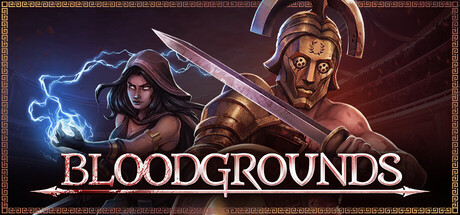
I came into Bloodgrounds ready to be skeptical. Grid-based gladiator tactics is a concept that sounds great on paper but tends to collapse into repetitive skirmishes once the novelty wears off. After several campaign runs spanning the five Ages, my spreadsheet instincts were fully engaged - and occasionally punished. The core combat loop is tighter than expected: battles play out on a square grid with initiative-based turn order and a strict action-point budget, meaning every move you make is a trade-off between aggression, repositioning, and item economy. Nine gladiator classes launch with distinct ability sets, and because each fighter begins with only two randomly drawn skills from their class pool and unlocks more through levelling, no two Retiarii or Murmillones play identically across runs. Gear compounds this further, with weapon choice affecting attack type and range while armor needs to sync with your gladiator's random traits to squeeze out meaningful synergies. The strategic layer in the coastal town of Marevento is where the game earns its management tag. Thirteen buildings across five upgrade tiers cover the spread you would expect - an infirmary to clear injuries and traumas, a market for equipment trading, training facilities to sharpen abilities - but unlocking them is gated behind defeating each Age's Arena Champion. That progression pacing is one of the sharper design decisions here. Act 1 can feel thin on options, and some players will bounce off the early-game scarcity before Act 2 opens up the gold sinks and deeper build infrastructure. Stick with it. The game is structured like an old-school RPG where being outmatched early is the point; the payoff in later Ages is real. Outside the arena, the audience favor system adds a secondary objective layer to every fight - crowd demands pay out bonus rewards but sometimes nudge you into risky extra turns, creating a genuine tension between safe play and showmanship. Permadeath is on by default and it means something here. A fallen gladiator takes their gear and all accumulated experience with them, permanently. That weight changes how you read positioning errors. A small white owl that jumps your formation, pushes fighters into ground traps, and consistently acts near the top of the initiative queue will ruin your best-laid plans faster than any boss, which is exactly the kind of enemy design that makes tactics games worth playing. The RNG does occasionally frustrate - a dodge-heavy enemy fishing a five-percent evasion check repeatedly is a community complaint with legs - and the status effect economy (fire, poison, bleed sitting at two to five percent HP damage) feels underpowered against the numbers late-game enemies bring. These are balance knobs, not structural problems, and the 1.0 launch incorporated extensive balancing work following Early Access feedback. On the production side, the pixel-art arenas sit in an interesting visual space - closer to pixelated 3D than flat sprite work - and equipment visually reflects on your gladiators, which is a small detail that pays off when you have a veteran fighter with fifteen hours of gear decisions visible on their model. The city screen is a weaker point aesthetically; NPCs populating Marevento do not have enough mechanical function to make the hub feel alive beyond a menu wrapper for your upgrades. The narrative - revenge against Emperor Dammas II for destroying your family - provides direction without ever becoming a reason to play on its own. You play on for the gladiators, not the story. At over fifteen hours of core campaign content with meaningful roguelite replayability from procedural maps, random modifiers, and varied enemy compositions, the value-to-depth ratio is solid for the genre. For strategy players who can tolerate a slow Act 1 and accept that RNG will occasionally feel unfair, Bloodgrounds delivers a mechanically dense campaign that rewards roster management, class synergy thinking, and risk-calibrated aggression. The free demo covers the first Age in full - use it before committing if you are unsure the pacing works for you.

Strategy & simulation
Tags
System Requirements
Minimum
- OS
- Windows 10
- Memory
- 8 GB RAM
- DirectX
- Version 11
- Storage
- 500 MB available space
- Graphics
- NVIDIA GeForce GTX 960 or AMD Radeon R9 280
- Processor
- Intel Core i5-6400 or AMD FX-8320
Recommended
- OS
- Windows 11
- Memory
- 8 GB RAM
- DirectX
- Version 11
- Storage
- 500 MB available space
- Graphics
- NVIDIA GeForce GTX 960 or AMD Radeon R9 280
- Processor
- Intel Core i5-6400 or AMD FX-8320
Keep exploring
Community Discussion
Be the first to comment on Bloodgrounds.
Reviews & Ratings
No ratings available
Game Info
- Developer
- Exordium Games
- Publisher
- Daedalic Entertainment
- Release Date
- Mar 12, 2026