Compare Block'hood prices across 50+ stores and find the best deal. Developed by Plethora Project. Published by Devolver Digital. Released on 5/10/2017. Available on PC, Mac, Linux. Genres: Indie, Simulation, Strategy. Metacritic score: 75/100.

Vertical city-building with a resource chain so interconnected it reads like a supply-chain audit. Worth a look if you think in inputs and outputs, but don't expect a 200-hour campaign.

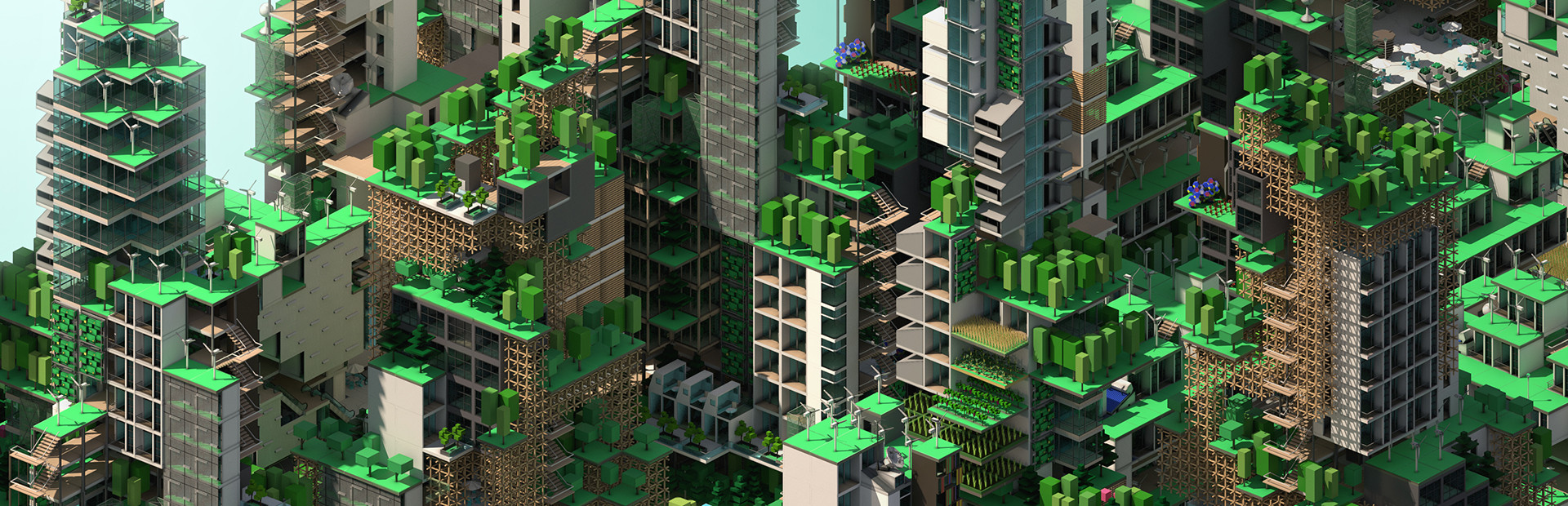
My first few minutes with Block'hood felt like someone handed me a factory floor in miniature and said 'good luck.' Every single block placed on the tile grid consumes resources and produces others, and the chain reactions start humbling you almost immediately. Drop a Tree block and it outputs Fresh Air, Wilderness, and Leisure but demands Groundwater to survive. That Groundwater has to come from Sprinklers, which need Water and Electricity, which means Water Towers and Solar Panels, and suddenly you're maintaining six interdependent systems just to have some green space. That loop is genuinely clever, and for anyone who gravitates toward production-chain games, the early hours feel like a satisfying puzzle being assembled one piece at a time. The vertical design is where Block'hood separates itself from the flat-grid city-builder pack. You build upward, stacking blocks to construct dense, skyscraper-esque neighborhoods where elevators and stairs connect layers of commerce, nature, and housing. The visual payoff is real: at full height, a well-balanced hood looks like an architectural model come to life. Resources like Community, Knowledge, Leisure, and Sickness sit alongside Energy and Food in the balance sheet, which gives the whole thing an ecological philosophy that feels genuine rather than grafted on. The game picked up a 'Best Gameplay' award at the Games for Change festival, and you can feel the design-school DNA underneath it. The three modes on offer are Story, Challenge, and Sandbox. Story acts essentially as an extended tutorial, walking players through a narrative about a boy and a boar and the tension between technology and nature. It's paced slowly and locks your build options per chapter, which makes it a low-stress entry point but a frustrating long-term destination. The 24 Challenge scenarios are the mechanical heart of the game: each one constrains your money, space, or available blocks and asks you to hit specific resource targets. Early challenges risk feeling too loose once you find a working combination, because the main counter-pressure is just time spent at speed. The late challenges tighten the screws enough to require genuine planning, but the difficulty curve is uneven. Sandbox, including the World mode that connects multiple hoods together, is where the real creative expression lives, and it is also where bugs and resource-display glitches have historically surfaced. The honest limitations matter here. Depth plateaus faster than you might expect for a game with 200-plus blocks. Once you have a reliable production loop, the incentive to experiment with alternate combinations is weak, because the old solutions keep working. The tutorial structure is fragmented, splitting guidance across three separate modes, and some players have hit progression walls in Story. Post-launch developer communication went quiet for long stretches. On Mac, there is an important compatibility note: the game does not run on macOS Catalina or later. That is a meaningful caveat for anyone on a modern Apple machine. Despite all that, Block'hood sits at a 75 on Metacritic and roughly 73 percent positive on Steam, which tracks with its identity as a niche game with a very specific audience. If you enjoy Settlers-style production chains compressed into a vertical ecological puzzle, the concept delivers. If you want the depth and late-game complexity of a proper grand-strategy or a full city sim, this is not that game, and it was never trying to be. Diego, Scout Team

Block'hood
IndieSimulationStrategy

Block'hood

May 10, 2017Plethora ProjectDevolver Digital
GamerScout Says

Vertical city-building with a resource chain so interconnected it reads like a supply-chain audit. Worth a look if you think in inputs and outputs, but don't expect a 200-hour campaign.

PCMacLinux
Best Price Available
0.00
at N/A
Historical low: $0.29

Compare Prices(0 stores)

Loading prices...

We may earn a commission when you buy games through links on this page — at no extra cost to you. It never affects our rankings or verdicts.

Screenshots & Media

Screenshot

About Block'hood

My first few minutes with Block'hood felt like someone handed me a factory floor in miniature and said 'good luck.' Every single block placed on the tile grid consumes resources and produces others, and the chain reactions start humbling you almost immediately. Drop a Tree block and it outputs Fresh Air, Wilderness, and Leisure but demands Groundwater to survive. That Groundwater has to come from Sprinklers, which need Water and Electricity, which means Water Towers and Solar Panels, and suddenly you're maintaining six interdependent systems just to have some green space. That loop is genuinely clever, and for anyone who gravitates toward production-chain games, the early hours feel like a satisfying puzzle being assembled one piece at a time. The vertical design is where Block'hood separates itself from the flat-grid city-builder pack. You build upward, stacking blocks to construct dense, skyscraper-esque neighborhoods where elevators and stairs connect layers of commerce, nature, and housing. The visual payoff is real: at full height, a well-balanced hood looks like an architectural model come to life. Resources like Community, Knowledge, Leisure, and Sickness sit alongside Energy and Food in the balance sheet, which gives the whole thing an ecological philosophy that feels genuine rather than grafted on. The game picked up a 'Best Gameplay' award at the Games for Change festival, and you can feel the design-school DNA underneath it. The three modes on offer are Story, Challenge, and Sandbox. Story acts essentially as an extended tutorial, walking players through a narrative about a boy and a boar and the tension between technology and nature. It's paced slowly and locks your build options per chapter, which makes it a low-stress entry point but a frustrating long-term destination. The 24 Challenge scenarios are the mechanical heart of the game: each one constrains your money, space, or available blocks and asks you to hit specific resource targets. Early challenges risk feeling too loose once you find a working combination, because the main counter-pressure is just time spent at speed. The late challenges tighten the screws enough to require genuine planning, but the difficulty curve is uneven. Sandbox, including the World mode that connects multiple hoods together, is where the real creative expression lives, and it is also where bugs and resource-display glitches have historically surfaced. The honest limitations matter here. Depth plateaus faster than you might expect for a game with 200-plus blocks. Once you have a reliable production loop, the incentive to experiment with alternate combinations is weak, because the old solutions keep working. The tutorial structure is fragmented, splitting guidance across three separate modes, and some players have hit progression walls in Story. Post-launch developer communication went quiet for long stretches. On Mac, there is an important compatibility note: the game does not run on macOS Catalina or later. That is a meaningful caveat for anyone on a modern Apple machine. Despite all that, Block'hood sits at a 75 on Metacritic and roughly 73 percent positive on Steam, which tracks with its identity as a niche game with a very specific audience. If you enjoy Settlers-style production chains compressed into a vertical ecological puzzle, the concept delivers. If you want the depth and late-game complexity of a proper grand-strategy or a full city sim, this is not that game, and it was never trying to be. Diego, Scout Team

Tags

singleplayerachievementstier:aaaEcological SimulationProduction ChainVertical BuildingResource DecayPuzzle-AdjacentArchitecture-InspiredRelaxing SoundtrackShort Story ModeConstrained Sandbox

Steam Deck & Linux

ProtonDB Gold

Runs great on Linux after minor tweaks. Based on 3 ProtonDB community reports.

System Requirements

Minimum

OS
Windows XP, 7,8,10
Memory
4 GB RAM
DirectX
Version 9.0c
Storage
1 GB available space
Graphics
GeForce 600 series or better
Processor
2GHz Dual Core

Recommended

OS
Windows XP, 7,8,10
Memory
8 GB RAM
DirectX
Version 9.0c
Storage
1 GB available space
Graphics
GeForce 700 series or better
Processor
2GHz Quad Core

Community Discussion

Be the first to comment on Block'hood.

Reviews & Ratings

Metacritic
75

Game Info

Developer
Plethora Project
Publisher
Devolver Digital
Release Date
May 10, 2017

Price Alert

Get notified when the price drops below your target!

Create Alert

Price History

2026-06-100.29(lowest)

Buy smarter: helpful guides

Looking for more? See games like Block'hood

Frequently asked questions about Block'hood

How much does Block'hood cost?

Block'hood pricing changes often and varies by store, edition and region. The live price table on this page compares the cheapest in-stock key and store offers across 50+ verified shops, so you always see the current lowest price before you buy.

Where can I buy Block'hood cheapest?

Compare Block'hood prices across every verified store in the price table on this page. We list the cheapest in-stock key and store offers, updated regularly, so you always see the best current deal before you buy.

What platforms is Block'hood available on?

Block'hood is available on PC, Mac, Linux.

When was Block'hood released?

Block'hood was released on 10 May 2017.

Who developed Block'hood?

Block'hood was developed by Plethora Project and published by Devolver Digital.

Is Block'hood worth buying?

Block'hood holds a Metacritic score of 75/100, making it one of the standout Indie titles. See the full reviews, ratings and how-long-to-beat times on this page to decide.