Bleed 2
One developer, seven stages, and more boss fights per square inch than most studios manage in a full release. Wryn's second outing earns its 96% Steam rating the hard way.
GamerScout Verdict
Built for score-chasers and boss-fight obsessives; casual players wanting a long campaign should look elsewhere.
Compare Prices(4 stores)
Every store in this table quotes us in euros, so the EUR figure is the price the seller actually set, not our arithmetic — which is why EUR is also the currency we rank in. We only list an offer here when the store gives us its price in euros, so nothing in this table is a number we invented.
Pick USD, PLN, GBP, CAD or AUD in the header and we convert from EUR at the European Central Bank reference rate — converted amounts are prefixed with ~. Your bank or the store may apply a different rate at checkout. We never hide offers based on where you are: everyone sees this whole table.
We may earn a commission when you buy games through links on this page — at no extra cost to you. It never affects our rankings or verdicts.
Price History
Screenshots & Media
About Bleed 2
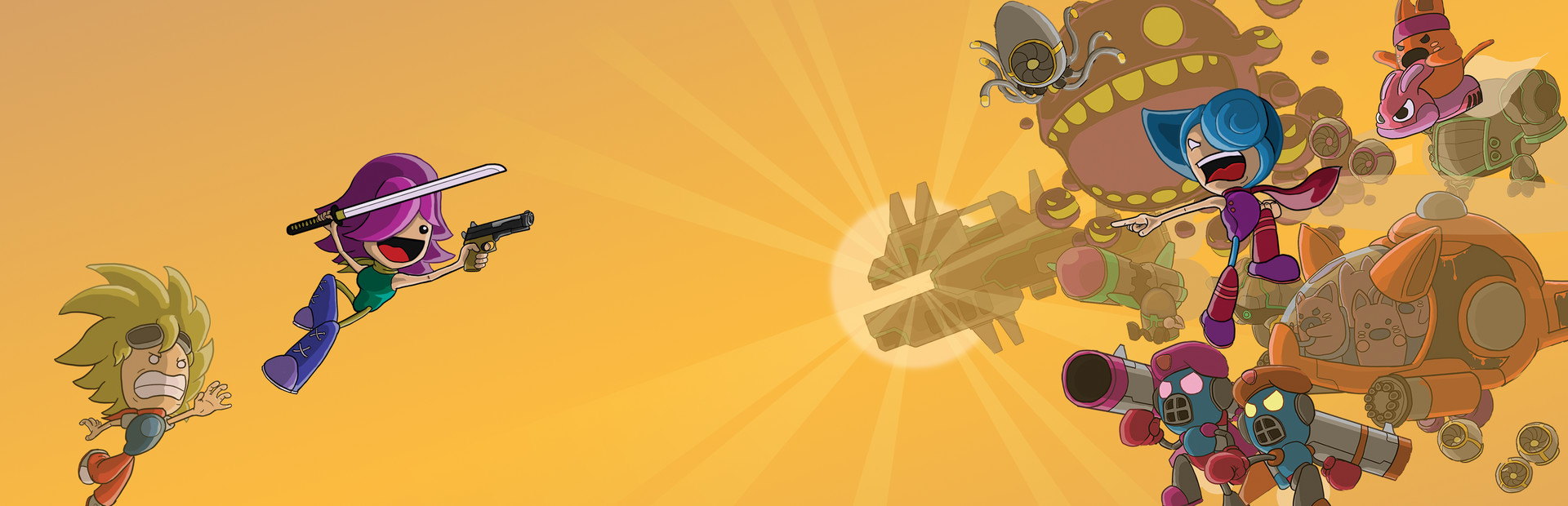
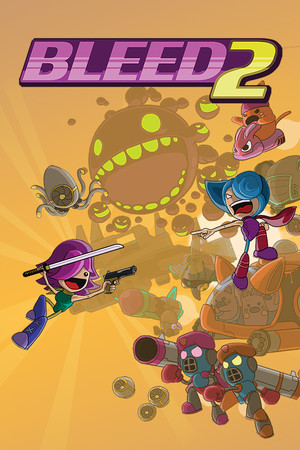
I went in expecting a competent little indie action game and came out the other side genuinely rattled, in the best possible way. Bleed 2 is the work of a single developer, Ian Campbell, and it carries that particular handcrafted density that only solo projects tend to achieve: nothing here is accidental, nothing is padded, and every second of its roughly one-to-two-hour campaign feels like it was stress-tested to within an inch of its life. That's both its greatest virtue and the first honest warning I'll give you. At its mechanical core, this is a twin-stick run-and-gun platformer built around three interlocking ideas: a triple jump that lets you weave through bullet patterns with something between elegance and desperation, a time-slow that genuinely changes how you read the screen rather than just cheating your way past hard parts, and a katana-based bullet deflection system that is the real star of the show. Wryn dual-wields a pistol and katana by default, and the right stick governs both: flick to slash, hold to shoot. Colored projectiles can be deflected back at enemies when you're swinging the blade, while others cannot, which gives every boss encounter the kind of read-react rhythm you'd expect from a shooter closer to Ikaruga than anything purely western. When you catch a helicopter missile mid-air and sling it back into the machine that fired it, the feedback is visceral in a way that pixel art has no business being. The boss fights are the heart of things, and Campbell leans into that completely. Seven stages across the story mode, and the game stacks multiple bosses inside each of them, sometimes treating the connective platforming as little more than a breather between encounters. The in-between sections can feel a touch bland for it, fodder enemies doing little besides occupying your hands until the next big battle arrives. But that is a fair trade, because those battles are inventive and demanding, with multi-phase patterns, screen-filling attacks, and a generosity of checkpointing that keeps frustration from curdling into resentment. Four difficulty settings let newcomers in while the higher tiers, paired with optional mutations like enemy bullet-return or all-attacks-unreflectable, create a genuinely savage ceiling for players who want one. Arcade Mode compresses everything into a single life. Challenge Mode lets you pick three bosses and fight them simultaneously. A randomly-generated Endless Mode throws patterns at you in succession. The short campaign is really just the foundation. On the audio side, the soundtrack was composed by Jukio Kallio, whose fingerprints you might recognize from Nuclear Throne and Minit. He trades Campbell's original chiptune stylings for something denser: synths and electric guitars chasing each other at pace with the on-screen chaos, hard rock riffs that don't exactly vary wildly across levels but do exactly what they need to do. The final boss theme reprises the main menu, which is a small touch I always notice and always appreciate. Visually, the pixel art is clean and purposeful rather than elaborate. The enemy variety across the story mode is thinner than you might wish for, and backgrounds scroll past too fast to admire them properly. None of that meaningfully dents the experience, but if you're the sort of player who needs rich environmental storytelling, Bleed 2 is not going to provide it. The honest caveat is length. A first normal-difficulty run ends in about an hour. The game's answer to that is replayability: unlockable characters with distinct playstyles (including a guest fighter from They Bleed Pixels), alternate weapons replacing Wryn's default loadout after each completed difficulty, mutators, daily challenges, local co-op that splits the deflection colors between two players in a clever mechanical twist. It's a legitimate answer, but only if you're the kind of player who finds joy in chasing scores and trimming seconds off runs. Casual players who want a long campaign and varied environments will leave unsatisfied regardless of the post-campaign content on offer. Know which type you are before clicking the button.
Indie & narrative
Tags
System Requirements
Minimum
- OS
- Windows 7/Vista/XP
- Memory
- 2 GB RAM
- DirectX
- Version 9.0c
- Storage
- 500 MB available space
- Graphics
- 512MB video card (XNA 4.0 compatible, Shader Model 2.0 or higher)
- Processor
- 2.0 Ghz dual core
- Sound Card
- DirectX-compatible sound card
Keep exploring
Community Discussion
Be the first to comment on Bleed 2.
Reviews & Ratings
Game Info
- Developer
- Ian Campbell
- Publisher
- Ian Campbell
- Release Date
- Feb 8, 2017