Bladed fury
Four hours of hand-painted ancient China, a revenge-driven princess, and boss fights that earn every Soul Sliver you carry. The art alone justifies the runtime; the combat almost does too.
GamerScout Verdict
Worth it for the boss fights and art direction alone; just don't expect enemy variety or a story that sticks.
Compare Prices(4 stores)
Every store in this table quotes us in euros, so the EUR figure is the price the seller actually set, not our arithmetic — which is why EUR is also the currency we rank in. We only list an offer here when the store gives us its price in euros, so nothing in this table is a number we invented.
Pick USD, PLN, GBP, CAD or AUD in the header and we convert from EUR at the European Central Bank reference rate — converted amounts are prefixed with ~. Your bank or the store may apply a different rate at checkout. We never hide offers based on where you are: everyone sees this whole table.
We may earn a commission when you buy games through links on this page — at no extra cost to you. It never affects our rankings or verdicts.
Price History
Screenshots & Media
About Bladed fury
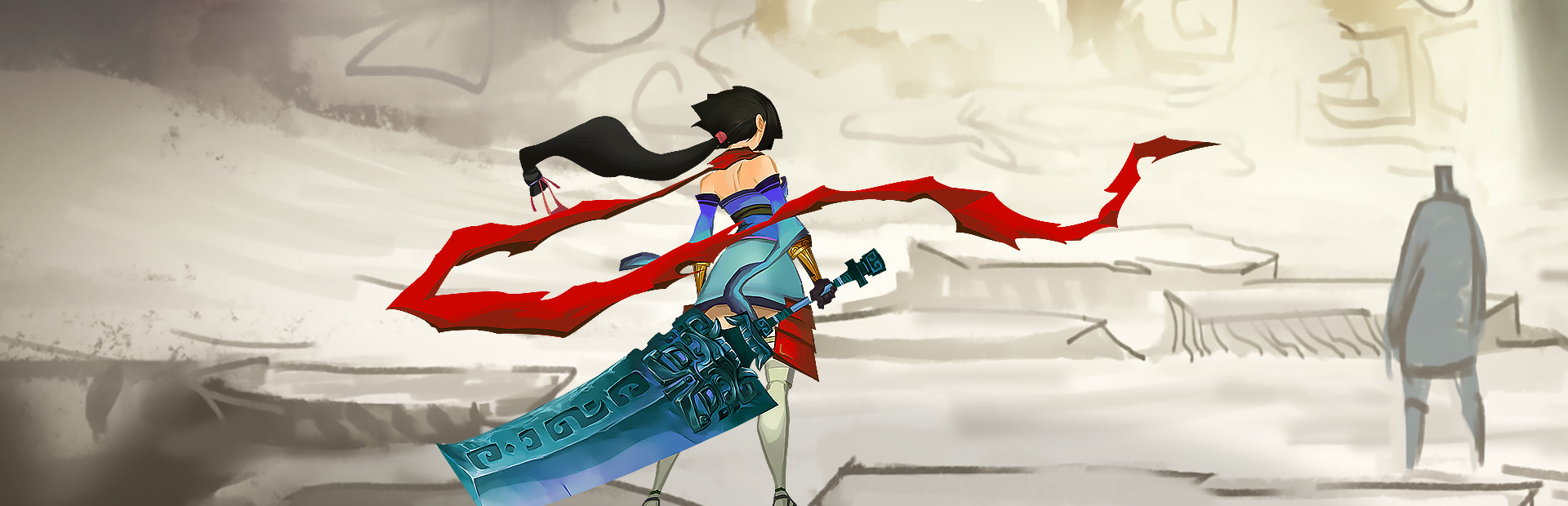
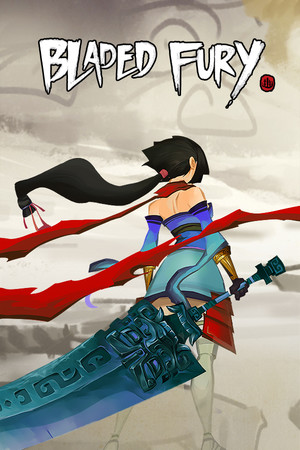
My first impression of Bladed Fury was purely visual, and it hit hard. NEXT Studios built something that draws immediate comparisons to Vanillaware's Muramasa in its ink-washed character work and silhouetted backgrounds, and for a studio of its scale, that is not faint praise. The Warring States period setting is dressed in hand-crafted sprites, mythologically warped enemies, and a color palette that feels like a scroll painting caught mid-storm. If you are the kind of player who screenshots every third room, budget accordingly. You play as Princess Ji, falsely accused of murdering her father Duke Kang by an ambitious rival named Tian. The setup is a decent revenge fable rooted in Chinese history and mythology, with gods, demons, and the occasional anachronistic mech suit thrown in to keep things surreal. Ji hunts down three witnesses to clear her name, and that chase provides the loose thread holding the game together. The story never quite coheres: the English translation reads stiffly, cultural references land flat without prior knowledge of the lore, and Ji herself stays at a frustrating emotional distance throughout. If you arrive knowing your Warring States history, you will get more from the narrative. Most players will arrive for the action and be fine leaving the story as scenery. Combat is where the hours go, and it earns its reputation for feeling good even when it does not demand much. Ji switches between a fast pair of daggers for chaining lighter enemies and the slow, armor-cracking Crimson Mass broadsword for shielded foes. A double jump, dash, parry-capable shield, and aerial attacks round out the moveset, and chaining all of it into a flowing room clear produces a genuine flow state that not many short games manage. The Soul Sliver system is the real design highlight: each boss you defeat yields a soul you can equip and trigger mid-fight, giving you tools like a black hole that drags enemies to the center of the screen, a rain of arrows, a spider web that slows everything on screen, or a screen-length laser cannon. Swapping and timing these slivers adds a meaningful layer of strategy without complicating what is otherwise an accessible system. Boss fights are the campaign's consistent high point, starting slow but escalating into inventive, visually spectacular encounters that genuinely use the game's mythological bestiary well. The early bosses feel routine; the later ones feel earned. The honest limitations are real and worth naming. Enemy variety in regular waves is thin, and the upgrade system, funded by souls collected from fallen enemies, mostly enhances what Ji already does rather than meaningfully expanding her options. Level design is functional at best: a string of rooms, light platforming, the occasional torch-order puzzle or projectile reflection, and a gate to unlock before the next fight. Reviewers across the board noted repetitive layouts and, on some platforms, framerate dips during heavy combat. The runtime clocks in at roughly two to four hours depending on pace, which for most players is exactly the right length given how little the encounter design refreshes itself. A boss rush challenge mode unlocks after completion, and hard mode offers replayability for score-chasers, but the campaign itself is a single, linear pass. For players who love short games that know their own shape, Bladed Fury lands somewhere honest and worthwhile. It is not deep, and it does not pretend to be. What it offers is a compact action experience dressed in some of the most carefully considered visual design you will find in this price tier, with boss encounters that feel designed by people who genuinely love the mythology they are drawing from. The soundtrack carries the atmosphere in the quieter stretches, traditional instrumentation giving the whole thing a weight the story sometimes forgets to earn. Come for the art, stay for Ji's blades, and leave before the repetition sets in. This game knows when to end.

Indie & narrative
Tags
System Requirements
Minimum
- OS
- Windows 7 SP1 / 8.1 / 10
- Memory
- 4 GB RAM
- Storage
- 3 GB available space
- Graphics
- NVIDIA GeForce GTX 660
- Processor
- i3 Sandy Bridge Dual Core or Equivalent
Recommended
- OS
- Windows 7 SP1 / 8.1 / 10
- Memory
- 8 GB RAM
- Storage
- 3 GB available space
- Graphics
- NVIDIA GeForce GTX 960
- Processor
- i5 Sandy Bridge Dual Core or Equivalent
Keep exploring
Community Discussion
Be the first to comment on Bladed fury.
Reviews & Ratings
Game Info
- Developer
- NEXT Studios
- Publisher
- NEXT Studios
- Release Date
- Dec 17, 2018