Beyond Enemy Lines
A solo-dev tactical FPS with real punishment and zero handholding - respect its hardcore DNA or walk away frustrated.
GamerScout Verdict
For hardcore tactical FPS fans only - rough edges throughout, but a functional punishment loop if you have the patience for it.
Compare Prices(2 stores)
Every store in this table quotes us in euros, so the EUR figure is the price the seller actually set, not our arithmetic — which is why EUR is also the currency we rank in. We only list an offer here when the store gives us its price in euros, so nothing in this table is a number we invented.
Pick USD, PLN, GBP, CAD or AUD in the header and we convert from EUR at the European Central Bank reference rate — converted amounts are prefixed with ~. Your bank or the store may apply a different rate at checkout. We never hide offers based on where you are: everyone sees this whole table.
We may earn a commission when you buy games through links on this page — at no extra cost to you. It never affects our rankings or verdicts.
Price History
Screenshots & Media
About Beyond Enemy Lines
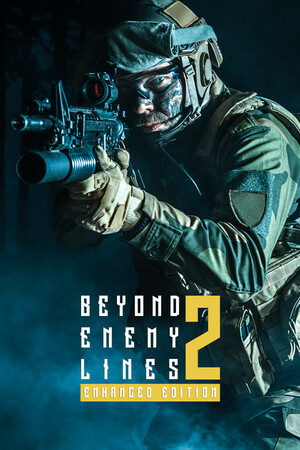
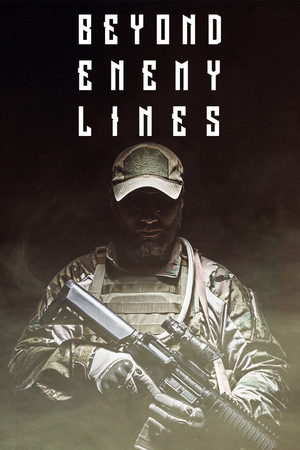
I want to be the advocate here, because Polygon Art is a one-person operation out of Germany, and that context matters when you boot up Beyond Enemy Lines. The ambition is genuine: a lone-wolf tactical FPS where you infiltrate Soviet separatist compounds, recover a satellite control chip, and choose between quiet elimination and direct confrontation. No aim assistance. No mid-mission saves. No tooltips nudging you toward the right answer. The design philosophy is proudly punishing, and for a small slice of the audience, that will land exactly right. The original 2017 release sits at a mixed reception on Steam, hovering around 46% positive, and the criticisms are consistent across multiple outlets. Level design is the core wound. The compounds you infiltrate are largely linear, with reviewers pointing out that real stealth games live and die by their spatial creativity - multiple entry points, vertical options, environmental shortcuts. Beyond Enemy Lines tends to offer one way in and one way out, which turns what should be tactical chess into a slower, more frustrating version of trial and error. The AI pitches itself as a dynamic moral system where enemies react without scripted behavior, but in practice reviewers found the AI inconsistent - enemies who stop pursuit too early, don't call reinforcements, and occasionally glitch into walls or freeze mid-animation. When the AI works, there is genuine tension. When it doesn't, the whole premise of 'skill and tactical decisions matter' collapses under you. Gunplay is similarly uneven. Recoil is present and unassisted, which fits the hardcore pitch, but the feel of the weapons never quite delivers the weight that the difficulty demands. Firefights are quick and lethal, which can be thrilling or simply punishing depending on how the encounter geometry falls. The visuals run on Unreal Engine but reviewers consistently described them as feeling dated - sparse environments, drab color palettes, limited animation work. The soundtrack is minimal to the point of near-silence in stretches, which some might read as atmospheric austerity and others will read as an unfinished soundscape. I lean toward the latter, reluctantly. Where the game earns some of its goodwill is in its scope for a solo development project. The original campaign runs to roughly 8 missions across approximately ten hours of playtime, with the Operation: Arctic Hawk add-on contributing four more missions set in winter environments. The Workshop support means community maps exist to extend the life of the experience past the base content. If you treat this as a patience test - learning patrol routes, scouting from elevated positions before committing, accepting restarts as part of the loop - there is a functional challenge loop underneath the rough edges. It is not polished, but it is earnest. The honest recommendation is narrow. If your frame of reference is Delta Force or the early Rainbow Six games and you can tolerate a budget execution of that fantasy, Beyond Enemy Lines has enough mechanical structure to give you something to work against. If you need responsive AI, varied level architecture, or any visual personality in your environments, this will feel like a step backward rather than a throwback.

Indie & narrative
Tags
System Requirements
Minimum
- OS
- Windows 7 64Bit
- Memory
- 4 GB RAM
- DirectX
- Version 11
- Storage
- 20 GB available space
- Graphics
- Geforce GTX 570 or AMD Radeon HD 7850
- Processor
- Intel Core i5-2500K CPU or equivalent
Recommended
- OS
- Windows 10 64Bit
- Memory
- 6 GB RAM
- DirectX
- Version 11
- Storage
- 20 GB available space
- Graphics
- Geforce GTX 970 or AMD Radeon R9 290
- Processor
- Intel Core i7 4790k CPU or equivalent
Keep exploring
Community Discussion
Be the first to comment on Beyond Enemy Lines.
Reviews & Ratings
No ratings available
Game Info
- Developer
- Polygon Art
- Publisher
- Polygon Art
- Release Date
- Feb 21, 2017