Beyond Divinity
Soul-forged to a Death Knight you can't stand, forced to cooperate or rot in a demon's prison universe - Beyond Divinity's premise is stronger than its execution, but patient old-school RPG fans will find real depth here.
GamerScout Verdict
Best for Divine Divinity veterans and old-school RPG diehards who can tolerate a rough interface and a punishing first act.
Compare Prices(6 stores)
Every store in this table quotes us in euros, so the EUR figure is the price the seller actually set, not our arithmetic — which is why EUR is also the currency we rank in. We only list an offer here when the store gives us its price in euros, so nothing in this table is a number we invented.
Pick USD, PLN, GBP, CAD or AUD in the header and we convert from EUR at the European Central Bank reference rate — converted amounts are prefixed with ~. Your bank or the store may apply a different rate at checkout. We never hide offers based on where you are: everyone sees this whole table.
We may earn a commission when you buy games through links on this page — at no extra cost to you. It never affects our rankings or verdicts.
Price History
Screenshots & Media
About Beyond Divinity
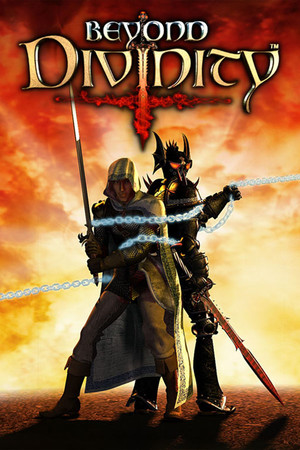
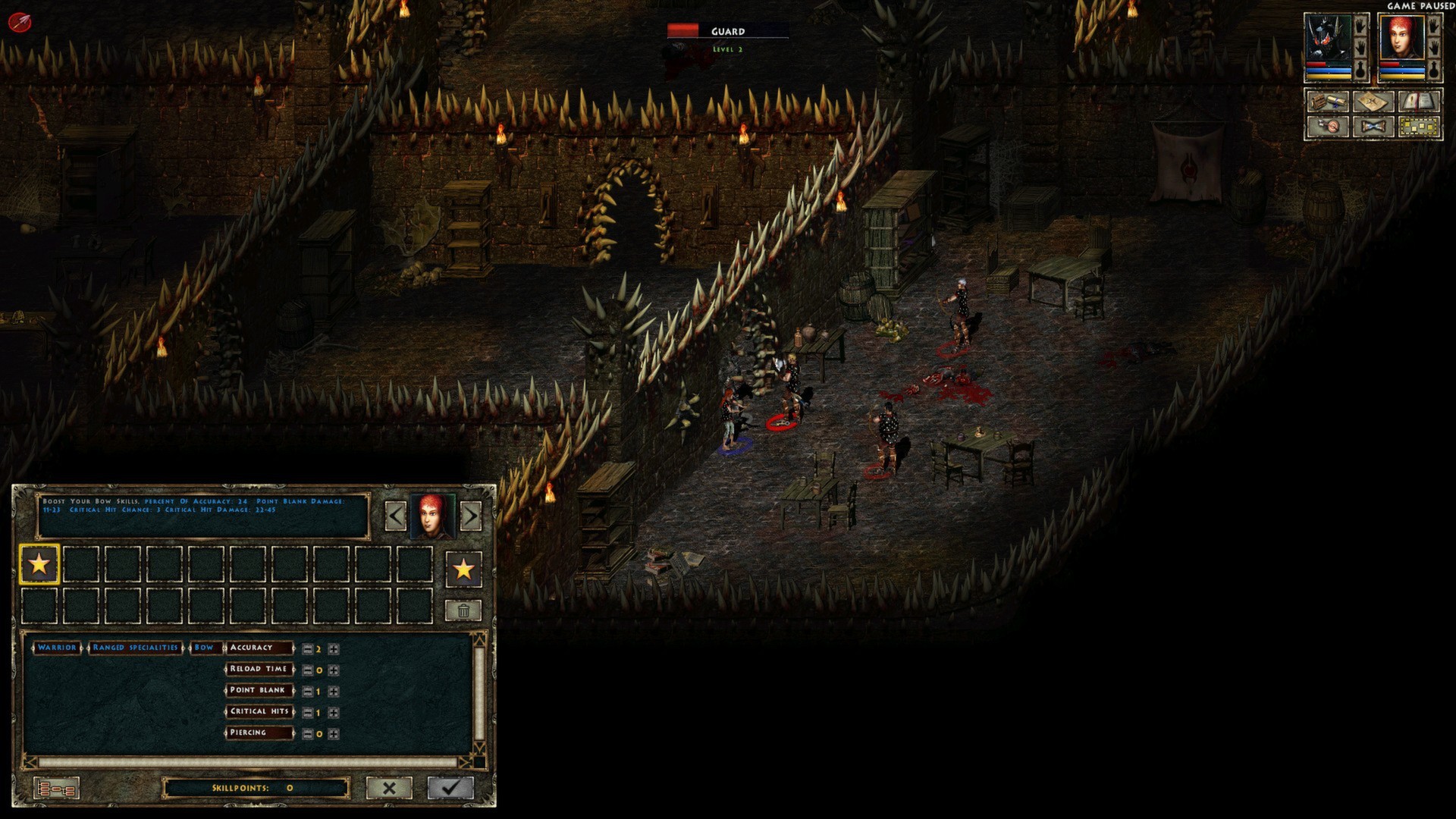
I've spent enough time in Larian's back catalogue to know that Beyond Divinity is the awkward middle child of the Divinity series - not the scrappy underdog charm of Divine Divinity, and nowhere near the mechanical confidence of Divinity: Original Sin. What it is, though, is a genuinely weird and ambitious action RPG from 2004 that still has things to offer if you meet it on its own terms. The setup is the game's best asset. You play a paladin - a hunter of necromancers - who gets yanked into a demon's pocket universe mid-battle and soul-forged to a Death Knight: a creature of pure evil who hates you just as much as you hate him. The two of you are now a package deal. If one dies, so does the other. It is an odd-couple setup with real dramatic potential, and the writing commits to the uncomfortable dynamic with a dry, self-aware humor that occasionally lands harder than you'd expect from a mid-2000s PC RPG. The game unfolds across four acts, starting cramped and linear before opening up considerably - later acts give you genuine freedom to roam a world that is dense with NPCs, side quests, and incidental encounters. On the systems side, Beyond Divinity replaces fixed classes with a fully open character-building framework. You pick a starting archetype - Warrior, Survivor, or Mage - and then distribute points freely across over 30 traits and a skill list that stretches past 290 options, covering everything from alchemy and trap-crafting to twelve distinct arrow types for ranged builds. Managing both your hero and the Death Knight simultaneously is the core loop, and there is real satisfaction in tuning two complementary builds. Each act also gives you a summoning doll - Act 1 hands you a skeleton capable of wielding a crossbow - adding another layer to combat. The Battlefields, randomly generated dungeon zones attached to each act, provide optional loot runs and a separate merchant ecosystem if you want to grind. Mage builds are the weak link: spell mana costs are punishingly high in the early game, and the resistance system - Fire, Water, Earth, Air, Ethereal, Shadow, Bone, plus physical damage types - is more cluttered than it is strategically interesting. Here is where I have to be honest with you. Beyond Divinity is a game that fights you. The skill economy is stingy - there are not enough points to cover both combat and utility skills comfortably, some skills (lockpicking, I am looking at you) turn out to be nearly useless, and unique items are routinely outclassed by random drops, which is demoralizing. Worse, quest-critical NPCs have a habit of wandering off or disappearing entirely, occasionally forcing reloads of much earlier saves. The interface is clunky, the inventory is a chore, and the first act in particular has an awful pacing problem that will filter out anyone without patience. The difficulty swings wildly between trivial and brutal with no soft gradient between the two. None of this is fatal if you are already the kind of person who reads tooltips for fun and keeps multiple save slots - but go in expecting BG3-level polish and you will bounce off hard. For players who loved Divine Divinity and want more of that specific texture - a vast, hand-crafted world, dry humor baked into the quest writing, and a build system you can genuinely get lost in - Beyond Divinity delivers. It is a game that rewards stubbornness more than skill, and its best moments come in the later acts once the world opens up and the odd-couple dynamic between your paladin and the Death Knight starts to breathe. That is not nothing. But you should know what you are signing up for before the first act finishes testing your patience.

RPGs
Tags
System Requirements
Minimum
- OS
- Windows XP
- Sound
- DirectX compatible
- Memory
- 256 MB RAM
- Graphics
- DirectX compatible 3D card
- DirectX®
- 9.0c
- Processor
- Pentium 4 1.4 GHz
- Hard Drive
- 2300 MB HD space
Keep exploring
Community Discussion
Be the first to comment on Beyond Divinity.
Reviews & Ratings
Game Info
- Developer
- Larian Studios
- Publisher
- Larian Studios
- Release Date
- Oct 29, 2012