Beholder
Run a Soviet-era apartment block as a state-installed spy. Every tenant is a target, every decision a moral compromise.
GamerScout Verdict
Worth it for players who like optimizing moral decision trees across multiple short runs in a tense, well-written dystopian setting.
Compare Prices(8 stores)
Every store in this table quotes us in euros, so the EUR figure is the price the seller actually set, not our arithmetic — which is why EUR is also the currency we rank in. We only list an offer here when the store gives us its price in euros, so nothing in this table is a number we invented.
Pick USD, PLN, GBP, CAD or AUD in the header and we convert from EUR at the European Central Bank reference rate — converted amounts are prefixed with ~. Your bank or the store may apply a different rate at checkout. We never hide offers based on where you are: everyone sees this whole table.
We may earn a commission when you buy games through links on this page — at no extra cost to you. It never affects our rankings or verdicts.
Price History
Screenshots & Media
About Beholder
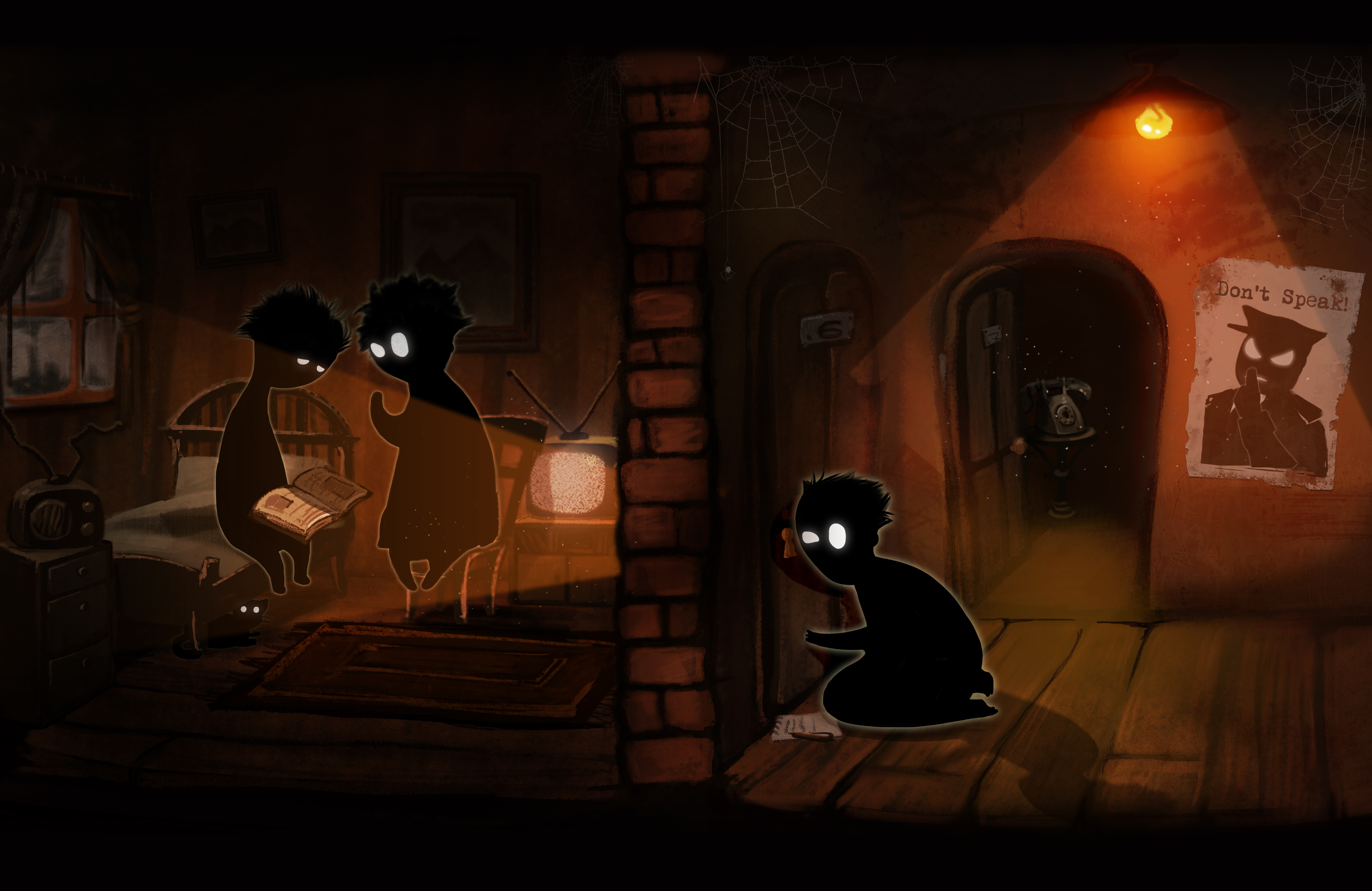
Beholder is a 2D surveillance and management game set in a bleak totalitarian state where you play Carl, a government-appointed landlord ordered to spy on his own tenants, report dissidents, and keep the regime happy. If you came expecting a city-builder or a traditional strategy title, recalibrate: this is closer to a timed resource game wrapped in a morality system. Your apartment building is the map, your tenants are the nodes, and every action you take ripples through a web of consequences that the game tracks with quiet ruthlessness. The core loop runs on tension. You sneak into rooms when tenants leave, rifle through belongings, plant bugs, and file reports to the Ministry. Meanwhile your own family has needs, money runs short, and the regime keeps piling on new mandates. Time pressure is real. Quests have deadlines, tenants move in and out, and some story beats lock permanently if you miss them. This is not a game you can pause and theorize over at leisure, which is either a design strength or a frustration depending on how you play. The decision-making rarely has a clean answer: do you report the elderly woman hiding contraband books to collect the bounty, or protect her and risk your own family? The game does not moralize at you. It just shows you the outcome, and then moves on. Mechanically, Beholder is lean. There are no build orders, no tech trees, no unit management. What it does have is a branching quest graph and a reputation economy that rewards players who treat the game like a logic puzzle. Money management matters more than it first appears. Bribes, upgrades to your apartment, and black-market items all feed into which endings you can reach. There are multiple endings, and reaching the better ones requires a level of optimization across the whole run that newcomers will almost certainly miss on their first playthrough. That first run is essentially a tutorial by consequence, which is a legitimate design choice but one worth flagging if you hate starting over. The AI governing tenant behavior is simple, not sophisticated. Tenants follow routines, react to your actions in predictable ways, and mostly serve as story triggers rather than genuinely autonomous characters. Do not come in expecting the emergent chaos of a Dwarf Fortress neighbor or a Crusader Kings vassal. The mod ecosystem on PC is limited compared to deeper strategy titles. What carries the game is atmosphere and writing. The art direction is stark and effective, the soundtrack oppressive in exactly the right way, and the moral weight of the choices lands because the writing keeps the characters just human enough to matter. For the Scout Team's usual strategy audience, Beholder sits at the lighter end of the spectrum. It is a single-session-to-learn, multiple-run-to-optimize experience that rewards players who like charting decision trees and hunting alternate outcomes. At roughly four to six hours per run, it is also one of the more time-efficient ways to get a complete narrative arc from a strategy-adjacent title. If you want 200-hour depth, look elsewhere. If you want a tightly wound game that makes every choice feel loaded and replays cleanly once you understand the systems, Beholder earns its Very Positive rating honestly.

Strategy & simulation
Tags
System Requirements
Minimum
- Processor
- Intel Pentium Dual CPU E2180 2.00GHz
- Memory
- 2 GB RAM
- Graphics
- GeForce 600M / ATI Radeon HD 5450 (1GB)
- DirectX
- Version 9.0c
- Storage
- 1600 MB available space
Recommended
- Processor
- Intel Core i5 – 2.4 GHz
- Memory
- 3 GB RAM
- Graphics
- GeForce GT 730 (1Gb) / Radeon R7 A10-7700K
- DirectX
- Version 11
- Storage
- 1600 MB available space
DLC & Add-ons for Beholder1
Expansions, DLC packs and add-on content for this game. Click any item to see store offers.
Keep exploring
Community Discussion
Be the first to comment on Beholder.
Reviews & Ratings
Game Info
- Developer
- Alawar Stargaze (Warm Lamp Games)
- Publisher
- Alchemic Dream Inc
- Release Date
- Nov 9, 2016