Before We Leave
If you've been burned by city builders that turn into war sims by hour three, this hex-grid planet-hopper from Balancing Monkey Games is a deliberate antidote, peaceful logistics all the way to the stars, with just enough space-whale chaos to keep you honest.
GamerScout Verdict
Best for newcomers to the city-builder genre and anyone who wants logistics satisfaction without the stress of an enemy timer or combat layer.
Compare Prices(9 stores)
Every store in this table quotes us in euros, so the EUR figure is the price the seller actually set, not our arithmetic — which is why EUR is also the currency we rank in. We only list an offer here when the store gives us its price in euros, so nothing in this table is a number we invented.
Pick USD, PLN, GBP, CAD or AUD in the header and we convert from EUR at the European Central Bank reference rate — converted amounts are prefixed with ~. Your bank or the store may apply a different rate at checkout. We never hide offers based on where you are: everyone sees this whole table.
We may earn a commission when you buy games through links on this page — at no extra cost to you. It never affects our rankings or verdicts.
Price History
Screenshots & Media
About Before We Leave
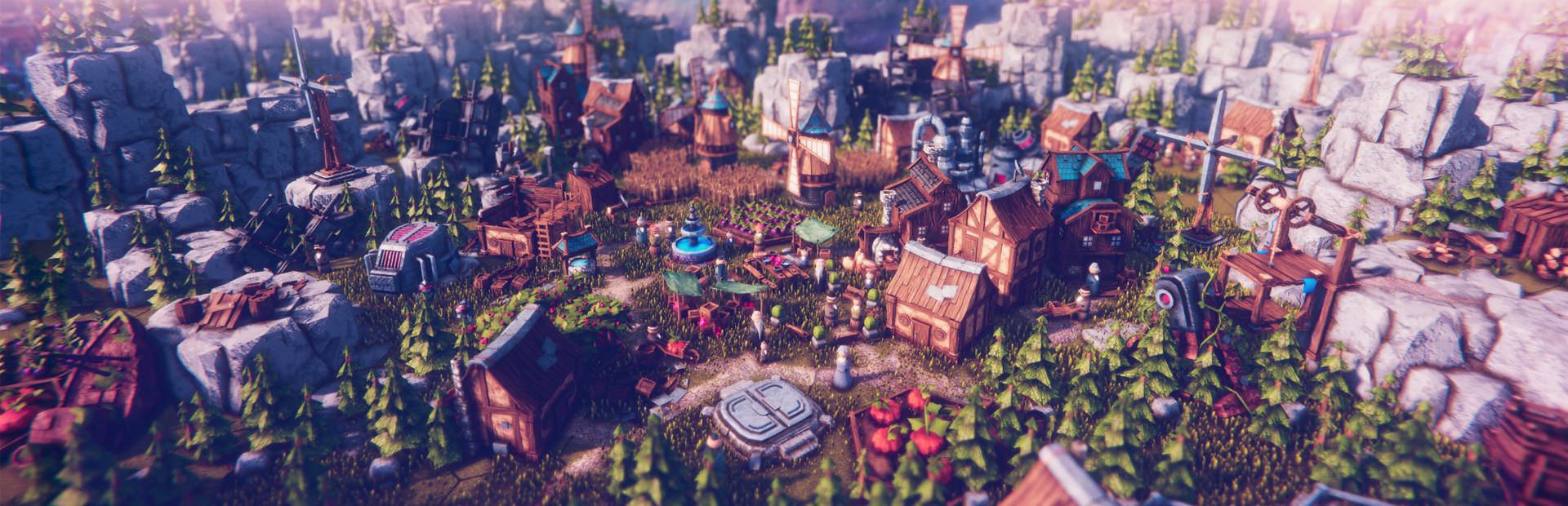
I've spent enough time in Anno and Frostpunk to spot a city builder that's quietly doing something unusual, and Before We Leave is absolutely that. The entire 4X framework is here, expand, exploit, explore, and tech up through a linear research tree unlocking libraries, refineries, shipyards, and eventually rockets, but the fourth pillar, exterminate, has been surgically removed. No hostile AI, no military units, no conquest. What fills that gap is a resource-happiness loop that turns out to be more demanding than it first looks. The core loop starts simply: a handful of Peeps emerge from their bunkers, you drop some huts and potato farms, string roads across hex tiles, and watch a little settlement take shape. Happiness is the efficiency multiplier here, unhappy Peeps slow their own work, so balancing food variety, pollution from factories, and available housing space is the actual strategic layer. Pollution from industrial buildings drags morale down, meaning every new mine or smelter forces a countermeasure: parks, tree preservation, or positioning choices that keep smoke away from residential hexes. It is a gentler tension than a Frostpunk countdown clock, but it is a real one. Mid-game opens up ocean crossings to new islands with different resource profiles, which forces the kind of inter-colony logistics juggling that strategy fans genuinely enjoy. Late game pushes you to build rockets, establish trade routes between planets in a randomly seeded solar system, and manage a multi-world supply chain, all while space whales periodically swipe entire hex clusters off your carefully built settlements. The whales are not a joke: they will eat an orchard or a research station without ceremony, and that late-game disruption is the closest the game gets to a real threat pulse. For genre veterans, the honest critique is that the tech tree is linear and not particularly deep, Peeps cannot be individually assigned to buildings, and the road auto-routing system has a habit of producing tangled results that resist fine-tuning. Steam reviews sit at roughly 78 percent positive across over 1,200 ratings, which tracks: people who come in expecting Tropico-level control will bounce off the limited agency, while players who want a clean systems toy to tinker with will find it very hard to stop. The OpenCritic aggregate lands at 75, with critics largely praising the accessible onboarding and visual charm while flagging repetition in the late game and a ceiling that dedicated city-builder fans may hit faster than they would like. Where the game genuinely earns its audience is as an entry point for players who have always been curious about the genre but intimidated by Anno 1800's commodity chains or Cities: Skylines' infrastructure depth. The tutorial walks through fundamentals without condescension, difficulty sliders let you reduce resource costs for a more freeform experience, and the average campaign sits around 15 hours, long enough to feel substantial, short enough that a second run with a different planet seed is realistic. The hex-grid globe presentation, the acoustic soundtrack with its Celtic-folk inflections, and the toy-set visual style all reinforce a deliberate coziness that serves the pacing well. The environmentalism angle, your Peeps literally repeat the industrial mistakes that drove them underground, and the game nudges you to notice, gives the whole thing a quiet thematic consistency that most city builders skip entirely.

Strategy & simulation
Tags
System Requirements
Minimum
- OS
- Windows 10 (64 bit only)
- Memory
- 4 GB RAM
- DirectX
- Version 11
- Storage
- 2 GB available space
- Graphics
- NVIDIA GeForce GTX 550 Ti or AMD Radeon HD 4890
- Processor
- Intel Core i5-4300U or AMD Phenom II X4 975
Recommended
- OS
- Windows 10 (64 bit only)
- Memory
- 8 GB RAM
- DirectX
- Version 11
- Storage
- 2 GB available space
- Graphics
- NVIDIA Geforce GTX 970 or AMD Radeon RX 590
- Processor
- Intel Core i5-9400 or AMD Ryzen 5 3400G
Keep exploring
Community Discussion
Be the first to comment on Before We Leave.
Reviews & Ratings
Game Info
- Developer
- Balancing Monkey Games
- Publisher
- Team17
- Release Date
- May 13, 2021